Explore mission story video content best practices to boost donor engagement and community trust. Create impactful videos that inspire action.
Mission Story Video Best Practices for Nonprofits
Mission story video content best practices are defined as the specific production, storytelling, and distribution decisions that determine whether a video inspires action or gets ignored. For nonprofits, schools, and healthcare facilities, these decisions directly affect donor retention, community trust, and fundraising outcomes. The GPS (Goals, Problems, Stakes) interview framework, strategic video length, and beneficiary-centered narratives are the three pillars that separate effective mission videos from forgettable ones. Get these right, and your video works long after the camera stops rolling.
1. What is the ideal length for mission story videos?
Video length is the single most controllable factor in viewer retention. 70% of viewers stop watching after 90–120 seconds if the content lacks immediate engagement. That number should shape every production decision you make.
The right length depends on where the video lives and what it needs to do:
Hero videos (your flagship mission film): 90 seconds to 2 minutes
Social media clips: 30–45 seconds, cut from longer footage
Deep-dive case studies: 3–8 minutes, for donors or partners who already know you
A hero video that runs four minutes without a gripping narrative loses most of its audience before the halfway point. The ideal hero video length is 90 seconds to 2 minutes, and every second must earn its place.
Pro Tip: Cut your rough edit by 30% before you show it to anyone. If a shot does not move the story forward, remove it.

2. How to structure a mission video for maximum impact
Structure determines whether viewers feel pulled through a story or left to wander. A mission video needs a continuous, compelling narrative arc, not a highlight reel of organizational achievements.
The GPS framework (Goals, Problems, Stakes) gives interviews a clear spine. Ask your subject what they were trying to achieve, what stood in the way, and what was at risk if nothing changed. GPS interview questions bring out natural urgency and credibility without scripting anyone. The result sounds real because it is real.
Avoid filler content that kills pacing. Drone shots of empty buildings, staged slow-motion B-roll, and generic stock footage all signal to viewers that the video has nothing meaningful to say. Filler shots like these actively hurt conversion. Replace them with footage of staff engaging directly with clients or patients.
3. Why authenticity is the core of effective video storytelling
Authenticity is the primary currency for trust in mission-driven video. Viewers prefer unscripted, natural speech and minor imperfections over polished, scripted narration. A subject who stumbles slightly over a word but speaks from genuine experience is more persuasive than a rehearsed talking head.
The most powerful mission videos center the beneficiary as the protagonist, not the organization. Focusing on the organization dilutes emotional stakes and reduces the viewer’s ability to connect. Your school, hospital, or nonprofit is the catalyst. The student, patient, or community member is the hero.
“The organization should act as a catalyst in story videos; beneficiaries or patients must be the heroes to maximize emotional engagement and donation action. Focusing on the organization dilutes emotional stakes and hurts impact.”
Authentic moments are not manufactured. They come from giving your subject enough time and comfort to speak naturally. Rushing that process produces stiff, forgettable footage.
Pro Tip: Before filming, spend 10 minutes in casual conversation with your subject. People open up on camera when they already feel at ease with the crew.
4. Audio quality matters more than you think
Clear audio directly determines whether viewers stay or leave. A budget-friendly wireless microphone often outperforms high-end visuals in retaining viewers because poor sound is immediately distracting. Viewers will forgive slightly imperfect lighting. They will not forgive muffled dialogue.
This is one of the most underestimated decisions in video production for nonprofits. Organizations spend thousands on cameras and locations, then record interviews with built-in microphones. The result is a video that looks professional but sounds like a phone call. Prioritize a quality wireless lav mic above almost every other equipment upgrade.
5. How to conduct interviews that produce real stories
The interview is where most mission videos succeed or fail. High-converting testimonial interviews run 10–15 minutes maximum, guided by GPS questions rather than scripts. Longer interviews produce rambling answers. Scripted interviews produce robotic ones.
Use these interview techniques to get usable footage:
Open with context questions. Ask the subject to describe their situation before they encountered your organization.
Apply GPS prompts. Ask about their goals, the problems they faced, and what was at stake.
Let silence work. After an answer, pause before asking the next question. Subjects often add their most honest thoughts in that silence.
Avoid leading questions. “How much did our program help you?” produces a weak answer. “What changed for you?” produces a story.
Time-box the session. Keep the full interview under 15 minutes to maintain energy and focus.
Interview prompts instead of coaching yield credible, specific storytelling that no script can replicate.
6. Focus on one story, not many
Focusing deeply on one compelling personal story produces higher engagement than covering multiple fragmented stories. One story told with depth creates more donor action than five stories told at surface level. This is counterintuitive for organizations that want to show the breadth of their impact.
The reason it works is simple. Viewers connect with individuals, not statistics. A single patient’s recovery, a student’s transformation, or a family’s relief is something a viewer can feel. A montage of ten different people’s experiences gives viewers nothing to hold onto.
Choose your subject carefully. The best story subjects are specific, willing to be vulnerable, and able to articulate what changed in their life. Generalities do not move people. Specifics do.
7. Pre-production planning is not optional
Rushing timelines to produce mission videos in under two weeks leads to shallow stories that lack emotional depth. Planning sufficient time yields stronger narratives and higher viewer engagement. This is a pattern I see repeatedly with organizations that treat video as a last-minute campaign add-on.
Effective pre-production covers four areas:
Audience definition. Who is this video for? A donor, a referral partner, or a new client? Each audience needs a different angle.
Goal clarity. What action do you want viewers to take after watching?
Story selection. Identify your subject and confirm their willingness and availability before any production planning begins.
Ethical review. Confirm informed consent, especially when filming patients, minors, or vulnerable populations. Dignity is non-negotiable.
Organizations that skip pre-production often end up with footage they cannot use or stories that feel incomplete. The planning phase protects your investment in production.
8. How to distribute mission videos for ongoing impact
Production is only half the work. Embedding mission videos on your homepage or impact pages ensures immediate visitor engagement and strengthens fundraising appeals. A video buried in a blog post from two years ago does not serve your mission.
Effective distribution looks like this:
Homepage placement: Your hero video belongs above the fold or within the first scroll on your main page.
Email campaigns: Video thumbnails in donor emails increase click-through rates and keep supporters connected.
Social media cuts: Repurpose your hero video into 30–45 second clips tailored for each platform’s format and audience behavior.
Landing pages: Pair your video with a specific donation ask or program enrollment call to action.
Referral partner outreach: For healthcare facilities and schools, send your video directly to case managers, counselors, or community partners who refer clients.
Distribution Channel | Primary Goal |
|---|---|
Homepage | Immediate trust-building with new visitors |
Email campaigns | Donor retention and re-engagement |
Social media clips | Awareness and reach with new audiences |
Landing pages | Conversion for specific campaigns |
Partner outreach | Referral relationship building |
9. When to refresh your mission video content
Organizations should refresh core mission video assets every 2–3 years to maintain relevance and impact. A video featuring a program that no longer exists, or a facility that has since been renovated, actively undermines credibility.
Systematic ongoing production, not one-off projects, is what distinguishes organizations that scale their fundraising from those that plateau. Build a video library with assets for different audiences and platforms. Plan refreshes around major organizational changes: new leadership, new programs, facility updates, or significant outcome data.
Pro Tip: Schedule your next video refresh the same day you finish your current production. Treat it like a recurring budget line, not a one-time expense.
Key Takeaways
The most effective mission story videos combine beneficiary-centered narratives, strategic length, authentic interviews, and systematic distribution to drive lasting engagement and donor action.
Point | Details |
|---|---|
Keep hero videos short | Aim for 90 seconds to 2 minutes to retain the majority of viewers. |
Center the beneficiary | Make the person you serve the hero, not your organization. |
Prioritize audio quality | A quality wireless mic retains more viewers than expensive visuals alone. |
Use the GPS framework | Guide interviews with Goals, Problems, Stakes questions for natural, credible stories. |
Refresh content regularly | Update core video assets every 2–3 years to stay relevant and credible. |
What I’ve learned after years of mission video production
The most common mistake I see organizations make is producing a video about themselves. They list their programs, show their staff, and explain their history. Then they wonder why donors do not respond.
The videos that actually move people are the ones where the organization is almost invisible. You see a patient describing the moment they realized they were going to be okay. You hear a student explain what it felt like to finally understand something they had struggled with for years. That specificity is what creates the emotional pull that leads to a donation, a referral, or a phone call.
I also see organizations underinvest in audio and overinvest in location. A beautifully lit interview in a noisy room is unusable. A simple, quiet space with a good wireless mic produces footage you can actually build a story around.
The other thing worth saying plainly: one great video beats five average ones every time. If your budget is limited, go deep on a single story rather than spreading thin across multiple subjects. Your audience will feel the difference.
— Tzvi
How Simchon Productions supports mission-driven organizations
Nonprofits, schools, and healthcare facilities across the tri-state area work with Simchon Productions to produce mission videos that hold up over time. The approach starts with pre-production conversations about audience, goals, and story selection, not camera specs.
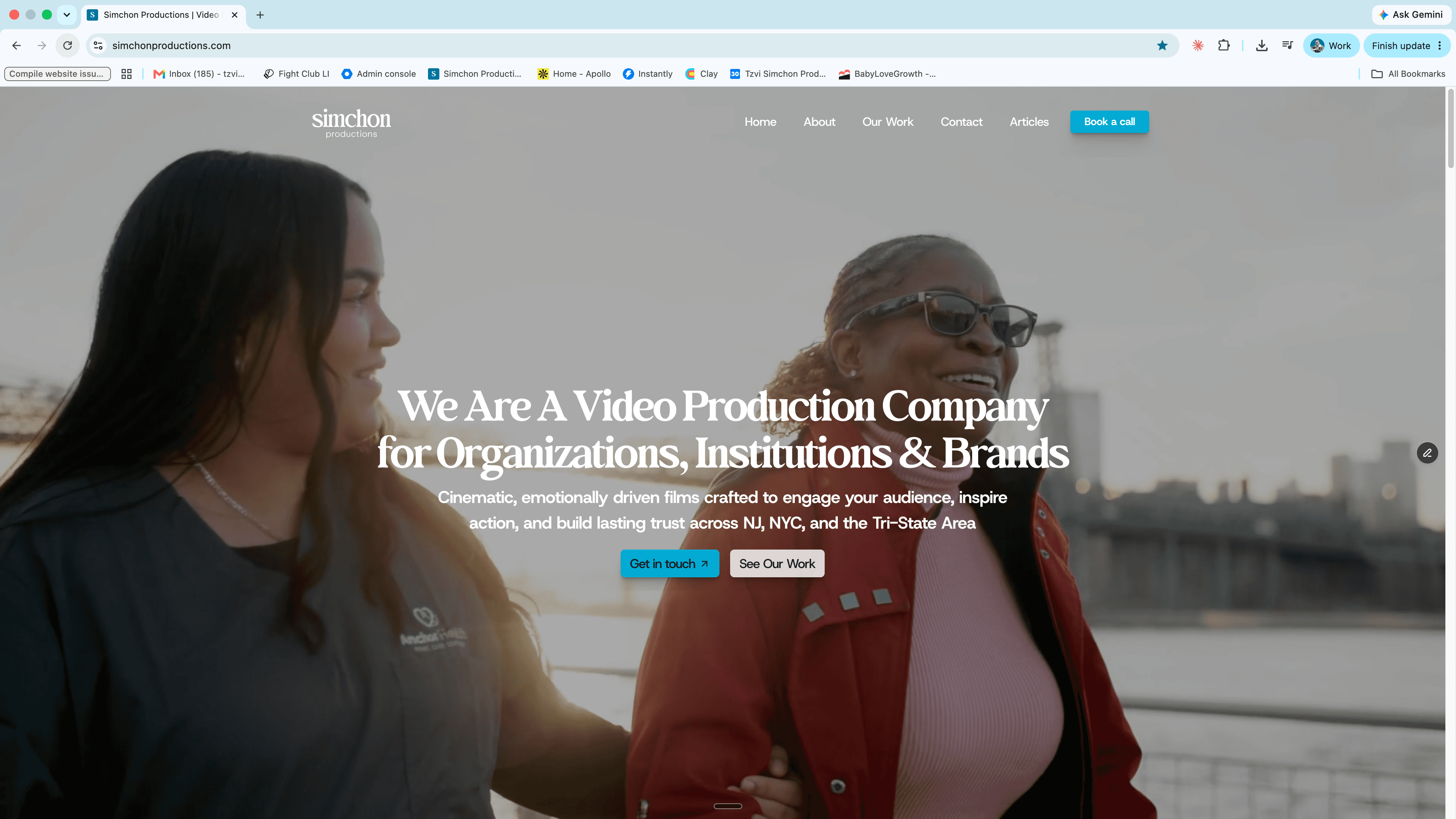
Every project Simchon Productions delivers is built around authentic, unscripted storytelling with intentional post-production that keeps emotional impact intact. You can see how that approach translates across sectors in the video production portfolio. If you are planning a mission video and want a production partner who understands what makes these stories work, Simchon Productions is ready to talk through your goals.
FAQ
What is the best length for a nonprofit mission video?
The ideal length for a flagship mission video is 90 seconds to 2 minutes. Social media clips should run 30–45 seconds, while in-depth case studies can extend to 3–8 minutes for engaged audiences.
What is the GPS interview framework?
GPS stands for Goals, Problems, Stakes. It is an interview structure that guides subjects to share their story naturally, without scripting, by asking what they wanted to achieve, what stood in their way, and what was at risk.
How often should organizations update their mission videos?
Organizations should refresh core mission video assets every 2–3 years. Major changes to programs, facilities, or leadership are additional triggers for an update.
Should the organization or the beneficiary be the focus of a mission video?
The beneficiary should always be the central figure. The organization acts as the catalyst in the story. Videos that focus on the organization rather than the person served produce lower emotional engagement and weaker fundraising results.
Why does audio quality matter more than video quality in mission videos?
Viewers will tolerate imperfect visuals but will stop watching if dialogue is hard to hear. A quality wireless microphone is the single highest-return equipment investment for organizations producing mission story content on a limited budget.