Discover the senior care video production process explained. Learn how structured video storytelling builds trust with families and referral sources.
Senior Care Video Production Process Explained
The senior care video production process is defined as a structured sequence of pre-production, production, and post-production stages designed to communicate a facility’s culture, care quality, and values to families and referral sources. This process is not simply filming a building tour. It requires deliberate planning, ethical clearance, and skilled editing to produce content that builds genuine trust. Hero videos that exceed 2 minutes lose 70% of viewers, making tight, focused storytelling a production requirement, not a preference. Simchon Productions works with healthcare organizations to apply exactly this kind of structured approach, from the first strategy call through final delivery.
What are the three core stages of the senior care video production process?
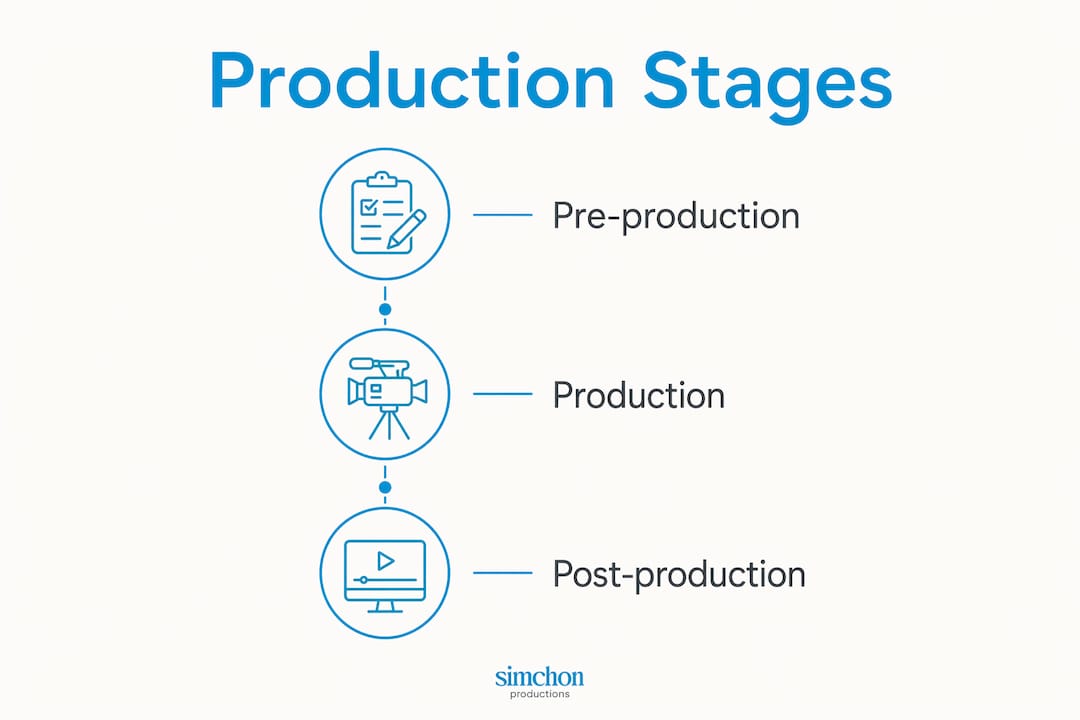
The senior care video production process follows three distinct phases. Each phase has a specific purpose, and skipping any one of them shows up clearly in the final product.
1. Pre-production: strategy before the camera turns on
Pre-production is where most senior care videos succeed or fail before a single frame is shot. This phase covers audience identification, messaging strategy, shot lists, scripting decisions, and consent planning. For senior care specifically, the scripting question matters more than in other industries. Unscripted leadership conversations and authentic daily care moments resonate far better with referral sources than polished, rehearsed testimonials. Pre-production is also when clinical and ethical leadership must be brought into the process to review content plans and establish consent protocols.
2. Production: filming with purpose
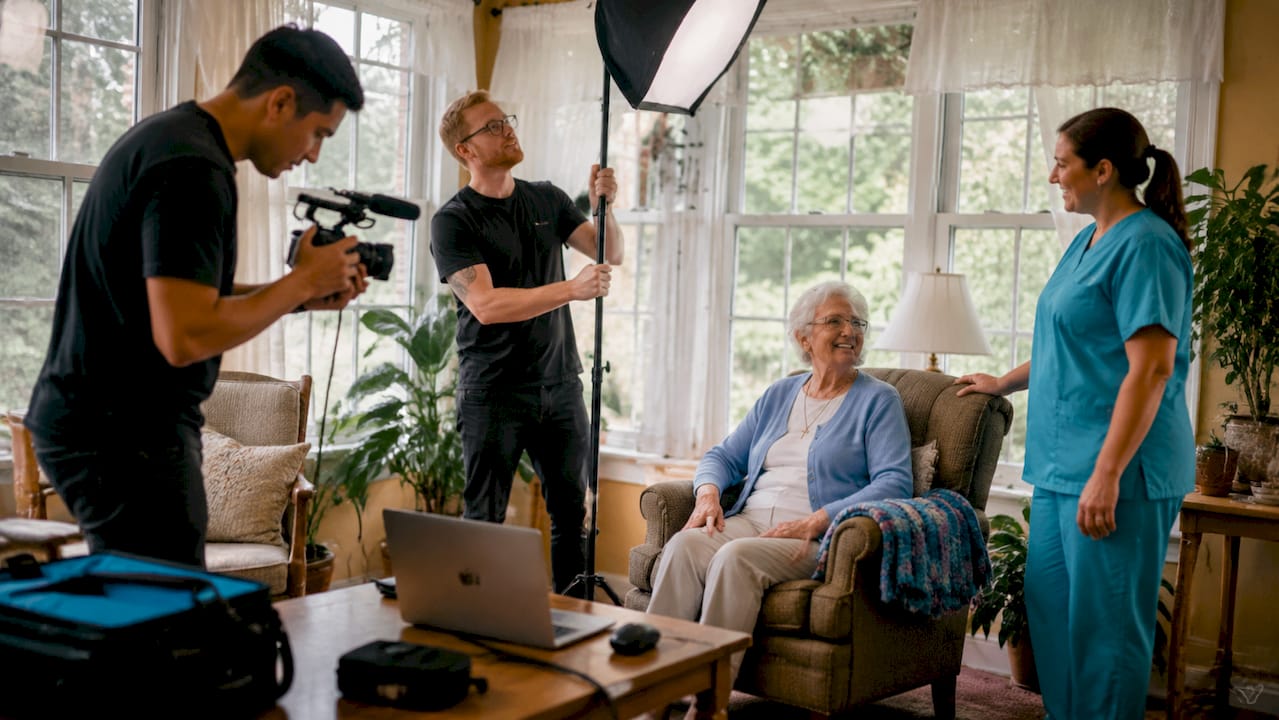
Production in a senior care setting requires patience and sensitivity. Multi-camera setups allow crews to capture genuine moments without disrupting residents or staff. The goal is to document real care activity, not to stage it. Hospital case managers and families respond most strongly to unposed footage of staff performing daily tasks. That kind of footage reads as credible proof of care quality. A skilled crew knows when to step back and let a moment unfold naturally.
3. Post-production: editing for impact
Post-production is where raw footage becomes a focused, emotionally resonant film. The industry standard for a senior care hero video is 60–90 seconds. That constraint forces editors to make real choices about what stays and what goes. Beyond the hero film, a single shoot can yield multiple assets: short social clips, staff recruitment videos, and B-roll libraries for ongoing use. Building that library of B-roll during each shoot reduces the cost of future content without requiring a full production every time.
Pro Tip: Plan your video production calendar quarterly, not annually. A regular cadence of smaller content updates keeps your facility visible and relevant far more effectively than one large film produced once a year.
How to create authentic senior care video content that resonates
Authenticity is the single most important quality in senior care video content. Families detect generic, stock-style footage immediately, and authentic on-location footage consistently outperforms polished generic marketing materials, even when the production budget is lower. The reason is simple: families are making one of the most emotionally charged decisions of their lives. They need to see the real place, the real people, and the real culture.
Social connection themes also carry particular weight. Research like the Harvard Study of Adult Development confirms that connection and community are central to wellbeing in older adults. Senior care videos that show genuine relationships between residents and staff tap directly into what families are looking for.
Content do’s:
Show staff performing real care tasks without staging or direction
Feature unscripted conversations with the director of nursing or administrator
Capture residents in natural, everyday moments: meals, activities, hallway conversations
Use natural light and real facility spaces rather than dressed sets
Include short clips from multiple departments to show the full scope of care
Content don’ts:
Avoid scripted resident testimonials, which read as rehearsed and lose credibility
Skip the drone flyover opening. It signals generic marketing, not genuine care
Do not rely on slow-motion montages of empty hallways or decorative details
Avoid stock footage of any kind. Families recognize it immediately
Do not over-produce. Heavy color grading and cinematic filters can undermine authenticity
Pro Tip: Ask your director of nursing to walk you through a typical morning on camera, without a script. That single clip often becomes the most-watched segment of the entire film.
Understanding senior care brand film content types helps administrators plan which formats serve which audiences, from families researching placement to hospital discharge planners evaluating partners.
What do senior care videos cost, and what affects the budget?
Professional senior care video production typically ranges from $8,000 to $25,000 for a complete facility film. That range reflects real differences in scope, not just vendor pricing. A single-camera, half-day shoot with basic editing sits at the lower end. A multi-camera, full-day production with multiple deliverables, motion graphics, and a B-roll library sits at the upper end.
The table below outlines what administrators can expect at each budget level.
Budget level | Shoot scope | Deliverables |
|---|---|---|
$8,000–$12,000 | Half-day, single camera | One 60–90 second hero video, basic editing |
$13,000–$18,000 | Full day, two cameras | Hero video, 2–3 short social clips, B-roll library |
$19,000–$25,000 | Multi-day, multi-camera | Hero video, staff recruitment film, social series, full B-roll archive |
The most important budget decision is not how much you spend. It is who you hire. A healthcare-specialist videographer delivers higher quality and better-aligned content than a generalist, because they understand clinical environments, resident dignity, and the specific concerns of families and referral sources. Generalist crews often default to the drone shots and slow-motion aesthetics that senior care audiences distrust.
Hiring a specialized production company also reduces the time your staff spends managing the shoot. A crew experienced in healthcare settings requires less direction and causes less disruption to daily operations.
What ethical and legal considerations apply to senior care filming?
Ethical compliance is not optional in senior care video production. It is a clinical and legal responsibility. The following practices are required before any footage is published.
Obtain documented consent from every resident who appears on camera. Consent must be written, specific to video use, and retained in the resident’s file.
Assess consent capacity with clinical staff. Not every resident can provide legally valid consent. A nurse or social worker must confirm capacity before filming begins.
Submit content for clinical and ethical review before publication. Clinical and ethical leadership must review all footage to confirm it represents care accurately and does not compromise resident dignity.
Establish a protocol for resident death after publication. A featured resident may pass away after a video goes live. Video asset management plans must include clear steps for removing or archiving content in that situation.
Limit identifiable health information in the footage. Showing a resident receiving medication or physical therapy requires additional consent considerations under HIPAA.
These protocols protect residents and protect the facility. A video that later causes a privacy complaint or a family grievance does far more damage than no video at all. Building the ethical review process into pre-production, not post-production, prevents those problems from arising.
Key Takeaways
Effective senior care video production requires structured planning, authentic filming, ethical compliance, and regular content updates to build lasting trust with families and referral sources.
Point | Details |
|---|---|
Three-stage structure | Pre-production, production, and post-production each serve a distinct purpose; skipping any stage weakens the final film. |
Authenticity over polish | Unscripted footage of real staff and residents consistently outperforms stock or staged content with families and case managers. |
Budget range | Professional senior care films cost $8,000–$25,000; hiring a healthcare-specialist crew improves relevance and reduces disruption. |
Ethical compliance | Documented consent, capacity assessment, and clinical review are required before any footage is published. |
Regular cadence | Quarterly content updates outperform a single annual production for maintaining engagement and supporting facility culture. |
What I’ve learned from watching senior care videos miss the mark
I see a consistent pattern with senior care marketing videos. The facility invests in a beautiful production, the cinematography is clean, the music is moving, and the whole thing feels like a luxury real estate ad. Then it underperforms. Families watch it and feel nothing specific about the place.
The problem is that polish is not the same as trust. Families are not evaluating production quality. They are looking for evidence that their parent will be treated with dignity by real people who care. A slightly imperfect clip of a charge nurse explaining her morning routine does more work than two minutes of cinematic B-roll.
The other mistake I see is treating video as a one-time project. A facility produces a flagship film, puts it on the homepage, and considers the job done. Twelve months later, the staff in the video has turned over, the rooms have been renovated, and the film no longer reflects reality. Video content for senior care works best as an ongoing practice, not a single event.
The facilities that do this well treat every shoot as an opportunity to build a content library. They capture B-roll, short staff spotlights, and resident activity clips that feed social media, email campaigns, and referral presentations throughout the year. That approach costs less per asset and produces more trust over time than any single flagship film.
— Tzvi
How Simchon Productions approaches senior care video production
Simchon Productions specializes in documentary-style films for healthcare organizations, senior living communities, and nonprofits across New Jersey and the tri-state area.
Every project starts with a pre-production strategy session to define the audience, the message, and the ethical protocols specific to the facility. From there, the production team films on-site with a focus on authentic moments, not staged scenes. Post-production delivers a tightly edited hero film along with a library of supporting assets built for ongoing use. Administrators who want to see this approach in practice can view the portfolio or connect with the team to discuss a production plan for their facility.
FAQ
What is the ideal length for a senior care facility video?
The optimal length for a senior care hero video is 60–90 seconds. Films that exceed 2 minutes lose 70% of viewers before the message lands.
Should senior care videos use scripted testimonials?
Scripted testimonials reduce credibility with families and referral sources. Unscripted conversations with leadership and genuine resident moments perform significantly better.
How much does professional senior care video production cost?
A complete senior care facility film typically costs between $8,000 and $25,000, depending on shoot duration, camera setup, and the number of deliverables.
What consent is required before filming residents?
Every resident who appears on camera requires written, documented consent. Clinical staff must also assess consent capacity before filming begins, and content must pass an ethical review before publication.
How often should a senior care facility update its video content?
A quarterly content cadence outperforms a single annual production. Regular smaller updates keep the facility’s story current and support both external marketing and internal culture.