Discover why independent schools invest in video production. Create emotional connections, drive engagement, and boost enrollments through authentic...
Why Independent Schools Invest in Video Production
Why video production pays off for independent schools
Video has become the primary decision-making tool for families researching independent schools. A static website with a building photo and a “Request a Tour” button gives families a secondhand experience. A two-minute video of real students explaining why they love their school creates an emotional connection before anyone sets foot on campus.
The case for video is clear in the numbers. Video marketers see 49% faster revenue growth, and 82% report positive ROI from their video programs. Research also confirms that video supplements teaching with measurable gains in comprehension and motivation, which means your investment serves both marketing and the classroom.
Here is what video does that no brochure can:
Conveys culture instantly. Families see how students interact, how teachers engage, and what the environment actually feels like.
Builds emotional trust. Authentic storytelling creates the kind of connection that drives enrollment decisions.
Outperforms static content. Video communicates values, energy, and community in ways that text and photos simply cannot replicate.
Supports learning outcomes. Studies show that educational video enhances comprehension and student motivation when used alongside traditional teaching.
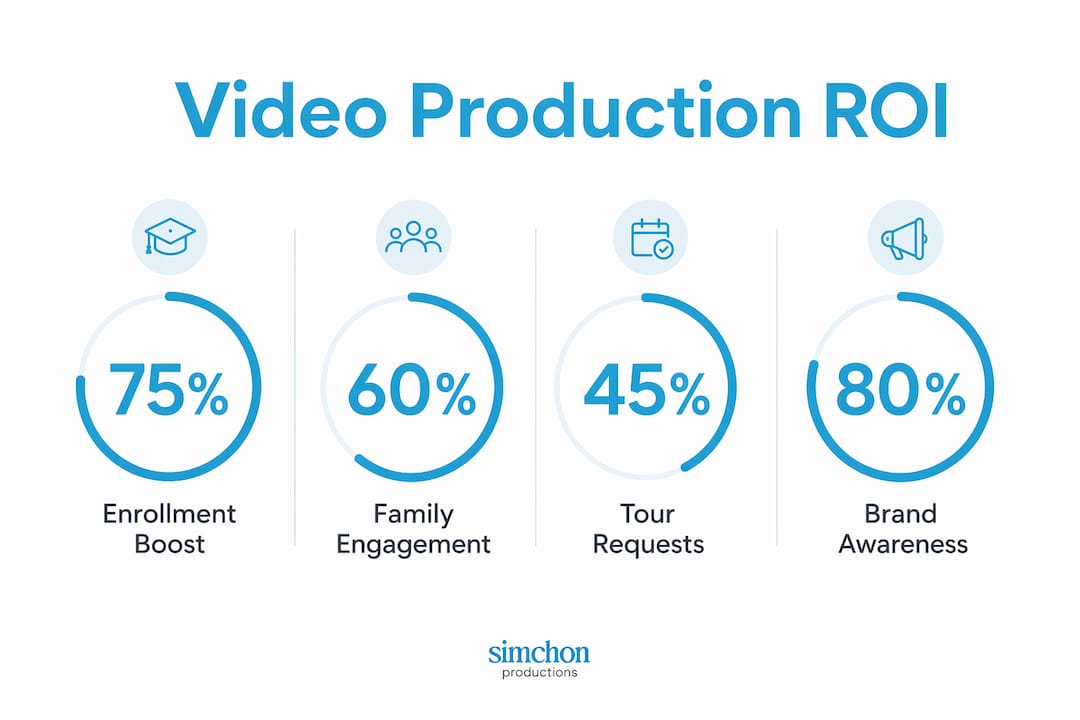
Delivers measurable ROI. Good video programs can increase tour request volume by 10-15% and improve enrollment conversion rates by 2-3%.
The NAIS 2024–2025 State of Independent School Marketing report confirms that growing enrollment and strengthening brand are the top two goals for independent school marketing teams. Video addresses both simultaneously.
What types of video content work best for schools
Not every video format serves the same purpose. The schools that get the most out of their video budgets plan content with intention, matching format to goal.
Campus tours and day-in-the-life videos are your foundation. These give prospective families a genuine feel for the physical environment, the pace of the school day, and the student experience. Keep them honest. A polished tour that feels staged does less work than a relaxed walkthrough with a real student as the guide.
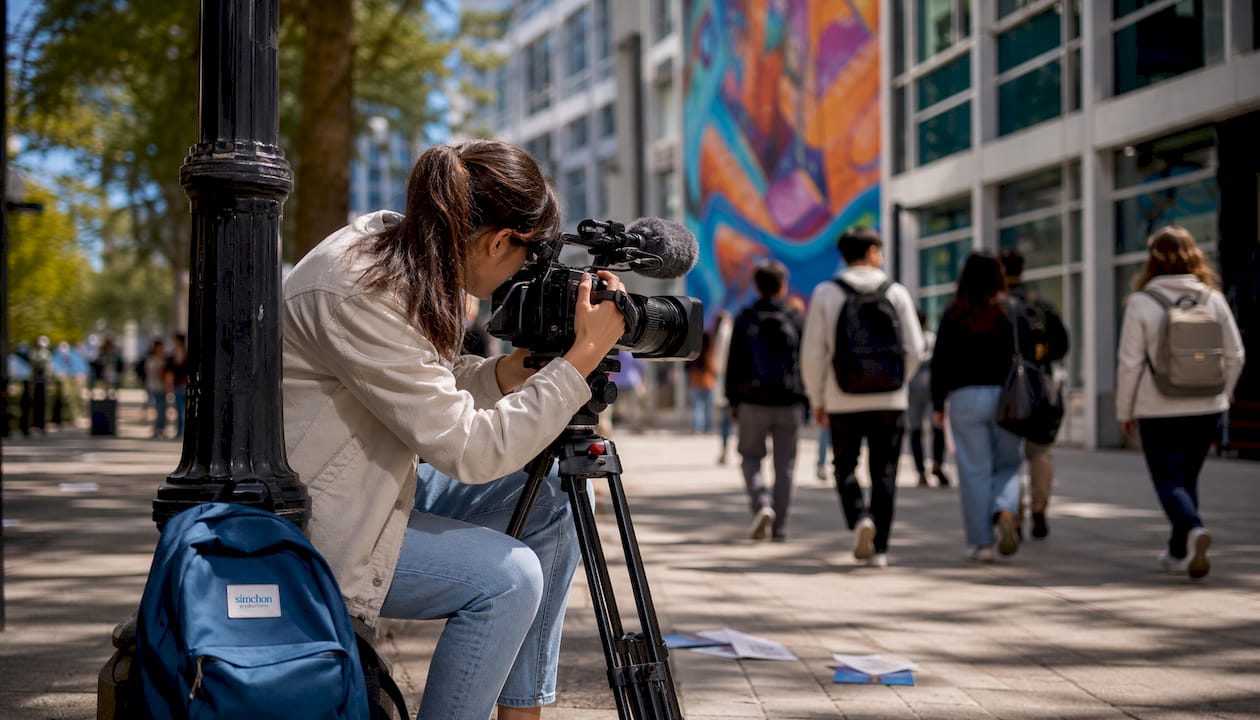
Student and faculty testimonials carry significant weight. Families trust peer voices more than institutional messaging. A 90-second clip of a student describing what changed for them academically or socially is more persuasive than any copy your admissions team could write.
Event highlights document what makes your school distinct: the robotics competition, the spring musical, the community service day. These videos work well for current family engagement and for showing prospective families the breadth of school life.
Short-form social media videos (Reels, TikToks, YouTube Shorts) serve a different function. They are discovery tools. A funny classroom moment or a quick science experiment clip reaches families who were not actively searching for your school.
Academic and program-specific videos demonstrate your school’s intellectual depth. A faculty member walking through a signature curriculum approach, or students presenting a capstone project, signals academic seriousness in a way that a course catalog cannot.
DIY versus professional production is a real budget decision. Smartphone footage shot consistently outperforms a single expensive production that never gets followed up. Professional video production makes sense for flagship content like your primary campus tour or a brand film. Consistent, lower-cost content drives sustained engagement.
Which platforms give school videos the most reach
Where you post matters as much as what you post. Each platform reaches a different segment of your enrollment audience.
YouTube is your long-form home base. YouTube’s algorithm favors educational content, and parents actively search “private schools in [city]” there. Full campus tours, day-in-the-life videos, and deep-dive program content of several minutes belong here. YouTube also provides lasting SEO value that social posts do not.
Instagram Reels reach parents in their daily scroll. With an engagement rate of 5.53%, Reels outperform most other content formats on the platform. Keep these under 60 seconds and lead with something visually compelling in the first two seconds.
TikTok skews younger, but that is exactly the point. Prospective middle school students influence their parents’ decisions. With an engagement rate of 5.75%, TikTok stands out as one of the highest-performing platforms for short-form school marketing content. Authentic, unscripted moments perform better than produced content here.
Email newsletters are underused for video. Embedding a video thumbnail linked to YouTube in your monthly newsletter lifts open rates and keeps prospective families warm between their first inquiry and enrollment decision.
Your school website should feature video prominently on the homepage and admissions pages. A family who lands on your site and immediately sees real students talking about their experience is far more likely to fill out a contact form.
Pro Tip: Tailor video length to the platform. YouTube rewards depth; Instagram and TikTok reward brevity. A 10-minute campus tour repurposed as a 45-second highlight reel serves both audiences without doubling your production workload.
How to maximize ROI from your school’s video program
The biggest mistake schools make is spending $3,000 on one polished video and then producing nothing else for a year. Eight $300 videos will consistently outperform that single production in terms of reach, engagement, and enrollment impact.
Budget realistically. Professional agencies typically charge several thousand dollars for a single promotional video. For consistent enrollment-driving content, internal or freelance production at a few hundred dollars per finished video is more sustainable. If budget allows, hiring a freelance editor from platforms like Fiverr or Upwork to help with editing is a cost-effective option.
Assign a video coordinator. One team member shooting raw footage twice a month, organizing files, and coordinating with an editor keeps production moving without overwhelming your staff. With a commitment of a few hours per month, this is manageable even for a small team. For guidance on when to bring in outside help, the hiring a video production company framework from Simchon Productions is a practical starting point.
Track the metrics that connect to enrollment. Website traffic, inquiry volume, tour requests, and enrollment conversion rates are your real indicators. Ask families how they found you. Over three to six months, a consistent video program should increase inquiry volume and tour bookings by at least 10-15% and improve enrollment conversion rates by 2-3%.
Legal and privacy considerations require attention before you film. Get written consent from parents and guardians before featuring students in any video. Review your school’s media release policy annually. For staff, confirm that participation is voluntary and that any video used externally has been reviewed by administration. These steps protect your school and build trust with your community.
Common challenges and how to handle them:
“We don’t have time.” Assign the coordinator role and commit to a twice-monthly shooting schedule. Consistency beats perfection.
“Our videos look amateur.” Good lighting and clear audio matter more than camera quality. A smartphone with a $30 clip-on microphone produces usable content.
“We don’t know what to film.” Start with a campus tour. Then film one student testimonial. Then document your next major event. Build the library incrementally.
For schools exploring video in higher education recruitment, the same principles of consistency and authentic storytelling apply across enrollment levels.
Research-backed principles for creating videos that actually work
Video effectiveness comes from thoughtful design, not format alone. The research on educational video principles points to a few consistent findings that apply directly to school marketing content.
Keep videos short and focused. Student engagement with videos drops significantly beyond 6–9 minutes. For marketing content, aim for 2–4 minutes on most platforms. The goal is emotional connection, not exhaustive information.
Use segmentation and signaling. Labeled chapters and focused audio-visual elements help viewers find what matters to them. A campus tour with chapter markers (academics, arts, athletics, community) lets a family jump to what they care about most.
Use a conversational tone. Scripted, formal delivery feels institutional. A faculty member speaking naturally about why they chose to teach at your school is more persuasive than a polished voiceover reading from a brochure.
Lead with emotional relevance. Families are not just evaluating academics. They are asking whether their child will be happy, challenged, and known. Video that addresses those questions directly, through real student voices and genuine moments, resonates in ways that credentials lists do not.
Align video objectives with audience needs. A video for prospective kindergarten families should feel different from one targeting high school applicants. Tailor the content, the voices featured, and the emotional tone to the specific audience you are trying to reach. For a broader look at how video formats serve different institutional audiences, the B2B video format guide from Zeta Plus offers useful framing on matching format to audience intent.
Pro Tip: Authenticity outperforms production gloss for school branding. Families can tell when a video is staged. Real students, real moments, and real teachers speaking honestly about your school will always outperform a highly produced piece that feels like an advertisement.
Key Takeaways
Independent schools that invest consistently in video production see measurable gains in enrollment inquiries, tour volume, and brand recognition, driven by authentic storytelling and strategic platform deployment.
Point | Details |
|---|---|
Video drives enrollment decisions | Families form emotional connections through video before visiting campus, making it the primary research tool. |
Consistency beats cost | Eight $300 videos outperform one $3,000 production for sustained enrollment impact. |
Platform strategy matters | YouTube serves long-form discovery; Instagram Reels and TikTok drive engagement at 5.53% and 5.75% respectively. |
Track the right metrics | Good video programs can increase tour requests by 10-15% and boost enrollment conversion rates by 2-3% over 3–6 months. |
Short videos perform better | Videos under 6–9 minutes retain significantly higher viewer engagement than longer content. |
Simchon Productions helps your school tell its story
At Simchon Productions, we work with independent schools to create cinematic, authentic films that connect with prospective families on an emotional level. From campus tour films to documentary-style storytelling, every project is built around your school’s specific culture and enrollment goals. If you are ready to build a video program that actually moves the needle on enrollment, see what we do and let’s talk about what your school’s story looks like on screen.