Learn how to attract patients with video storytelling. Discover key strategies that enhance engagement and boost conversion rates in healthcare.

Attract Patients with Video Storytelling: 2026 Guide
Patient storytelling video is defined as a structured, filmed narrative in which real patients describe their health challenges, care experiences, and outcomes in their own words. Healthcare marketers who attract patients with video storytelling consistently outperform those relying on written content alone. Patient testimonial videos generate 340% higher engagement and 156% better conversion rates than written reviews. That gap is not a rounding error. It reflects a fundamental shift in how people evaluate healthcare providers before booking an appointment.
How to attract patients with video storytelling: prerequisites first
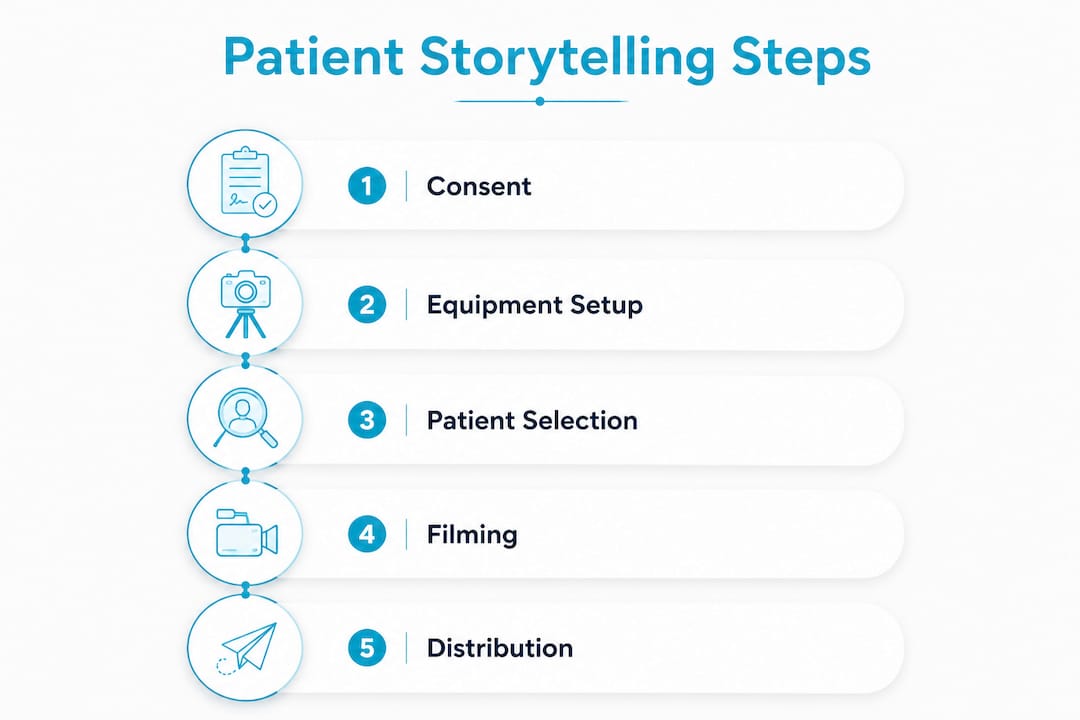
Before a camera rolls, three foundations must be in place: legal compliance, the right equipment, and the right patients.
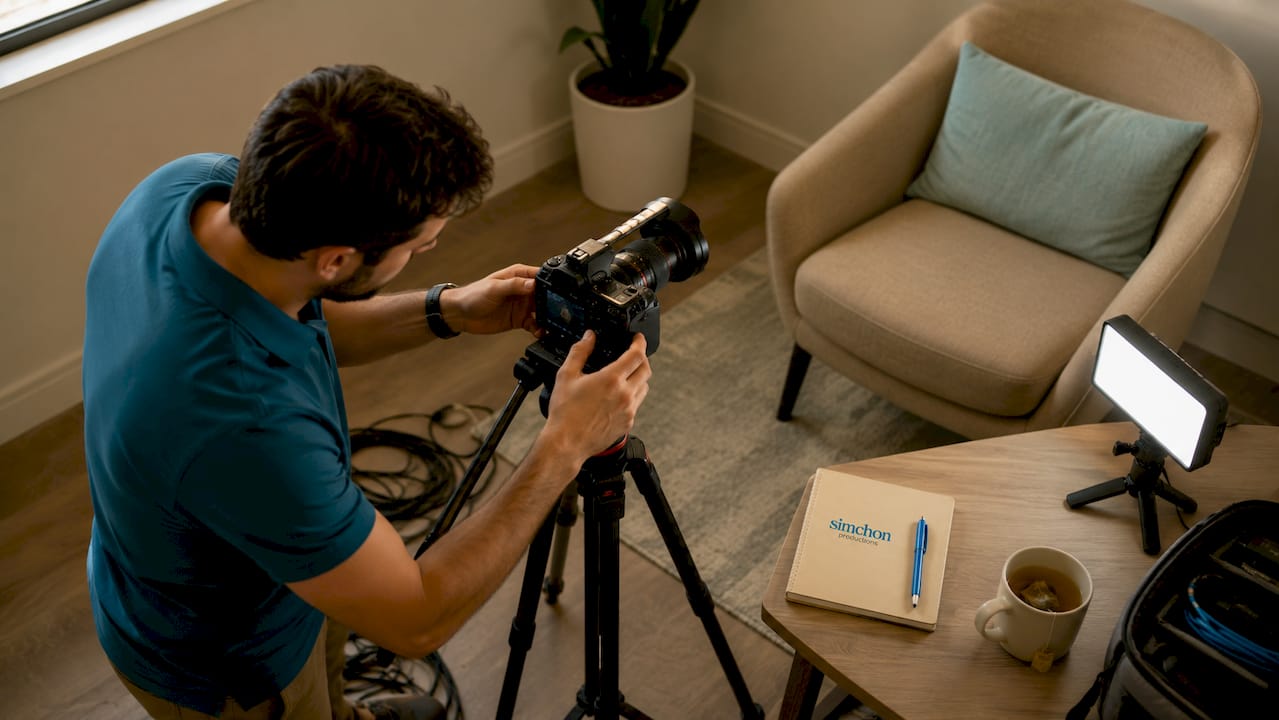
Legal and consent requirements
HIPAA compliance and thorough consent documentation are mandatory before any video production begins. This means written authorization forms that specify exactly how footage will be used, on which platforms, and for how long. A patient who consents to a website testimonial has not automatically consented to a paid social media ad. Get separate, specific sign-off for each use case.
Equipment and team essentials
You do not need a broadcast studio. You do need gear that produces clean audio and sharp visuals. Poor audio kills credibility faster than any other technical flaw.
Element | Minimum standard | Why it matters |
|---|---|---|
Camera | 4K capable mirrorless or DSLR | Maintains quality across screen sizes |
Microphone | Lavalier or directional shotgun mic | Eliminates ambient noise and room echo |
Lighting | Two-point or three-point LED setup | Removes unflattering shadows on faces |
Editor | Professional with healthcare experience | Understands pacing, tone, and compliance |
Your team needs at least one person managing the patient relationship and one managing the technical production. Splitting those roles prevents the patient from feeling like a prop on a film set.
Recruiting the right patients
The best patient storytelling videos come from patients who volunteer, not patients who are recruited under pressure. Work with your clinical staff to identify patients who have expressed gratitude or shared positive outcomes spontaneously. Those patients already want to tell their story. Your job is to give them a safe, professional way to do it.
Pro Tip: Run a pre-interview call with every patient before filming. Use it to identify their emotional hooks, the moment their fear turned to relief, and the specific detail that made them trust your practice. That call shapes the entire narrative.
How to produce compelling patient testimonial videos
Structure and authenticity are not opposites. The best patient testimonials follow a clear arc while feeling completely unscripted.
The narrative arc that works
Every effective patient story follows three beats: the problem, the care, and the outcome. The patient describes life before treatment, what the care experience felt like, and how their life changed afterward. This arc mirrors the decision-making process of a prospective patient evaluating your practice.
Industry standards recommend video lengths of 90 seconds to 3 minutes to maintain viewer retention while delivering a full narrative. Shorter clips lose the emotional payoff. Longer videos lose the audience. The 90-second to 3-minute window is where trust gets built.
Why you should never script a patient
Authentic patient testimonials rely on guided, conversational interviews rather than scripted delivery. Scripted patients sound like actors. Viewers recognize it immediately, and the trust effect collapses. Instead, prepare a list of open-ended prompts and let the patient respond naturally. Your editor shapes the story in post-production.
The production process for a compelling testimonial looks like this:
Pre-interview call. Identify the emotional core of the patient’s experience.
Location selection. Choose a setting that feels personal, not clinical. A patient’s home or a quiet outdoor space works better than a sterile exam room.
Guided interview. Ask open-ended questions. “What were you most afraid of before your first appointment?” produces far more powerful footage than “Tell us about your experience.”
B-roll capture. Film the patient in daily life activities that visually anchor their recovery or improved quality of life. A grandmother playing with her grandchildren after hip surgery says more than any statistic.
Post-production. Cut for emotional pacing, not just information delivery. The moment a patient’s voice breaks or their face lights up is the moment you keep in the edit.
Pro Tip: Prioritize the patient’s emotional language over clinical terminology in every edit. “I could finally sleep through the night” lands harder than “the procedure resolved my chronic pain condition.”
Patient stories transform abstract clinical information into relatable, human experiences that reduce fear and build trust. That is the core function of video storytelling in medical practice. It is not marketing in the traditional sense. It is empathy delivered at scale.
What are the best distribution strategies for patient storytelling videos?
Producing a great video is half the work. Getting it in front of the right people at the right moment is the other half.
Social media video formats must match platform preferences to perform. Each platform rewards different content styles:
Instagram and TikTok: 30–60 second clips with a strong emotional opening in the first three seconds. Captions are non-negotiable because most viewers watch without sound.
Facebook: Longer testimonials of 2–3 minutes perform well. Facebook’s algorithm rewards watch time, and a complete patient story earns it.
LinkedIn: Provider-focused content works here. A physician discussing a patient outcome (with consent) positions your practice as a clinical authority.
Website landing pages: Full-length testimonials placed above the fold on service-specific pages drive the highest conversion impact. Landing pages featuring patient videos see conversion increases of up to 80%. That number alone justifies the production investment.
Repurposing is where most healthcare marketers leave value on the table. A single 3-minute testimonial can generate a 60-second Instagram cut, a 30-second TikTok teaser, a written transcript for your blog, and a quote graphic for email campaigns. One production session feeds four channels.
Pro Tip: Add captions to every video before publishing. A significant portion of social media video is watched on mute. Without captions, you lose that audience entirely.
Structured patient storytelling programs generate three times more engagement and achieve 1,200% more shares on social platforms than standard content. The multiplier effect comes from consistency. One video is a tactic. A library of patient stories is a marketing asset that compounds over time.
How to avoid common pitfalls and measure what works
The most common failure in healthcare video storytelling is not technical. It is over-scripting. When patients read from a script or follow a rigid outline, the result feels like a commercial. Viewers disengage within seconds.
The second most common failure is ignoring legal risk. One improperly documented consent form can expose your organization to significant liability. Build a compliance checklist into your production workflow before you film a single frame.
Here is how to measure whether your video storytelling program is working:
Engagement rate. Track likes, comments, shares, and saves across platforms. A high share rate signals that viewers found the story worth passing on.
Watch time and completion rate. These metrics tell you whether your narrative arc is holding attention or losing viewers at a specific moment.
Conversion rate. Measure appointment bookings or contact form submissions on pages where videos are embedded. Compare pages with and without video.
Patient bookings attributed to video. Ask new patients how they found your practice. “I watched a video on your website” is a direct attribution signal.
Tracking KPIs such as engagement, shares, conversion rates, and patient bookings is the only way to refine your storytelling program over time. Data tells you which stories resonate and which ones fall flat.
“The goal of patient storytelling is not to produce a polished advertisement. It is to create a moment of recognition where a prospective patient sees themselves in someone else’s experience and thinks, ‘That could be me. I could get better too.’ That moment of recognition is what drives the call.”
Video storytelling in medical practice builds long-term trust, not just short-term clicks. Practices that commit to a consistent library of engaging patient stories over 12 to 24 months see compounding returns in both organic reach and patient referrals.
Key Takeaways
Video storytelling attracts patients by converting authentic human experiences into trust-building content that outperforms every other healthcare marketing format on engagement, shares, and conversion.
Point | Details |
|---|---|
Legal compliance comes first | Obtain specific, written HIPAA consent for every platform and use case before filming. |
Guided interviews beat scripts | Open-ended prompts capture real emotion; scripted delivery destroys viewer trust immediately. |
Optimal video length is 90 seconds to 3 minutes | This window maintains retention while delivering a complete problem-care-outcome narrative arc. |
Platform format determines reach | Tailor length and style to each channel: short clips for Instagram and TikTok, longer cuts for Facebook and websites. |
Measure bookings, not just views | Track appointment conversions directly attributed to video to prove and improve marketing ROI. |
What I’ve learned from years of filming patient stories
I have sat across from a lot of patients with a camera in the room. The ones who tell the most powerful stories are never the ones who prepared the most. They are the ones who felt safe enough to be honest.
The mistake I see healthcare marketers make most often is treating patient video as a marketing deliverable rather than a human conversation. They focus on production value, brand messaging, and call-to-action placement. Those things matter. But they are secondary to the moment when a patient says something true and unguarded on camera.
Digital narrative medicine research confirms what I have observed firsthand. When healthcare professionals absorb patient stories, their empathy and decision-making both improve. The same effect applies to prospective patients watching those stories. They are not evaluating your equipment or your editing. They are asking one question: “Does this practice understand people like me?”
Production quality is the floor, not the ceiling. A technically perfect video with a hollow story will underperform a slightly imperfect video with a genuine one every time. I have seen it happen repeatedly. The practices that grow their patient base through video are the ones willing to slow down, listen to their patients, and let the story lead.
The ethical responsibility here is real. Patients are sharing vulnerable moments. That trust deserves to be honored in every edit decision you make. If a detail feels exploitative, cut it. If a patient seems uncomfortable on review, go back and ask. The long-term reputation of your practice is worth more than any single video.
— Tzvi Simchon
How Simchon Productions helps healthcare marketers tell patient stories
Healthcare marketers who want results from patient video storytelling need more than a camera operator. They need a production partner who understands HIPAA compliance, narrative structure, and the specific emotional dynamics of healthcare stories.
Simchon Productions specializes in cinematic patient testimonial videos for hospitals, clinics, and healthcare organizations across New Jersey and the tri-state area. Every project includes consent documentation support, guided interview production, B-roll capture, and post-production editing calibrated for emotional impact. The process is designed to minimize disruption in clinical settings while producing content that drives measurable patient attraction. If your practice is ready to build a video storytelling library that compounds over time, Simchon Productions is the team to call.
FAQ
What is a patient storytelling video?
A patient storytelling video is a filmed narrative in which a real patient describes their health challenge, care experience, and outcome in their own words. It differs from a standard testimonial by following a structured problem-care-outcome arc designed to build trust with prospective patients.
How long should a patient testimonial video be?
Industry standards recommend 90 seconds to 3 minutes for patient testimonial videos. This length maintains viewer retention while delivering a complete and emotionally resonant narrative.
Does HIPAA apply to patient testimonial videos?
HIPAA compliance applies to all patient video content. Healthcare organizations must obtain specific written consent before filming and before publishing on any platform, including social media and websites.
How do patient videos improve patient attraction?
Patient testimonial videos generate 340% higher engagement and 156% better conversion rates than written reviews. Landing pages with embedded patient videos see conversion increases of up to 80%, directly driving new patient bookings.
How often should healthcare practices publish patient stories?
Consistency matters more than frequency. A structured program publishing one to two patient stories per month builds a compounding library that generates three times more engagement than one-off video campaigns.