Discover the benefits of video for university fundraising, including emotional connections and measurable results that drive donations effectively.
Video for University Fundraising: Benefits That Drive Gifts
Video is the single most effective medium for university fundraising today. Message retention for video sits at 95% compared to just 10% for text, which means your donors are actually absorbing what you send them. Beyond retention, video enables personalized stewardship at scale, turns complex impact stories into something a donor can feel in 60 seconds, and generates measurable lifts in donation volume. If your advancement team is still relying primarily on email copy and direct mail, you are leaving real money on the table.
Here is what video consistently delivers for university fundraising programs:
Emotional connection that text and static images simply cannot replicate
Scalable stewardship that thanks thousands of donors with a personal touch
Higher donor retention through authentic, ongoing communication
Measurable campaign results tied directly to video engagement data
Clearer impact storytelling that makes donors understand exactly where their gift goes
How video deepens emotional connection and strengthens storytelling for fundraising
The most powerful fundraising videos do not feel like fundraising videos. They feel like a conversation with someone whose life changed because of a donor’s gift. That is the core of what video storytelling does for universities: it puts a face, a voice, and a real moment in front of a donor who might otherwise receive a letter with a stock photo.
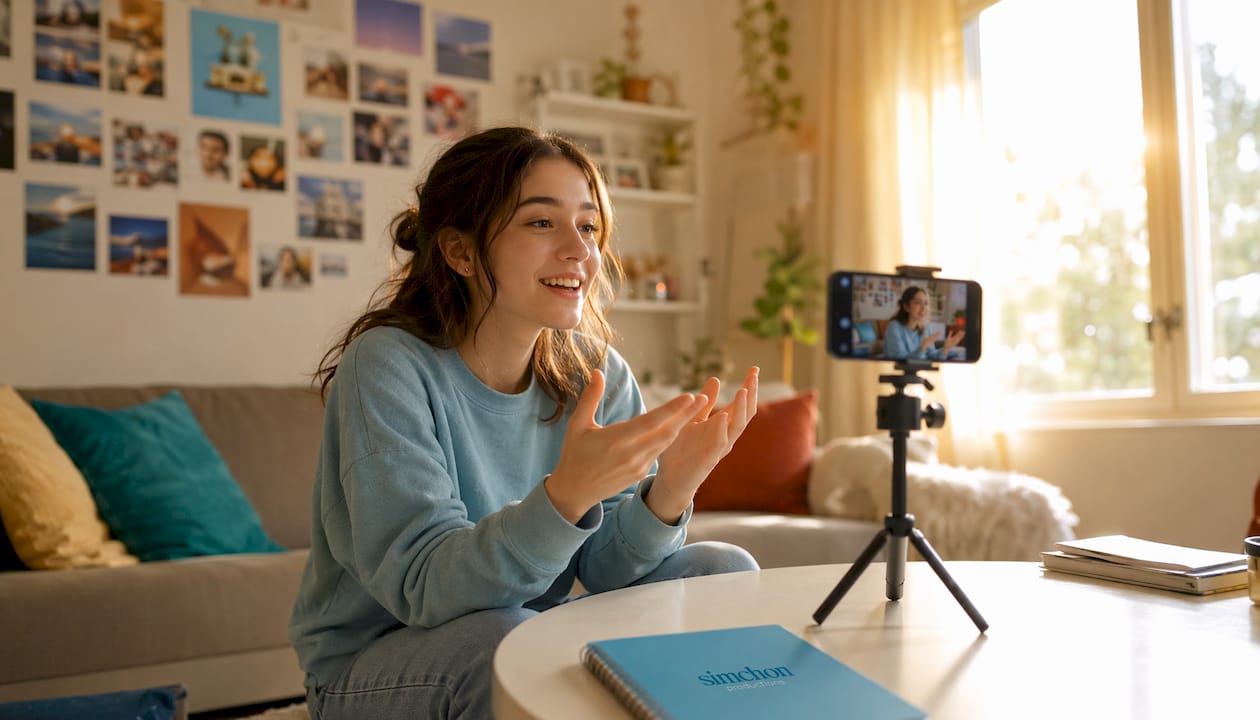
When a student speaks directly to camera about how a scholarship kept her in school during a family crisis, donors respond differently than they do to a paragraph describing the same situation. Video captures tone, hesitation, gratitude. Those details build trust faster than any copywriter can.
The University of Delaware’s Philanthropy Everywhere Campaign is a strong example of this in practice. The campaign used video to show philanthropy woven into everyday campus life, making giving feel less like a transaction and more like participation in something ongoing. The approach reframed the donor’s role entirely.
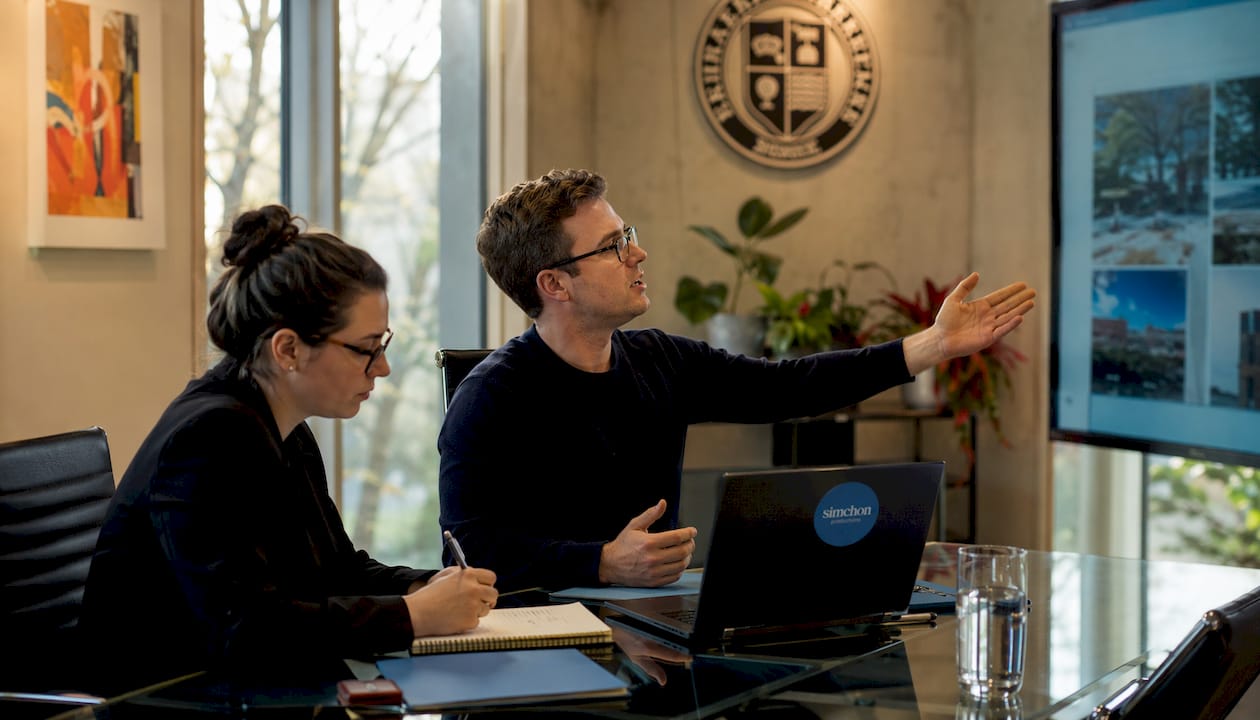
Emotional hooks work especially well when they personalize the stakes. Showing the actual person behind a matching gift, rather than just announcing the match deadline, creates urgency that donors feel rather than calculate. Highlighting the matching donor by name and story turns a financial mechanism into a human moment, and donors respond to deadlines differently when they know who they are helping.
Humor and nostalgia also have a place here. New Mexico State University’s Thank Every Aggie campaign used themed video parodies, including 80s-style productions, to thank over 17,000 donors monthly. The tone was playful, but the effect was serious: donors felt seen, appreciated, and entertained rather than solicited.
That quote captures something advancement professionals often underestimate. Personalization does not require one unique video per donor. It requires enough specificity that the donor feels the message was made with them in mind.
How video supports donor engagement, stewardship, and long-term retention
A single thank-you video is a nice gesture. A structured video sequence is a retention strategy. The difference between the two is intentionality about the donor journey.
Advancement experts recommend a sequenced approach: start with a personalized appeal, follow with a student testimonial that shows impact, then deliver an update video that closes the loop on what the gift accomplished. Each touchpoint reinforces the donor’s decision to give and makes the next ask feel natural rather than transactional.
Pro Tip: Address the donor by name within the first 10 seconds of any video. Personalized name mentions in the opening dramatically increase how long donors watch, and viewing time directly correlates with response rates.
Here is what an effective video stewardship cadence looks like in practice:
Personalized appeal video sent before a giving day or campaign launch
Student testimonial delivered mid-campaign to show real impact
Progress update on giving day to create momentum and urgency
Thank-you video within 24 hours of a gift, ideally from a student or faculty member
Impact report video sent 60–90 days post-gift to close the loop
Selfie-style, unscripted videos consistently outperform polished productions for stewardship touchpoints. UC Davis found that casual thank-you videos yield better donor feedback and stronger retention than highly produced alternatives. Donors respond to authenticity. When a video feels rehearsed and corporate, it loses the warmth that makes stewardship meaningful.
Segmentation matters here too. A donor who gave to the engineering school should hear from an engineering student, not a generic university spokesperson. Variable messaging within your video outreach, matched to donor interests and giving history, is what separates a good stewardship program from a great one. For a deeper look at how to build this kind of trust-building video strategy, the principles apply directly to donor relationships.
Cost-effective video production for university fundraising
Here is a myth worth busting directly: you do not need a production crew and a $20,000 budget to make a fundraising video that works. The evidence actually points the other way.
The videos that drive the strongest donor response are often filmed on a phone or tablet in under two minutes. UC Davis’s development team records most of their thank-you videos selfie-style, and the program costs a few thousand dollars per year for the software platform. That is a fraction of what a single produced video shoot costs, and the results speak for themselves.
Pro Tip: Involve student ambassadors in your video program. Student-led video programs provide authenticity that no professional actor can replicate, and students can record large batches of personalized videos in a single shift.
Practical ways to keep video production cost-effective without sacrificing quality:
Use student ambassadors paired to their own college or major for authentic, relatable messaging
Automate recurring videos like anniversary acknowledgments and pledge reminders to free staff capacity for higher-value work
Write teleprompter-style scripts with space for students to add a personal detail, balancing consistency with warmth
Film on tablets or phones for stewardship touchpoints; reserve higher production value for major campaign launches or capital campaign videos
Batch record in single sessions so students can produce dozens of personalized videos efficiently
The distinction between high-production and low-production video is not about quality versus no quality. It is about matching the format to the purpose. A giving day launch video benefits from strong production. A thank-you video from a student caller does not. Knowing which is which saves budget and often improves results. For guidance on when to invest in professional production, capital campaign video strategy is a useful reference point.
Content planning also matters. Maintain a video content library with clear governance so frontline fundraisers always have current, on-brand videos to share. Outdated video content undermines credibility and creates inconsistent messaging across your advancement team.
Measuring fundraising success and video content impact
You cannot improve what you do not measure. Video adds a layer of data to fundraising that email copy and direct mail simply cannot match.
When a donor opens a video email, you can see how long they watched, whether they clicked through, and whether they gave afterward. That data tells you which messages land and which ones lose viewers in the first 15 seconds. Text-based outreach gives you open rates and click rates. Video gives you retention curves.
KPI | What it measures | Why it matters for fundraising |
|---|---|---|
Video open rate | Percentage of recipients who play the video | Indicates subject line and sender effectiveness |
Viewer retention rate | How long donors watch before dropping off | Reveals where messaging loses attention |
Click-through rate | Clicks from video to giving page | Directly links video engagement to donation intent |
Gifts attributed to video | Donations from video-touched donors | Measures direct revenue impact of video outreach |
Donor retention rate | Year-over-year repeat giving | Shows whether video stewardship builds loyalty |
Boston University’s personalized video campaign achieved a 49% open rate with 60% viewer retention, which led directly to $130,000 in donations from the personalized video segment. Those numbers came from tracking every step of the donor journey through video analytics integrated with their email and CRM platforms.
Qualitative signals matter too. Donor feedback on thank-you videos, responses sent back through video reply tools, and comments from gift officers about donor conversations all add texture that raw click data cannot capture. At UC Davis, a donor responded to a Valentine’s Day video with a personal message about it being a bright spot during a difficult time. That kind of feedback tells you the relationship is real.
Integrate your video analytics with your fundraising CRM so you can segment future outreach based on engagement history. A donor who watched 90% of your impact video is a very different prospect than one who opened and closed it in five seconds.
Examples of successful university fundraising video campaigns
Real results from real programs make the case better than any general argument. These campaigns show what video actually produces when advancement teams commit to it.
Butler University used personalized video outreach for its giving day and raised $653,000 total, driving 44% more gifts than the prior year’s giving day. Nearly several hundred additional gifts came in, with personalized videos sent to 1,434 donors. Human-centric video messaging drove much higher click-through rates compared to standard solicitations.
Boston University deployed personalized video integrated into email outreach, achieving a high open rate and generating significant donations from the video-touched donor segment. Over 1,000 gifts came in on giving day, with 150 donors giving immediately after watching the video.
Illinois State University built a student ambassador video program that contributed to millions in annual gifts, and a single engagement-center conversation surfaced a major gift that would have been missed in a traditional phone program. Their approach paired students to their own colleges so conversations felt genuine rather than scripted.
New Mexico State University’s Thank Every Aggie campaign used 80s-themed video parodies and student-led content to thank thousands of donors monthly. The playful format kept donors engaged and made stewardship feel like something worth receiving rather than ignoring.
UC Davis built a thank-you video program that reaches thousands of donors monthly, filmed primarily on phones and tablets. A major donor who received a student impact video responded with an increased planned gift. The development team had not even intended to solicit her.
That reaction captures something important. When donors feel genuinely appreciated through video, the relationship shifts. They stop being transactional and start being invested. For advancement professionals exploring what this looks like in practice, higher education video case studies offer additional examples of student participation driving fundraising outcomes.
How video works best alongside your other fundraising channels
Video is not a replacement for direct mail, email, or phone outreach. It is the layer that makes all of them work harder.
Illinois State’s program illustrates this clearly. Their cadence anchors on direct mail, which Jillian Nelson, their Senior Managing Director of Annual Giving, says has grown rather than faded. Around that anchor, they layer personal video, email, text, and social touchpoints during focused six-to-eight-week micro-campaigns. Video does not replace the mail piece. It follows it up with a face and a voice that the letter cannot provide.
Email is where video gets distributed, and the combination consistently outperforms either channel alone. Boston University’s campaign used Vidyard personalized video embedded in email outreach, with social data driving segmentation and a dedicated microsite as the landing destination. Each channel had a role, and video connected them.
For giving days specifically, video works across the full arc: a teaser video before the day builds anticipation, a progress update during the day creates momentum, and a thank-you video after the day closes the loop. Donors who receive all three touchpoints feel like participants in something, not targets of a campaign.
Social media extends video reach beyond your direct donor list. Short clips from longer impact videos, student testimonials cut for Instagram or LinkedIn, and behind-the-scenes footage from campus events all give alumni a reason to share content with their own networks. That organic distribution is something no direct mail piece can replicate.
The key is treating video as part of a multi-channel donor journey rather than a standalone tactic. When video is integrated with your CRM, your email platform, and your direct mail calendar, it amplifies every other touchpoint and builds the kind of relationship that turns annual donors into planned giving prospects.
Key Takeaways
Video drives higher donor retention, larger gifts, and stronger engagement when it is authentic, sequenced, and integrated across fundraising channels.
Point | Details |
|---|---|
Message retention advantage | Video retains 95% of a message versus 10% for text, making it far more effective for fundraising appeals. |
Authenticity over production value | Selfie-style videos consistently outperform polished productions for donor stewardship and thank-you touchpoints. |
Scalable personalization | Student ambassador programs can produce thousands of personalized videos monthly, as Illinois State’s $8M annual giving program demonstrates. |
Measurable campaign impact | Boston University’s personalized video campaign achieved a 49% open rate and $130,000 in donations from the video-touched donor segment. |
Multi-channel integration | Video works best as part of a sequenced donor journey alongside direct mail, email, and social outreach, not as a standalone tactic. |
Ready to put video to work for your fundraising program?
Simchon Productions works with educational institutions and nonprofits to create video content that connects with donors and drives real results. Whether you need a giving day launch video, a student testimonial series, or a full campaign production, the team brings cinematic quality and authentic storytelling to every project.
See our work and find out what a well-crafted fundraising video can do for your next campaign.