Ten curated brand films with production ready takeaways, hero/60s/30s cut guidance, and a Simchon Productions checklist to plan and launch.

10 Brand Films Producers Can Copy: Hero, 60s and 30s Cuts
A brand film is a short cinematic story built around one human protagonist and a clear tension, with the brand appearing only after the audience has earned an emotional reason to care. Studying real examples matters because it shows you the exact structure, pacing, and distribution choices that separate a film people share from one they scroll past. Simchon Productions treats these examples as working case studies, not inspiration boards.
TL;DR:
Creating a brand film requires defining a specific audience and success metrics during Discovery to ensure targeted messaging and effective distribution planning from the start.
Using a single protagonist with a concrete problem enhances empathy and emotional engagement, while craft elements like cinematography and sound should build gradually until the brand appears as an earned outcome.
Producing multiple cut versions simultaneously and planning distribution across channels from day one maximizes engagement and prevents footage from sitting unused or getting improperly cropped.
Budgets range from approximately $15,000 to over $120,000, with higher-tier productions offering more crew, shoot days, and post-production polish, but all must deliver essential cuts for various platforms.
Failure to plan distribution, measure success, or differentiate between a film and a product demo often leads to underperformance and wasted effort post-launch.
Table of Contents
What makes a great brand film?
What are the best brand film examples to study right now?
What patterns show up across the best brand films?
What is the actual production process for a brand film?
What does a brand film actually cost, and how long does it take?
How do you brief and evaluate a production partner?
What genres and styles of brand films work best?
What mistakes ruin most brand film projects?
How do brand films fit into a broader marketing strategy?
Simchon Productions’ view: how we approach brand films and what we prioritize
Ready to plan your own brand film?
Sources
FAQ
What makes a great brand film?
A great brand film earns its emotional payoff instead of announcing it. The best ones follow a narrative arc almost every viewer recognizes without realizing why: tension first, a real person to root for, then a resolution where the brand shows up as the answer to a problem the audience now feels invested in.
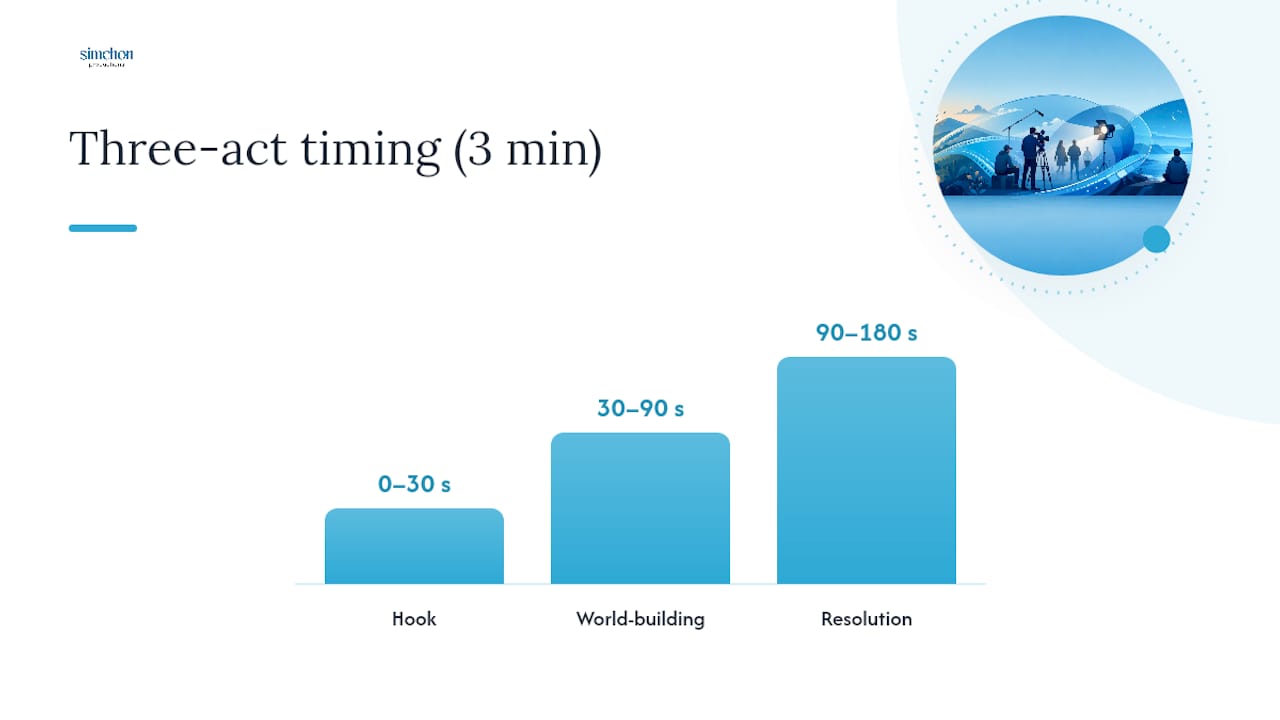
This structure isn’t accidental. Brand films that perform well tend to use a three-act narrative: a hook in the first 30 seconds, world-building around a single protagonist from 30 to 90 seconds, then a resolution where the brand becomes an earned outcome rather than an interruption.
Specificity does the heavy lifting here. One protagonist with a concrete problem creates more empathy than a montage of happy customers ever will, because viewers connect with a person’s situation, not with a demographic.
Beyond story, craft carries the emotional weight:
Cinematography that reflects the protagonist’s world, not a stock studio look
Sound design that builds tension quietly, then releases it
Pacing that slows down for the human moment and speeds up for transitions
Editing that never rushes the emotional beat just to fit a runtime
A brand film is a cinematic expression of what a company believes, not a product demo or a corporate overview. If your film explains features, it’s not a brand film. It’s an ad wearing a brand film’s clothes.
Distribution planning has to start before the camera rolls, not after the edit locks. A film built for a 3-minute hero cut alone will fail on Instagram Reels. One built with multiple lengths in mind from day one works everywhere it needs to.
Pro Tip: Write your distribution plan on the same page as your treatment. If you can’t name where a scene will live (owned site, paid social, a 15-second teaser), cut it before you shoot it.
What are the best brand film examples to study right now?
The ten films below each teach one repeatable technique you can lift directly into your next brief, whether you’re producing in-house or briefing an outside crew.
Nike, “Dream Crazy” (YouTube). Protagonist: Colin Kaepernick, standing in for anyone told their ambition is too much. Tension: the gap between doubt and belief. The brand appears only in the final logo card after two minutes of pure conviction. Takeaway: silence and narration can do more than a music bed when the message is strong enough to carry itself. Second takeaway: a controversial protagonist raises stakes and share rate simultaneously.
Apple, “The Underdogs” (YouTube, three-part series). Protagonist: a scrappy small business team facing a corporate rival. Tension: proving they belong in the room. The brand appears as the tool that levels the field, not the hero. Takeaway: humor works in brand film when it never undercuts the stakes. Second takeaway: a series format lets you build a returning audience instead of a one-off view.
Patagonia, “Worn Wear” (Patagonia’s owned channel and YouTube). Protagonist: a longtime customer and their repaired jacket. Tension: consumerism versus durability. The brand appears through repair technicians, not marketing language. Takeaway: letting the product’s flaws show builds more trust than hiding them. Second takeaway: documentary-style handheld footage signals authenticity faster than polished studio shots.
Airbnb, “We Accept” (YouTube). Protagonist: a montage of real people across identities and backgrounds. Tension: exclusion versus belonging. The brand appears only in the final ten seconds as a quiet statement. Takeaway: a values-first film can skip a single protagonist if the theme itself is universal enough. Second takeaway: brevity (under 60 seconds) increases the odds of organic reshares during a cultural moment.
Dove, “Real Beauty Sketches” (YouTube). Protagonist: everyday women describing themselves to a forensic sketch artist. Tension: self-perception versus how others see us. The brand appears as the closing message, not a product shot. Takeaway: a simple experiment format can outperform an expensive set if the emotional reveal is genuine. Second takeaway: letting the camera sit on unscripted reactions beats any written line of dialogue.
Google, “Parisian Love” (YouTube). Protagonist: an unnamed man using search queries to fall in love, move abroad, and start a family. Tension: told entirely through search bar text, no dialogue. The brand appears as the literal interface the whole story lives inside. Takeaway: you can build a full emotional arc using only your own product’s native format. Second takeaway: minimalism (no faces, no voiceover) can feel more intimate than a fully cast film.
REI, “#OptOutside” (REI’s owned channel). Protagonist: REI’s own employees and customers choosing time outdoors over Black Friday shopping. Tension: consumer culture versus personal values. The brand appears by literally closing its stores on camera. Takeaway: an action (closing on the biggest sales day of the year) is a more credible brand statement than any line of copy. Second takeaway: founder-or-employee-led decisions read as more truthful than actor-led scripts.
Chevrolet, “Maddie” (YouTube). Protagonist: a young girl with Down syndrome and her mother. Tension: raw home-video footage building to a genuine emotional reveal. The brand appears as a brief mention near the end, almost as an afterthought. Takeaway: real footage, even shot on a phone, can outperform cinematic polish when the emotion is unstaged. Second takeaway: a short runtime (under two minutes) keeps a vulnerable story from feeling exploited.
Guinness, “Wheelchair Basketball” (YouTube). Protagonist: a group of friends playing wheelchair basketball. Tension: the twist reveal that only one player actually needs the wheelchair. Music-driven emotional build with almost no dialogue until the final line. Takeaway: a single well-placed twist can carry an entire film’s emotional payoff. Second takeaway: a tagline delivered once, at the exact right moment, beats repeating it three times.
Always, “Like a Girl” (YouTube). Protagonist: young girls and adult participants asked to demonstrate actions “like a girl.” Tension: the gap between childhood confidence and how phrases erode it with age. The brand appears through the campaign’s message, not a product shot. Takeaway: a social experiment format generates its own tension without a written script. Second takeaway: contrasting two age groups on camera is a fast way to make an abstract point concrete.
What patterns show up across the best brand films?
Every film on that list follows the same rough timing, even though the subjects couldn’t be more different. The first 30 seconds establish tension or a question. The next 30 to 90 seconds sit inside one person’s world. The final act lets the brand appear only after the audience already cares.
That single-protagonist choice isn’t a stylistic preference. Picking one specific person with a named stake creates faster empathy than a cast of extras ever will, because audiences connect with a situation they can picture themselves in, not a category of people.
Craft choices reinforce the same restraint. The strongest brand films use intentional restraint: cinematography, pacing, and sound that hold back until the brand moment has actually been earned. Sound especially does quiet work here. A rising score or a sudden silence tells the audience when to feel something before a single word of dialogue does.
Platform awareness separates films that actually get watched from films that get made and forgotten:
Build for sound-off viewing on social feeds with visual storytelling that doesn’t depend on dialogue
Front-load the hook in the first three seconds for paid placements, since most viewers decide to stay or scroll almost instantly
Cut a version with captions burned in for silent autoplay environments
Never assume the 3-minute hero cut will get cropped correctly by an algorithm; cut the shorter versions yourself
Pro Tip: Watch your rough cut with the sound off before you lock picture. If the story still makes sense visually, your pacing and shot choices are doing their job.
What is the actual production process for a brand film?
Brand film production runs through five phases: Discovery, Pre-production, Production, Post-production, and Distribution. Skipping any phase, especially Discovery, is the single biggest reason brand films underperform after launch.
A workflow that moves through Discovery, Pre-production, Production, Post, and Distribution in order prevents the misalignment and cost overruns that show up when distribution planning gets left until after the film is already edited. Here’s what each phase actually needs to produce:
Discovery. Define the audience in specific terms, not “millennials” or “our customers.” Set 2 to 3 measurable success metrics before writing a single word of script. Draft the distribution plan (owned, organic, paid, creator seeding, press) at this stage, not later.
Pre-production. Lock a written treatment and full script. Build a shot-day schedule with buffer time. Compile an asset list covering every cut length you’ll need later.
Production. Direct your protagonist for authentic, unscripted-feeling delivery. Protect continuity across takes so the edit isn’t fighting mismatched lighting or wardrobe. Capture extra footage specifically for shorter cutdowns while you have the crew and location.
Post-production. Edit against the original brief, not against what looks pretty. Secure music licensing early, since a rejected track late in post can delay delivery by weeks. Color grade for consistency across every cut. Build your 90-second hero, 60-second, and 30-second versions simultaneously rather than sequentially.
Distribution. Deliver correctly formatted files for each platform. Prepare custom thumbnails and burned-in captions. Launch on a 90-day content calendar instead of a single publish date.
Phase | Primary deliverable | Common mistake if skipped |
|---|---|---|
Discovery | Audience definition and success metrics | Film has no clear measurement plan |
Pre-production | Treatment, script, shot schedule | Costly reshoots and scope creep |
Production | Footage for hero cut plus cutdowns | No usable material for shorter edits |
Post-production | Color-graded, multi-length edits | One long cut with no social versions |
Distribution | 90-day launch calendar | Film gets one publish and disappears |
A single well-planned shoot day can supply a hero film, social cutdowns, stills, and behind-the-scenes content all at once, which stretches a production budget far further than scheduling separate shoots for each asset.
What does a brand film actually cost, and how long does it take?
Brand film budgets generally fall into three brackets, and each one buys a different level of crew, shoot time, and post-production scope. Knowing which bracket you’re in before you brief a vendor keeps expectations realistic on both sides.
Reported budget ranges run from Lean at $15,000 to $40,000, Mid at $40,000 to $120,000, up to Elevated brand films at $120,000 or more, with the difference showing up in crew size, shoot days, and how much post-production polish the project gets.

Every tier should still deliver the same set of required cuts: a full hero film, a 60-second version for paid social, a 30-second pre-roll, and platform-specific intros for the first three seconds on each channel. Each cut needs to work as a complete story, not a trailer for the longer version.
Once the film launches, measure it against retention benchmarks, branded search lift, and share rate rather than immediate return on ad spend. Brand films build awareness and trust over weeks, and these longer-horizon metrics reflect that better than a single conversion number ever will.
How do you brief and evaluate a production partner?
Ask any production partner to walk through their audience definition and success metrics before they talk about equipment or style. If a vendor jumps straight to camera packages without asking who the film is for, that’s a signal to keep looking.
Process questions matter just as much as creative ones:
Do you deliver simultaneous edits (hero, 60s, 30s) or only the long cut?
Who owns the rights to the footage and music after delivery?
How many rounds of revisions are included, and what happens after that?
What file formats and caption files come with final delivery?
Trust signals separate a serious partner from a vendor reading from a sales script. Ask for a director’s reel, sample storyboards from past projects, and direct client references you can actually call. A written measurement plan tied to the film’s goals is one of the clearest signs a partner treats production as a business investment, not just a creative exercise.
Pro Tip: If a vendor can’t name a single metric they’d use to judge their own film’s success, they haven’t planned past delivery day.
Watch for red flags: no distribution plan mentioned until after the shoot, no sample suite of past cutdowns, or a vague, one-line answer about their post-production process. Every one of those points to a film that will get made but never properly launched.
What genres and styles of brand films work best?
Brand films split into several recognizable styles, and picking the right one depends on your protagonist and your message, not on what’s trending. Documentary-style films, like Patagonia’s repair-focused content, work best when authenticity matters more than polish and the subject can carry a handheld, unscripted feel.
Founder-led films work when the person behind the brand has a genuinely compelling personal stake in the story, not just a title. Social experiment formats, like Dove’s sketch artist film or Always’ “Like a Girl,” generate tension without a written script, letting real reactions do the emotional work. Values-driven manifesto films, like Airbnb’s “We Accept,” skip a single protagonist entirely and instead build around a universal theme delivered through a fast montage.
Music-driven emotional builds, like the Guinness wheelchair basketball film, lean on score and a late reveal rather than dialogue to carry the story. Product-native storytelling, like Google’s “Parisian Love,” tells a full story using only the brand’s own interface or format, which works when your product itself has a visual or interactive language worth showcasing.
None of these styles is inherently better than another. The right choice depends on whether your strongest asset is a real customer, a founder’s story, an experiment you can film in real time, or a values statement that doesn’t need a single named character to land.
What mistakes ruin most brand film projects?
Most failed brand films share the same root cause: distribution and measurement get treated as an afterthought instead of a planning input. A film shot without knowing where it will live almost always needs expensive reshoots or gets cropped badly for the platforms that matter most.
Trying to fit a product demo into a brand film format is another common trap. A brand film is a cinematic expression of what a company believes, not a features walkthrough with better music. If your script spends more time on specifications than on a person’s problem, you’ve built an ad, not a brand film.
Casting too many protagonists dilutes empathy instead of expanding reach. A crowd of extras rarely lands as hard as one specific person with a named stake in the outcome. Rushing post-production to hit a launch date is another frequent mistake. Editing against the brief instead of against a deadline keeps the story’s emotional beats intact instead of cut for time.
Skipping music licensing until late in the process causes real delays. A track that gets rejected during final review can push delivery back by weeks if there’s no backup cleared in advance. Finally, publishing once and moving on wastes most of the film’s potential value. A 90-day launch architecture across owned, organic, paid, creator seeding, and press channels consistently outperforms a single publish date.
How do brand films fit into a broader marketing strategy?
A brand film works best as the emotional anchor of a campaign, not a standalone asset released and forgotten. It sets the tone that shorter ads, social posts, and email content can reference and build on for months after launch.
Distribution planning should map the film across five channels: owned (website, email), organic (social posts, employee sharing), paid (social ads, pre-roll), creator seeding (influencer or partner reposts), and press (media placement or trade coverage). Planning distribution before shooting rather than after editing keeps every channel supplied with the right cut length from day one.
The film’s cutdowns become raw material for the rest of the marketing calendar. A 30-second version becomes a paid social ad. A 15-second clip becomes a story ad. Behind-the-scenes footage from the same shoot day fuels organic content for weeks. Treating one shoot as a content engine, not a single deliverable, is what makes the budget work harder over time.
Cross-disciplinary work also strengthens the final product. Teams handling visual concept and packaging design alongside video production often produce a more cohesive brand story, since the visual language in the film should match what customers see on shelf or on-screen elsewhere.
Simchon Productions’ view: how we approach brand films and what we prioritize
We build every brand film around one protagonist, because a room full of secondary characters dilutes the exact empathy a brand film needs to work. That choice happens in Discovery, before a script exists, because the wrong protagonist can’t be fixed in the edit.
We also cut three lengths at once, not sequentially, because a 30-second version made as an afterthought almost always feels like a trailer instead of its own complete story. Distribution gets mapped during pre-production too. A film without a home before it’s shot tends to sit unused after delivery.
[Client case study placeholder: nonprofit brand film results]
[Client testimonial placeholder: healthcare marketing director]
— Tzvi Simchon
Ready to plan your own brand film?
A video production company can produce cinematic brand films, nonprofit videos, and healthcare marketing videos for organizations in a given region, following a Discovery-first process.
Some production shops hand you a single long cut and call the job done, but a well-planned approach includes the hero film, social cutdowns, and distribution timeline together, so you leave the shoot with a full asset suite instead of one video requiring re-editing. If you’ve read through the examples above and recognized the gaps in your current video content, that’s usually the moment to start a real conversation about your next project.
Browse the video production portfolio to see completed brand films across nonprofit, healthcare, and institutional clients, or visit Simchon Productions to request a quote for your next brand film.
Sources
The Complete Guide to Building a Brand Film That Actually Converts – D2C Times
Brand Film Production & Branded Content Guide 2026 — Hammerhead
Branded Video Production Process That Performs — Wild A Productions
FAQ
What is a brand film?
A brand film is a cinematic story built around a human protagonist and a real tension, where the brand appears only after the audience has an emotional reason to care, rather than a product demo or corporate overview.
What is an example of a brand story?
Patagonia’s “Worn Wear” film follows a real customer and their repaired jacket to tell a story about durability over consumerism, with the brand appearing through repair technicians instead of marketing language.
What is an example of a brand image?
REI’s decision to close its stores on Black Friday and film that choice for “#OptOutside” builds a brand image through action rather than through a tagline or logo placement.
How do you make a brand film?
Making a brand film starts with Discovery to define your audience and success metrics, moves through pre-production scripting and scheduling, then production, post-production, and a planned distribution launch, ideally guided by a production partner like Simchon Productions that plans multiple cut lengths from the start.
How much does a brand film cost?
Brand film budgets typically fall into qualitative categories such as lean, mid-tier, and elevated productions, each associated with increasing scale, crew size, and production complexity.