A production first guide for communications directors to plan, budget ($3,000–$15,000), and measure nonprofit brand films, with clear legal and...
$5,000–$10,000 Nonprofit Brand Films for Communications Directors

A nonprofit brand film is a story-driven, donor-facing video that builds trust by showing your mission through one real person’s experience, and organizations like Simchon Productions, guidelines from WCAG, and privacy rules from HIPAA all shape how a good one gets made. You need one when you’re preparing a gala ask, redesigning your homepage, or pitching a major donor who needs to feel your impact, not just read about it. Most brand films run 60 to 180 seconds for social and homepage use, while full mission films run 3 to 7 minutes. Budgets typically fall between $3,000 and $15,000 depending on scope.
TL;DR:
Most nonprofit mission films cost between $3,000 and $15,000, with $5,000 to $10,000 being the typical range for a professionally shot 3 to 7 minute video.
Planning starts with a one-page brief that addresses goals, audience, core message, call to action, and distribution channels to avoid budget overruns and achieve emotional clarity.
Distribute videos on your homepage, donation pages, social media, and email campaigns to maximize long-term impact and donor engagement.
Verify consent, accessibility, and legal compliance before filming, including HIPAA considerations if health information appears on camera.
The full production process spans 8 to 12 weeks, including preproduction, 1 to 3 shooting days, and postproduction with deliverables ready for various platforms.
Table of Contents
What Types of Nonprofit Brand Films Should You Consider?
How Do You Plan and Budget a Nonprofit Brand Film?
What Happens During Production and Editing?
How Do You Distribute and Measure a Nonprofit Film’s Impact?
What Ethical and Legal Steps Protect Your Nonprofit and Its Subjects?
How Does Simchon Productions Apply This to Real Projects?
Ready to See What a Mission Film Could Do for Your Organization?
Sources
FAQ
What Types of Nonprofit Brand Films Should You Consider?
The right film type depends on where it will live and what job it needs to do. A gala reel and a homepage film are not the same project, even if they use the same footage.
Here’s how the main formats break down:
Mission film. Runs 3 to 7 minutes. Lives on your homepage or plays at your annual gala. Tells the origin story and the “why” behind your work. Goal: build long-term trust with major donors and board members.
Fundraising film. Runs 90 seconds to 3 minutes. Used in email campaigns and year-end appeals. Focuses on urgency and a specific ask. Goal: drive donations, tracked by conversion rate on the linked donation page.
Impact or testimonial film. Runs 2 to 4 minutes. Features a person your organization served, told mostly in their own words. Lives on program pages and in grant applications. Goal: prove outcomes to funders and skeptical prospects.
Social cuts. Run 15 to 60 seconds. Built for Instagram, LinkedIn, and Facebook. Pull the strongest emotional beat from a longer film. Goal: awareness and shares, tracked by view rate and watch time.
Event reel. Runs 60 to 90 seconds. Recaps a gala or fundraiser for next year’s invite or a thank-you email. Goal: donor retention and event registration lift.
Nonprofit storytelling works because it turns an abstract mission statement into a concrete moment a donor can picture. The National Council of Nonprofits lists storytelling as a core communications practice precisely because it moves supporters from “I understand this cause” to “I trust this organization.” Pick one film type per project. Trying to make a mission film also serve as a fundraising ask usually weakens both goals.
How Do You Plan and Budget a Nonprofit Brand Film?
You plan a nonprofit brand film by writing a one-page brief before you contact anyone, then matching your budget to the film type and story complexity you actually need. Skipping the brief is the single most common reason projects run over budget or miss the emotional mark.
Your one-page brief should answer five questions plainly:
Goal. What action do you want the viewer to take after watching?
Audience. Major donors, first-time visitors, or grant reviewers each respond to different pacing and detail.
Single message. One sentence. If you can’t state it in one sentence, the film will feel scattered.
Call to action. Donate, volunteer, share, or attend. Pick one.
Where it will live. Homepage, gala screen, email, or social feed. This decides length, aspect ratio, and captioning needs.
Story selection matters as much as the brief. Before you commit to a subject, check for an emotional arc (a before and after, not just a description of need), visible impact you can film, genuine willingness to participate on camera, and a cast that reflects the community you actually serve, not just your most photogenic client.
Budget ranges shift with scope. Kolstad Media’s nonprofit guide puts full mission films in the $3,000 to $15,000 range, with a $5,000 to $10,000 “sweet spot” for a professionally shot 3 to 7 minute film. Here’s what drives that range:
Cost Driver | Lower Cost | Higher Cost |
|---|---|---|
Crew size | 1 to 2 person crew | 3+ person crew with gaffer, sound |
Shoot days | Half day, single location | 2 to 3 days, multiple locations |
Music and licensing | Royalty-free library track | Custom score or licensed song |
Drone footage | None | Certified operator with permits |
Timeline follows a predictable rhythm. Plan for 2 to 4 weeks of preproduction (scripting, scheduling, consent forms), 1 to 3 days of shooting, and 3 to 6 weeks of postproduction. Kolstad Media notes that total lead time from kickoff to delivery usually runs 8 to 12 weeks. Build that timeline backward from your gala date or campaign launch, not forward from when you first call a production company.
What Happens During Production and Editing?
Production for a nonprofit brand film happens in three stages: preproduction planning, the shoot itself, and postproduction editing. Each stage protects a different part of your film’s emotional and legal integrity.
Preproduction is where you prevent problems, not react to them. Your team should:
Prep interview questions in advance, and share them with subjects so nobody freezes on camera.
Collect signed consent and location release forms before the crew arrives, not after.
Confirm your accessibility plan now, including who will handle captions and transcripts after the edit.
Scout locations for clean audio, not just good light. A beautiful room with an HVAC unit humming in the background will cost you hours in postproduction.
On shoot day, priorities shift toward capturing what the edit will need. Clean audio matters more than a perfect frame; a viewer forgives soft focus far faster than they forgive muffled speech. Interviewing takes empathy, not a script read verbatim. Ask open questions, sit in silence after an answer, and let subjects finish their thought before you move on. B-roll should show impact in motion, hands doing the work, a meal being served, a classroom in session, rather than another static shot of someone’s face.
Postproduction is where the story actually gets built. Editors cut for narrative arc first, then layer in music (licensed correctly), color grading, and a sound mix that keeps dialogue front and center. Captions and a full transcript get produced here, not bolted on afterward.
Pro Tip: Ask your editor for a rough cut before final color and sound. It’s far cheaper to fix a story problem at that stage than after the film is polished.
Your final deliverable set should include the hero film, a 30 second and 60 second cut for social, a burned-in caption version, a separate SRT caption file, and exports formatted for web, email, and vertical social feeds.
How Do You Distribute and Measure a Nonprofit Film’s Impact?
You distribute a nonprofit brand film by placing it where donors already make decisions, then reusing it across channels for years instead of retiring it after one campaign. Planning that reuse before you shoot a single frame changes what footage you capture.
Launch priorities in order of impact:
Embed the hero film on your homepage and directly on the donation page, since that’s where a warm visitor converts.
Send it in a dedicated email, not buried in a newsletter roundup.
Screen it at your gala before the ask, timed to build emotional momentum right before pledges.
Run the 30 second cut as targeted social promotion to warm audiences, not cold prospecting.
Kolstad Media’s planning guide makes the case directly: organizations that map distribution before production get more mileage out of the same footage, often reusing a single mission film across newsletters, grant applications, and board presentations for two or three years.
Video storytelling moves donors. Think Branded Media’s guide reports that donors who watch a strong mission video are measurably more likely to give than those who only read text, and campaigns built around authentic on-location stories tend to see stronger returns than static appeals.
Track these metrics after launch: view rate (what percentage of page visitors press play), average watch time, donation conversion lift on pages with the video versus without it, email click-through rate on the video link, and event attendance lift if the film promoted a fundraiser. Set your benchmark before launch, not after, so you know if a 40% completion rate is a win or a warning sign for your organization specifically. For deeper strategy on repurposing footage into a full donor journey, see this breakdown of video content types that attract donors.
What Ethical and Legal Steps Protect Your Nonprofit and Its Subjects?
Nonprofit organizations protect subjects and stay compliant by documenting consent in writing, following accessibility standards, and getting proper permits before any drone leaves the ground. Skipping these steps creates liability that outlasts the film itself.
Build these into every project checklist:
Use a written, informed consent and release form for every person on camera, and explain plainly what the footage will be used for and where it will run.
Take extra care with vulnerable subjects, including minors, patients, and people in crisis, and never film without a guardian or advocate present when required.
If any health information appears on camera, consult HHS guidance on HIPAA before you shoot, and redact or anonymize any protected health detail that isn’t necessary to the story.
Provide captions and a full transcript for every public video, following WCAG accessibility standards.
If your organization serves government funders, check Section 508 requirements for any video used in grant deliverables.
Get a licensed operator and proper FAA drone authorization before shooting any aerial footage, and confirm the operator holds current remote pilot certification.
A consent form signed the morning of the shoot, rushed and unread, is not informed consent. The people who trust you with their story deserve time to understand exactly how it will be used.
How Does Simchon Productions Apply This to Real Projects?
Every nonprofit project should be built on an audience-first brief, matching interview style and pacing to the target viewer, whether a major donor or a social scroller. Interviews benefit from empathetic patience, and B-roll should show impact in motion, not just posed portraits. Deliverables typically include a hero film alongside social cuts, full caption files, and a launch plan built before the shoot, not after.

— Tzvi Simchon
Ready to See What a Mission Film Could Do for Your Organization?
A cinematic approach built around one honest story tends to hold attention through the ask, stronger than a generic or rushed in-house video that often loses donors early.
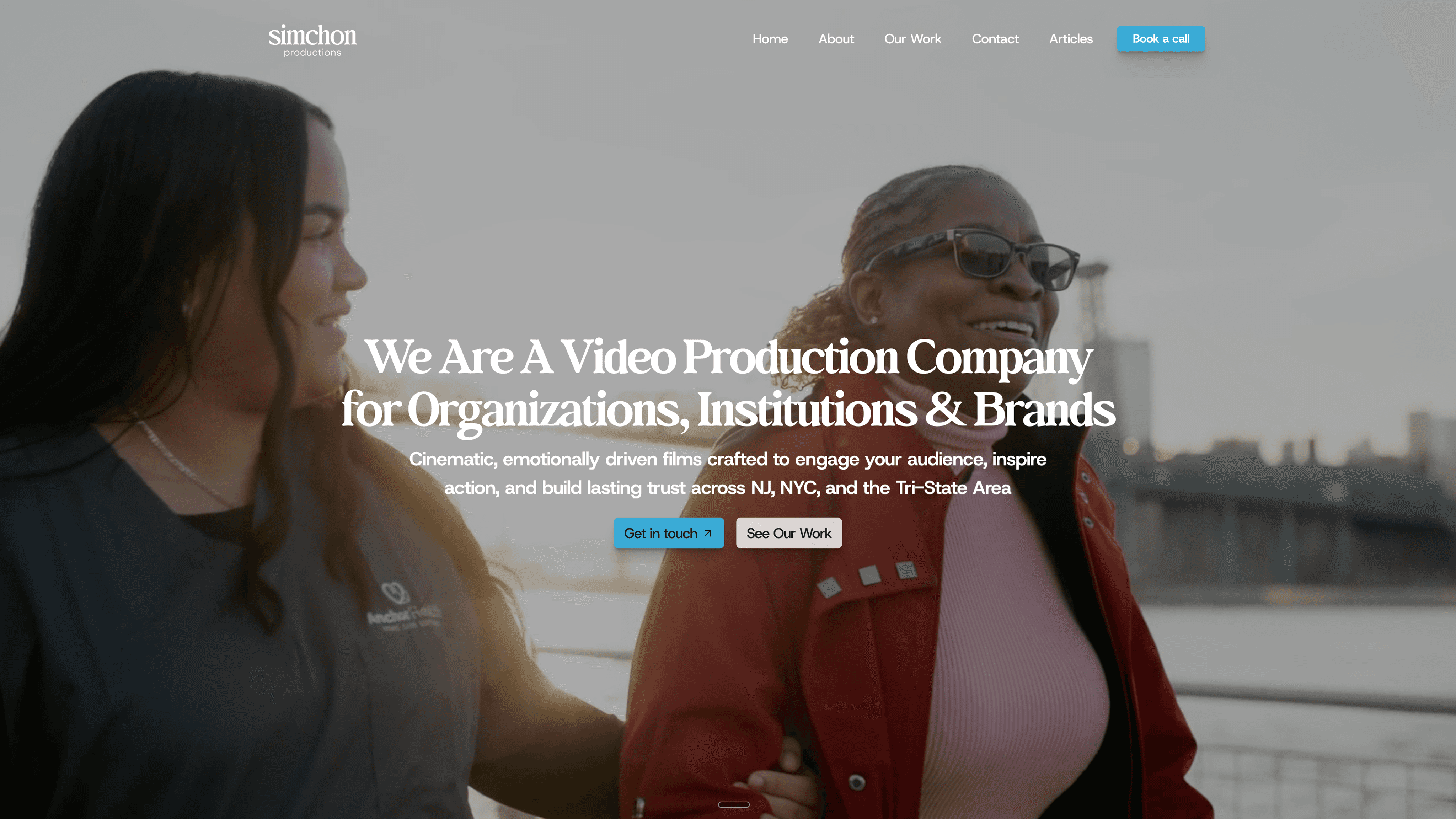
Every project starts with the same brief-first process outlined above: goal, audience, single message, and a distribution plan built before the camera rolls. That includes the hero film, social cuts sized for your channels, and full caption files ready for accessibility compliance. For a closer look at how a mission story comes together on screen, review this guide to mission story video best practices, and see how postproduction shapes the final emotional impact in this practical guide to nonprofit post-production. If your team is preparing subjects for on-camera interviews, this guide to video interview strategy covers useful prep tactics as well.
Visit Simchon Productions to view recent nonprofit work, request a project estimate, or ask about adding social cuts to an existing film.
Sources
Video Production for Nonprofits: A Complete Guide | Kolstad Media
Nonprofit storytelling: six reasons to start telling great stories | National Council of Nonprofits
Best Practices for Nonprofit Video Storytelling: Complete Guide for 2026 | Think Branded Media
FAQ
How Long Should a Nonprofit Brand Film Be?
Mission films typically run 3 to 7 minutes for homepage or gala use, while fundraising and social cuts run 60 to 180 seconds depending on the platform.
How Much Does a Nonprofit Brand Film Cost?
Budgets generally fall between $3,000 and $15,000, with a $5,000 to $10,000 range covering most professionally shot 3 to 7 minute mission films.
How Long Does It Take to Produce a Nonprofit Film?
Expect 8 to 12 weeks total, broken into 2 to 4 weeks of preproduction, 1 to 3 shoot days, and 3 to 6 weeks of postproduction.
Do Nonprofit Videos Need Captions?
Yes. Captions and transcripts are recommended under WCAG accessibility guidelines, and grant-funded videos may also need to meet Section 508 standards.
What’s the Difference Between a Mission Film and a Fundraising Film?
A mission film explains your organization’s why and builds long-term trust, while a fundraising film makes a specific, time-bound ask tied to a campaign or appeal.