Editor curated examples, production grade checklists, and Simchon case studies that show how to make donors care in 15 seconds. Includes a 60–90s hero...

Annual Giving Video Checklist for Advancement Teams
The best annual giving video is a 60 to 90 second donor story built around one person’s real impact, paired with 15 to 60 second vertical cuts for social and email. Emotional, specific storytelling drives gifts, and short vertical edits get the story in front of more donors. Your next step: write a one-paragraph donor story outline and book a half-day shoot this month.
TL;DR:
Short vertical clips, around 15 to 60 seconds, effectively expand outreach on social media, while the main 60 to 90 second video should go on your campaign page and email.
Using real recipients and specific outcomes in videos outperforms polished montages or broad mission statements, increasing donor engagement.
Incorporating a three-part script structure—hook, impact, and ask—within the first 15 seconds and tying the ask to a deadline boosts conversions.
Successful videos are typically produced with a moderate budget, emphasizing cinematic quality and thorough planning, and require several weeks from concept to final delivery.
Measuring success relies on tracking click-to-donate rates and gift size increases, rather than just total views, with UTM links and dedicated landing pages helping isolate campaign impact.
Table of Contents
What Makes an Annual Giving Video Successful?
What Script and Storytelling Rules Actually Convert Donors?
How Much Does an Annual Giving Video Cost to Produce?
Where Should You Publish Each Video Cut?
How Do You Know If Your Annual Giving Video Worked?
What Do Simchon Productions’ Case Studies Show About Donor Video?
A Practitioner’s Take on Annual Giving Video
How Simchon Productions Can Help With Your Next Campaign
Sources
FAQ
What Makes an Annual Giving Video Successful?
The most successful annual giving videos share one trait: they make a stranger care about a specific person in under 15 seconds. Annual giving is the organized, recurring push to fund an organization’s daily operations, not a building or an endowment, so the video’s job is to make that unglamorous need feel personal and urgent right now, according to Blackbaud.
Here are examples worth studying, and what to copy from each one.
Princeton’s Reunions testimonial film. Princeton’s Annual Giving team filmed alumni on campus during Reunions weekend, letting peers describe in their own words why the school mattered to them. The result connected alumni to the institution through people they recognized, not a narrator. Copy this: film testimonials at an event your donors already attend, where nostalgia is doing half the emotional work for you.
New Mexico State University’s stewardship series. NMSU sent personalized thank-you videos to 17,000 past donors using themed content, including 1980s parody videos and student-recorded messages, and saw high open rates through ThankView. Copy this: a templated video format with swapped-in names and small custom details scales personal thanks without a full reshoot for every donor.
CASE FundList’s clever appeal ideas. Peer institutions have shared creative annual appeal concepts ranging from on-campus donor races to personalized bookplates mailed with a short video link. Copy this: borrow a tactile, shareable hook and pair it with a short video that explains the idea in one breath.
A single-family stewardship clip. A short vertical video showing exactly what one gift funded, a scholarship recipient’s face, a classroom, a meal program, works because it replaces an abstract mission statement with a specific outcome a donor can picture.
The through-line across all four: specificity beats polish. A shaky phone video of a real recipient will outperform a glossy montage with no named beneficiary.
What Script and Storytelling Rules Actually Convert Donors?
The videos that convert use a three-part script formula: hook, impact, ask. Skip any one of the three and giving drops.
Hook in the first 3 to 15 seconds. Open on a face, a question, or a surprising detail, never on a logo or a slow fade-in. Donors decide whether to keep watching within the first few seconds on every platform.
Build the arc around the donor, not the organization. Structure the middle as “here’s a person, here’s what almost didn’t happen, here’s what your gift changed.” Keep the organization as the enabler, not the hero.
Land on a specific, urgent ask. “Give $50 today” outperforms “consider supporting our mission.” Tie the ask to a deadline when you can, since a meaningful share of annual gifts happen in December, so appeals timed ahead of year-end tend to perform best, per Fellowship Development.
Match length to platform. Plan a 60 to 90 second hero cut for email and your campaign page, then trim 15 to 60 second vertical versions for Instagram, TikTok, and Facebook Reels. Caption every version, since most viewers watch social video with sound off.
Test before you scale spend. A/B test two thumbnail images, two subject lines carrying the video link, and two short-clip calls to action before committing your full media budget.
Pro Tip: Cut a 15-second version first, then build up to the 90-second hero edit. It forces you to identify the one moment that actually matters, and that moment usually becomes your best hook anyway.
How Much Does an Annual Giving Video Cost to Produce?
A donor story film typically runs in three budget bands, and each band buys a different level of crew and post-production time. Low-budget projects run lean with a single shooter; high-budget projects add lighting, sound, and multiple edit rounds.
Plan a timeline of several weeks from concept to final delivery including concept approval, scheduling, shooting, and editing phases.
Before any camera rolls, confirm three things: signed consent and release forms for every subject, a clear plan for who owns the raw footage, and a shot list tied directly to your script. Deliverables should include the hero edit, short social cuts, vertical versions, burned-in captions, a thumbnail image, and archival masters in both H.264 and a higher-quality format like ProRes for future reuse, a step Simchon Productions covers in its post-production guide.
Where Should You Publish Each Video Cut?
Publish the hero edit on your campaign landing page and embed it in email, then cut shorter vertical versions for social feeds where attention spans are shorter. Each channel has its own format expectations, and matching them matters more than most teams assume.
Email: embed the 60 to 90 second hero cut with a static thumbnail image, since autoplay is unreliable across inboxes.
Campaign landing page: feature the hero edit above the fold, right next to the donate button.
Social feed (Facebook, LinkedIn): post the 30 to 60 second square or horizontal cut with burned-in captions.
Reels and TikTok: use the vertical 9:16 crop, 15 to 30 seconds, hook in the first 3 seconds.
Print mailers: add a QR code linking straight to the video, a low-cost way to bridge a physical appeal to video storytelling.
Sequence the campaign in stages: launch the hero video, follow with paid boosts on the short cuts, then send targeted follow-ups to non-donors and a separate stewardship video to everyone who gave. This mix of mail, email, phone, and social is standard practice across annual campaigns, according to Learning to Give.
How Do You Know If Your Annual Giving Video Worked?
You measure an annual giving video by tracking view-through rate, click-to-donate rate, and whether average gift size rose after launch, not just total views. Views alone tell you almost nothing about whether the video moved anyone to give.
Track view-through rate (did people watch past the hook, or drop off in the first 5 seconds).
Track click-to-donate rate from the video’s call-to-action button or link.
Track conversion rate on your donation page for traffic that arrived from the video specifically.
Watch for a lift in average gift size compared to your prior appeal without video.
Set up UTM-tagged links, a dedicated landing page for the video campaign, and, where your platform allows it, a promo code so you can isolate video-driven gifts from your baseline appeal. A well-produced video tends to lift engagement across a fundraising page, an effect outlined in more detail here.
A realistic first-year benchmark: treat any positive lift in click-to-donate rate over your video-free baseline as a win. Annual giving exists to fund daily operations and build the donor pipeline over years, not one campaign, so judge the video on whether it moved the needle at all before chasing a specific target number, a framing Double the Donation uses when describing annual giving’s long-term role.
What Do Simchon Productions’ Case Studies Show About Donor Video?
Simchon Productions’ project work shows that cinematic choices, careful lighting, a genuine interview setting, deliberate pacing, consistently outperform a rushed, unscripted shoot for donor response. The difference usually shows up in how long a viewer stays on the video before clicking away.
Post-production choices, like preserving raw interview audio and syncing a full transcript, keep a donor story reusable across future campaigns instead of a one-time asset, a practice detailed in Simchon Productions’ guide to nonprofit storytelling post-production.
Framing an annual report as a short film rather than a slideshow tends to hold attention longer, an approach covered in the annual report video production guide.
Choosing cinematic pacing and lighting over a flat, corporate interview style changes how emotionally connected a viewer feels to the subject, a point explored in why cinematic video moves donors to give.
Readers who want a fuller sense of format options for education donors can review video content types that engage college donors.
A Practitioner’s Take on Annual Giving Video
Most annual giving videos fail for a boring reason: they try to summarize the whole mission instead of telling one story well. The organizations that raise more money almost always narrow the frame, one recipient, one moment, one specific ask, and trust that specificity carries more weight than scope. Test this yourself: take your next appeal and cut it down to a single subject before you shoot anything.
— Tzvi Simchon
How Simchon Productions Can Help With Your Next Campaign
Simchon Productions produces cinematic donor story films built specifically for annual giving campaigns, then cuts them into the short vertical formats your email and social channels actually need.
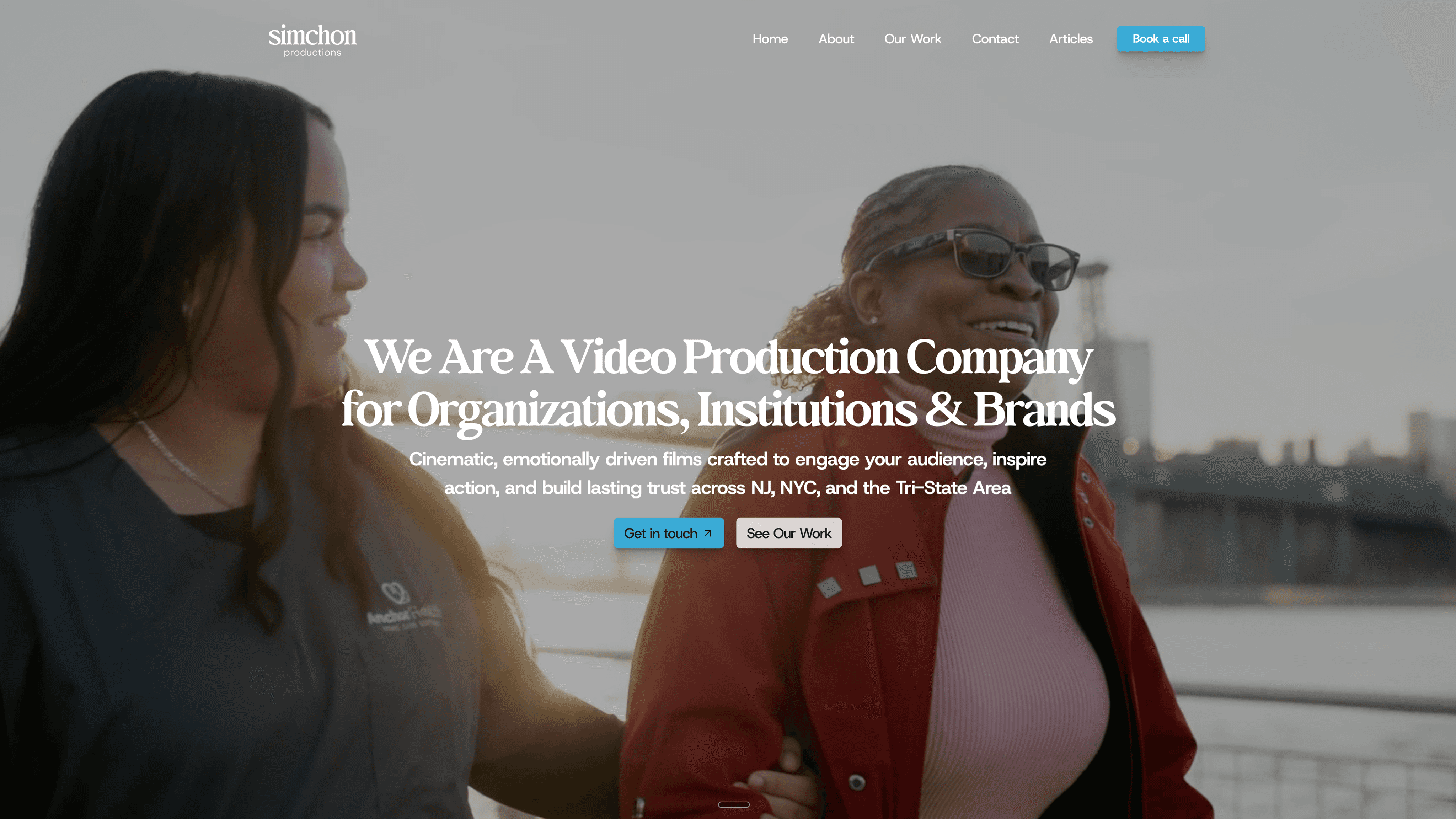
Working with a dedicated production partner ensures professional footage designed to engage donors. Typical annual giving projects include:
A donor or beneficiary interview shot on location
A 60 to 90 second hero edit plus 3 to 5 short vertical cuts for social and email
Captioned files, thumbnail images, and archival masters ready for reuse
A production timeline scoped to the campaign launch date, agreed upfront before any shoot day is booked
If your organization is planning shoots inside a chapel, sanctuary, or worship space as part of the story, coordinate early with your facilities team, since window glare and natural light shift throughout the day; a resource like TWT SoCal’s guidance for places of worship is worth a look if lighting control at the venue is a concern. To see how these projects come together, browse the Simchon Productions portfolio or reach out through Simchonproductions to scope your next annual giving film.
Sources
Annual Giving Basics: A Fundamental Guide for Yearly Donations - Blackbaud
Annual Giving celebrates the ‘best kept secret in the world’ in Reunions video
How NMSU used 80s parodies, student videos, and a boombox to thank 17,000 donors
9 Best Practices for a Successful Annual Giving Appeal | Fellowship Development
FAQ
What does annual giving mean?
Annual giving is a recurring, organized fundraising effort that funds an organization’s day-to-day operations and programs, as distinct from capital campaigns or endowment gifts, according to Blackbaud.
What are some best practices for annual giving?
Combine multiple channels, mail, email, phone, and social, use a specific and urgent ask, and time major appeals ahead of year-end, since a large share of annual gifts arrive in December.
What are some creative ideas for a fundraising video?
Film peer testimonials at an event donors already attend, build a themed stewardship series with personalized touches like NMSU’s parody videos, or pair a short mailer with a QR code linking to a vertical video cut.
How long should an annual giving video be?
Plan a 60 to 90 second hero edit for email and your campaign page, then cut 15 to 60 second vertical versions for social feeds, with the hook landing in the first 3 to 15 seconds.
How much does an annual giving video cost to produce?
Budgets typically vary from a low range for lean single-location shoots to a higher range for full crews with cinematic lighting and multiple deliverables.