Discover the ultimate law firm brand video production guide. Learn how to create engaging videos that build trust and boost client conversions.

Law Firm Brand Video Production Guide for Attorneys
Law firm brand video production is the process of creating strategic, story-driven films that build trust, communicate your firm’s values, and convert prospective clients into retained ones. A well-produced brand film does something a website bio cannot: it lets people feel who you are before they ever call your office. Adding video to landing pages can boost conversions by 80% and increase engagement by four to seven times compared to text alone. That number reflects a simple truth. Clients hire attorneys they trust, and video builds trust faster than any other medium. This guide walks you through every stage of the process, from planning and production to distribution and performance measurement.
What does a law firm brand video production guide cover?
A law firm brand video production guide covers the full lifecycle of creating a legal brand film: strategy, pre-production, filming, editing, distribution, and measurement. The industry term for the core deliverable is a “brand film,” sometimes called a “brand story film” or “attorney brand video.” Both phrases describe the same thing: a short, cinematic piece that positions your firm emotionally and professionally. The goal is not to list your practice areas. The goal is to make a prospective client feel that your firm understands their situation and can be trusted to handle it.
Videos drive 127% more email inquiries than text-only pages and appear 53 times more often on the first page of search results. That kind of reach changes how a firm grows. Simchon Productions builds every legal brand film around a clear audience framework, identifying who the viewer is and what emotional truth will resonate with them before a single camera is turned on.

What do you need before production starts?
Pre-production is where most law firm videos succeed or fail. Getting the tools and planning right before you film saves time, money, and reshoots.
Equipment and team essentials
Category | What you need | Why it matters |
|---|---|---|
Camera | Cinema-grade mirrorless or cinema camera | Produces the depth and color that signals professionalism |
Lighting | Three-point LED lighting kit | Eliminates unflattering shadows common in office settings |
Audio | Lavalier mic plus boom mic backup | Poor audio is the top reason viewers stop watching |
Team | Director, DP, sound recordist, editor | Each role requires focused expertise, not multitasking |
Planning | Discovery workshop, shot list, script draft | Pre-production effort accounts for 80% of a successful outcome |
You do not need a Hollywood budget to start. Many firms already have a conference room with good natural light and a quiet environment. Use what you have for B-roll and reserve your production budget for the interview setup, where audio and lighting quality matter most.
Pro Tip: Run a pre-interview discovery session without cameras present. Attorneys open up differently when there is no lens pointed at them, and those conversations reveal the authentic stories that make brand films work.
Pre-production discovery workshops and interviews make up 80% of successful video projects. That statistic should reframe how you budget your time. Most firms spend 90% of their energy on filming day and almost nothing on the strategic groundwork that makes filming day matter.
How do you produce a compelling law firm brand film step by step?
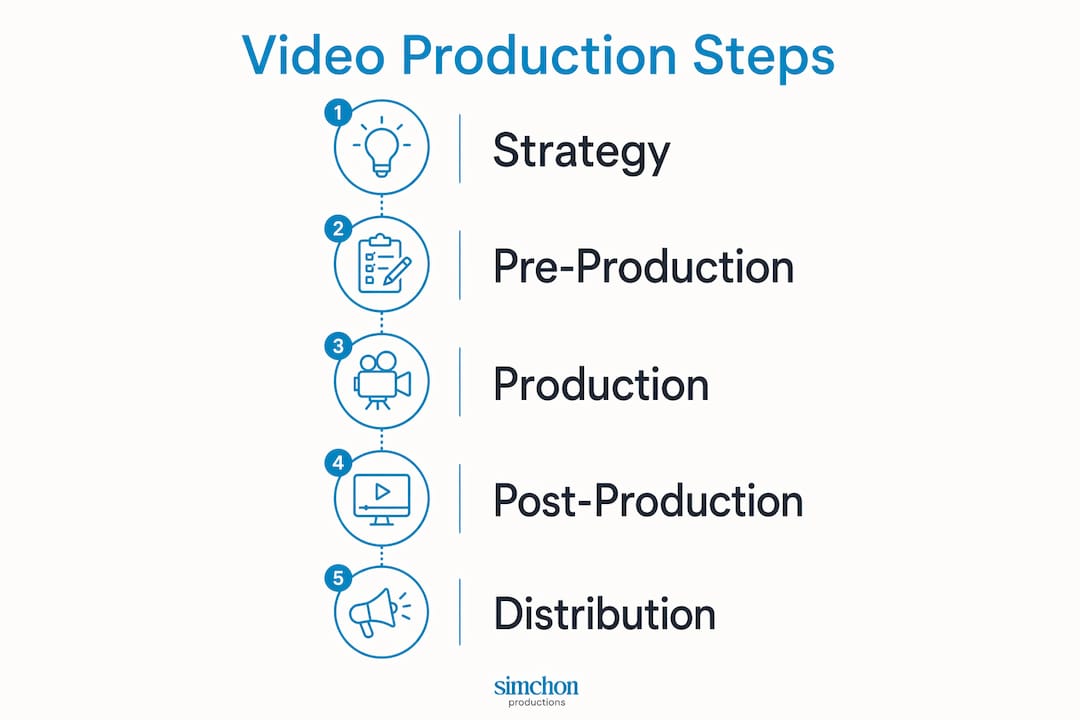
The legal brand film step by step process has six distinct stages. Skipping any one of them shows up on screen.
Discovery. Interview your partners, associates, and past clients without cameras. Ask what problem the firm solves at a human level, not a legal one. A personal injury firm is not just winning settlements. It is helping families rebuild after the worst day of their lives. That distinction drives everything else.
Scriptwriting. Write toward emotional connection, not credentials. Credentials belong on your website bio. The script should answer one question: “Why does this firm exist for the people it serves?” Effective brand films evoke human stories that audiences feel rather than just process facts. Keep the script conversational. Attorneys who read from a teleprompter sound like attorneys reading from a teleprompter.
Production planning. Build a shot list that includes interview setups, B-roll of the office and team, and any location footage that reinforces the firm’s story. Confirm your audio setup the day before filming. Audio problems cannot be fixed in post-production.
Filming. The director’s job is to make your attorneys feel comfortable, not to manage the camera. Comfort produces authenticity. Authenticity produces trust. Film more than you think you need. You will use less than you expect.
Post-production. Edit for pacing first, then color grade, then add captions. 85% of Facebook videos are viewed without sound, which makes captions non-negotiable for social distribution. Keep the final cut to two to three minutes for a brand film and two to five minutes for FAQ-style content.
Review and approval. Build two rounds of revision into your timeline. Professional brand films require 8–12 weeks of lead time for strategic and creative refinement. Rushing this stage produces a video your firm will want to replace in six months.
Pro Tip: The most common production mistake is filming too soon. If your attorneys cannot clearly articulate the firm’s core story in a five-minute conversation, you are not ready to film. Go back to discovery.
Where and how should you distribute your law firm brand video?
A great video that no one sees is a wasted investment. Distribution is where your law firm trust-building video strategy pays off.
Homepage. Place the brand film above the fold or within the first scroll. Visitors who watch a video stay on the page longer, which signals quality to search engines.
Practice area pages. Create shorter, practice-specific cuts from your main brand film. A family law page benefits from a different emotional tone than a corporate litigation page.
LinkedIn. The platform favors native video uploads over external links. Post the full brand film natively and pin it to your firm’s profile.
Facebook and Instagram. Use shorter clips (60–90 seconds) with captions as organic posts. Longer cuts work well in paid retargeting campaigns targeting people who visited your website.
TikTok. Short attorney Q&A clips and behind-the-scenes content perform well here, especially for consumer-facing practices like personal injury or estate planning.
Email marketing. Including the word “video” in an email subject line increases open rates. Embed a thumbnail with a play button that links to your hosted video.
Paid promotion. Run pre-roll ads on YouTube targeting users searching for legal help in your practice area and geography.
Integrating video platforms like Vimeo or Brightcove across HR, marketing, and business development enables consistent branding and measurable ROI. A unified video library also makes it easier to share assets across departments without version control problems. Track view duration, click-through rate, and form submissions tied to video pages. Those three metrics tell you whether your video is building trust or just collecting views.
What are the most common pitfalls in law firm video production?
Most law firm videos underperform for predictable reasons. Knowing them in advance is the difference between a video that works for years and one that gets quietly removed from the website.
Poor audio quality and long, unfocused videos are the top reasons for viewer drop-off. A viewer will forgive average lighting before they forgive muffled audio. Invest in a quality lavalier microphone before you spend money on a second camera.
Overproduction is a real problem in legal video. Firms sometimes produce videos that look more like corporate commercials than authentic stories. Prospective clients are not looking for a polished advertisement. They are looking for a person they can trust. Authenticity in video faces, combined with thoughtful scripting, is critical. Overreliance on AI-generated content risks blandness and loss of distinctiveness. Your attorneys’ real voices and real stories are your competitive advantage.
Compliance is a genuine concern for legal advertising. Every state bar has rules governing attorney advertising, including video. Review your state’s rules on testimonials, disclaimers, and superlatives before your video goes live. Do not assume what works for a consumer brand works for a law firm.
Music licensing is one of the most overlooked compliance issues in law firm video production. Platform licenses do not cover commercial use. Music licensing requires careful clearance; obtain professional licenses for any track used in a video distributed publicly or in paid advertising. Using a popular library song without the right license can result in your video being taken down or, worse, a legal claim against the firm.
Finally, repurpose your content. A two-minute brand film contains at least six to eight shorter clips for social media, one or two email thumbnails, and several quote graphics. You paid for the footage. Use all of it.
Key Takeaways
A law firm brand film succeeds when authentic storytelling, disciplined pre-production, and consistent distribution work together from the start.
Point | Details |
|---|---|
Pre-production drives outcomes | Discovery workshops and interviews account for 80% of a successful video project. |
Authenticity beats credentials | Scripts built on human stories outperform credential lists for building client trust. |
Captions are non-negotiable | 85% of social videos play without sound, making captions critical for retention. |
Distribution multiplies value | A single brand film generates homepage, social, email, and paid ad assets simultaneously. |
Compliance protects the firm | Music licensing and state bar advertising rules must be reviewed before any video goes public. |
Why video strategy is the conversation most law firms are not having
I work with firms across the tri-state area, and the pattern I see most often is this: a firm produces one video, posts it on the homepage, and considers the job done. Video is not a one-time deliverable. Video must be the foundational content engine driving marketing, business development, and HR consistency rather than a peripheral add-on.
The firms that grow fastest treat their brand film as a living asset. They cut it into social clips. They use it in recruiting. They build FAQ videos off the same production day. They measure what works and iterate. That is a fundamentally different mindset than “we made a video.”
The other thing I push back on is the idea that authenticity and professionalism are in tension. They are not. The most professional thing a law firm can do on camera is be honest about who they are and who they serve. Prospective clients are not impressed by production value alone. They are moved by recognition. When someone watches your brand film and thinks, “That firm gets what I am going through,” you have done your job. That is the conversation worth having before any camera turns on.
— Tzvi
Simchon Productions and law firm brand video
Law firm video marketing requires more than a camera and a script. It requires a production partner who understands how trust is built on screen and how to pull authentic stories out of attorneys who are not natural performers.
Simchon Productions works with law firms in New Jersey, New York, and the broader tri-state area to produce brand films that connect with real clients. Every project starts with a discovery process, moves through a structured production workflow, and ends with a deliverable built for multiple distribution channels. You can review completed brand film projects to see the quality and style firsthand. If you want guidance on selecting the right production partner for your firm, the hiring guide on the Simchon Productions blog walks through exactly what to look for.
FAQ
What is a law firm brand film?
A law firm brand film is a short, story-driven video (typically two to three minutes) that communicates a firm’s values, culture, and client focus to build trust before a prospective client makes contact.
How long should a law firm brand video be?
The optimal length for a law firm brand film is two to three minutes. FAQ-style attorney videos perform well at two to five minutes, provided the content stays focused and the audio is clear.
How much pre-production time does a brand film require?
Professional brand films require 8–12 weeks of lead time for strategic planning, scripting, and creative refinement. Rushing pre-production is the most common cause of videos that underperform.
Do law firm videos need captions?
Yes. 85% of social media videos are viewed without sound, so captions are required for any video distributed on Facebook, Instagram, LinkedIn, or TikTok to maintain viewer retention.
What compliance issues should law firms watch for in video production?
State bar advertising rules govern testimonials, disclaimers, and superlatives in attorney videos. Music licensing also requires professional clearance for any track used in publicly distributed or paid video content.