Checklist for families and long-distance decision-makers: use filmmaker-grade criteria to judge assisted living tour videos, spot staged polish, verify...

How Families Can Evaluate an Assisted Living Tour Video
A good assisted living tour video is a screening tool, not a decision-maker. It tells you fast whether a community is worth a real visit by showing you hallways, staff, and residents in motion. But it cannot show you staffing ratios during nighttime hours, how the kitchen handles a bad day, or how a nurse responds to your mother’s specific needs. Watch the video, take notes, then verify anything clinical with a phone call or an in-person visit before you sign anything.
TL;DR:
Live guided walkthroughs are the best video format for assessing daily care quality because they allow real-time questions and transparency.
Safety features such as lighting, grab bars, emergency systems, and staff visibility should be prioritized over aesthetics when evaluating a community virtually.
Rewatch videos with sound off to detect staged footage, and verify staffing, inspection reports, and accreditation through direct follow-up questions and official sources.
Comparing multiple communities using a consistent scoring checklist helps narrow options, with in-person visits at mealtime and unannounced follow-ups clarifying daily life.
Trustworthy videos feature multiple room types, unfiltered routines, timestamped footage, and genuine staff and resident introductions, not just polished marketing clips.
Simchon ProductionsBuild Trust Before Families VisitSimchon Productions creates cinematic assisted living films that show authentic stories, focused messaging, and the emotional core of your community.Explore Simchon Productions
Table of Contents
What Types of Assisted Living Tour Videos Will You Find?
What Should You Look For on a Senior Living Video Tour?
How Do You Spot Marketing Polish vs. Real Daily Life?
How Do You Turn a Video Into a Shortlist?
What Do Trustworthy Tour Videos Do Differently?
What Privacy and Consent Rules Apply to Tour Videos?
When Should You Trust the Video and When Should You Visit in Person?
How Simchon Productions Builds Tour Videos Families Actually Trust
Sources
FAQ
What Types of Assisted Living Tour Videos Will You Find?
Assisted living communities use four main video formats, and each one answers a different question. Knowing which format you’re watching changes how much weight to give it.

360-degree and interactive tours let you click through rooms and hallways at your own pace. They’re the best format for judging layout, room size, and how far a resident would walk from their room to the dining hall. They’re weak on showing daily life because most are shot empty, without people in them.
Live guided walkthroughs, run over video call with a counselor, are the closest thing to an actual visit. You can ask questions in real time and point the camera at whatever you want to see. If a community offers this, take it. It’s harder to stage on demand.
Recorded cinematic tours are produced pieces, often set to music, meant to sell the lifestyle. They show communal spaces, activities, and dining rooms at their best. Useful for a first impression, but treat every recorded tour as marketing until proven otherwise.
Testimonial clips from residents or family members add emotional context but rarely show anything you can verify. Use them for tone, not fact.
If your priority is daily care quality, ask for a live walkthrough. If it’s just floor plan and room size, a 360 tour works fine on its own.
What Should You Look For on a Senior Living Video Tour?
Watch for safety features, visible staffing, and signs of real daily life before you judge anything on décor or curb appeal. The CareScout guide to touring assisted living recommends prioritizing safety and accessibility over aesthetics, and that rule applies just as much to a screen as it does to an in-person walk.
Work through this list while you watch, pausing and rewinding as needed:
Lighting and hallways. Are hallways well lit with clear sightlines, or dim and cluttered?
Grab bars and bathroom layout. Check bathrooms for grab bars near the toilet and shower, plus a walk-in or low-threshold shower.
Emergency call systems. Look for call buttons or pendant systems in bedrooms and bathrooms, not just at a front desk.
Ramps and elevator access. Confirm step-free paths between floors and common areas.
Staff visibility. Count how many staff members appear on camera and whether they interact with residents by name.
Mealtime atmosphere. Watch how residents and staff behave at meals. Rushed, silent dining rooms are a warning sign.
Cleanliness and odor cues. You can’t smell a video, but stained carpets, cluttered supply carts, and overflowing trash bins are visible tells.
Activity calendars. Look for a posted or mentioned activity schedule, not just one staged craft session.
Pro Tip: Rewatch the video once with the sound off. Staged videos often rely on music and narration to distract from what’s actually in the background.
Red flags worth noting: a tour that only shows one perfect model unit, zero visible safety equipment anywhere, or a narrator who talks around staffing questions instead of answering them. Staffing is consistently ranked the top quality factor by AARP’s assisted living guide, so if staff barely appear on camera, that absence tells you something.
How Do You Spot Marketing Polish vs. Real Daily Life?
You spot the difference by checking whether a room looks lived in and by asking the community pointed follow-up questions after the video ends. A staged model unit has no personal items, no wear on the furniture, and lighting that looks studio-set rather than natural. A real resident’s room usually has photos, medical equipment, or clutter that a marketing team would never leave in frame.
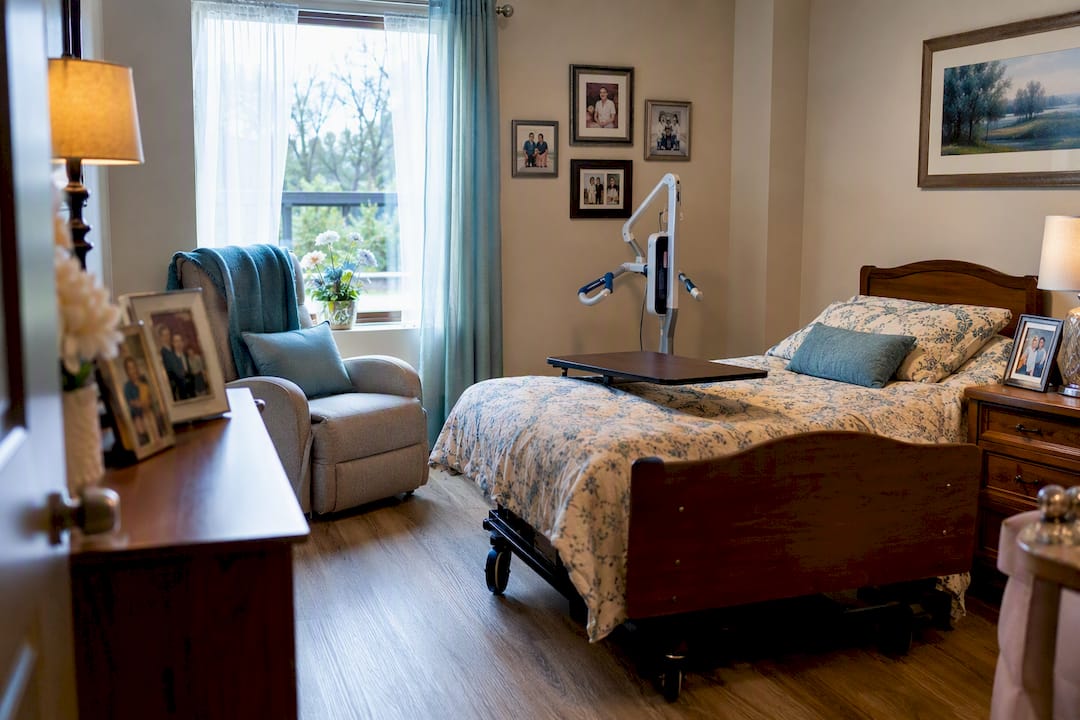
Watch for editing tells too. Footage shot only in mid-morning light, with residents clustered in one bright activity room, often means the crew avoided quieter, less flattering hours. A virtual tour built for families should include interactive floor plans, staff introductions, and footage of ordinary daily activity, not just one polished highlight reel.
After watching, call the community and ask direct questions:
What is the day shift and night shift staffing ratio, and has it changed in the last year?
What is staff turnover like, and how long has the nursing director been in that role?
What did the most recent state inspection report find?
Is the community accredited, and by whom?
Verify the answers instead of taking them on faith. Check Medicare’s Care Compare tool for inspection history, confirm state licensure with your state’s health department, and ask whether the community holds CARF accreditation, which signals it meets standards beyond the minimum required for a license.
How Do You Turn a Video Into a Shortlist?
You turn videos into a shortlist by scoring each community on the same three factors and booking in-person visits only for the top matches. Watch every tour with the same checklist so you’re comparing apples to apples instead of judging on gut feeling.
Score each community on safety, staffing visibility, and lived-in footage. Give each a simple rank instead of a vague impression.
Request a live walkthrough with an admissions counselor for your top two or three picks. Ask them to show you a random room, not just the model unit.
Schedule an in-person visit at mealtime. Nothing reveals daily culture faster than watching a dining room in action.
Ask to meet the director of nursing, not just the sales or admissions staff, before you commit.
Plan one unannounced follow-up visit after your first scheduled tour. The NIA’s guide to choosing a long-term care facility specifically recommends visiting more than once, at different times of day, before deciding.
If family members live out of state, share the video link along with your completed checklist so everyone is scoring the same footage. A five-minute clip and a shared spreadsheet beat a group phone call where nobody remembers the same details.
What Do Trustworthy Tour Videos Do Differently?
Trustworthy assisted living tour videos show more than one room type and more than one moment of staged activity. A community that films a single ideal apartment and one crowded bingo game is showing you its best five minutes, not its average day.
Better productions follow a few habits:
They show multiple unit sizes and conditions, including a standard room, not just the model.
They favor counselor-led live walkthroughs over fully edited pieces when a family requests more transparency.
They use visible timestamps and labeled footage so viewers know when and where a scene was filmed.
They include short, unscripted introductions from actual staff and residents instead of a single polished narrator voice.
That’s the standard Simchon Productions applies when producing healthcare and senior care video projects, where the goal is footage that holds up to scrutiny, not just footage that looks good on a homepage.
What Privacy and Consent Rules Apply to Tour Videos?
Residents who appear on camera, by name or by face, need to have given consent, and families should ask how a community handles that consent before assuming every resident on screen agreed to be filmed. Reputable communities get signed release forms from residents or their legal decision-makers before filming, and they update those releases when a resident’s condition or wishes change.
Ask whether the video includes any resident’s room, medical information, or care routine, since HIPAA-adjacent privacy expectations apply even in a marketing context. A community that blurs faces or uses actors instead of residents in some scenes isn’t necessarily hiding something. It may simply be respecting privacy for residents who declined to appear.
If your own family member is touring virtually and staff want to film them for a future promotional video, you’re allowed to say no without it affecting care. Ask what happens to footage after it’s recorded: where it’s stored, who can access it, and whether you can request it be taken down later. These are reasonable questions, and a community that gets defensive when asked is worth watching more carefully.
When Should You Trust the Video and When Should You Visit in Person?
Use a video tour to screen options fast, especially when family lives out of state and needs to narrow a long list quickly. But once memory care, mobility support, or complex medical needs are involved, an in-person visit becomes necessary, because no camera angle can show you how staff respond to a real crisis. The smart approach uses video to cut ten communities down to three, then commits real time to walking through those three yourself.
— Tzvi Simchon
How Simchon Productions Builds Tour Videos Families Actually Trust
Simchon Productions is the alternative to a generic marketing reel for communities that want tour videos families believe on first watch. Instead of one staged model unit and a highlight reel, Simchon Productions builds healthcare and senior care films around real staff introductions, honest footage of daily routines, and cinematography that holds up when a family rewatches it slowly, looking for the details that matter.

That approach draws on the same storytelling framework Simchon Productions applies to brand films, documentary style films, and nonprofit videos across the New Jersey and NYC tri-state area, work built around identifying the real audience for a video and giving them footage they can act on, not just footage that photographs well. For families that just chose a community, the transition doesn’t end at move-in. Planning the physical move is its own project, and resources like a senior moving service checklist or a downsizing timeline for assisted living can help once the video research phase is done.
If you run a senior living community and want a tour video built to hold up under this level of scrutiny, visit the Simchon Productions portfolio to see examples and request a sample project quote.
This article is general information, not a substitute for advice from a qualified doctor. Consult a qualified healthcare professional about your own circumstances before acting on anything here.
Sources
9 Questions to Ask When Touring an Assisted Living Community — CareScout
How to choose a nursing home or other long-term care facility — NIA
FAQ
Can a Video Tour Replace an In-Person Visit?
No. A video tour is a strong first screening step, but the NIA recommends visiting in person multiple times, including at mealtime, before making a final decision.
What’s the Best Type of Tour Video to Request?
A live guided walkthrough with an admissions counselor gives you the most control, since you can ask questions in real time and request to see rooms beyond the model unit.
How Do I Check if a Community’s Claims Are Accurate?
Verify staffing, inspection history, and accreditation directly. CARF accreditation and Medicare Care Compare inspection reports are both independent of the community’s own marketing.
Does Simchon Productions Produce Tour Videos for Assisted Living Communities?
Yes. Simchon Productions produces healthcare and senior care video projects for communities in the New Jersey and NYC tri-state area, and current pricing is available by request through the Simchon Productions site.
What Should I Ask About Staffing After Watching a Tour Video?
Ask for the day and night shift staffing ratio, staff turnover over the past year, and how long the director of nursing has held that role, since staffing is the factor AARP flags as most predictive of care quality.