Unlock success with our family decision video marketing guide. Build trust, engage authentically, and empower family choices in 2026.
Family Decision Video Marketing Guide for 2026
Effective family decision video marketing builds trust and supports informed choices in healthcare, education, and community engagement. The core of any successful video strategy for families comes down to a few non-negotiable principles:
Emotional resonance: Families respond to stories that mirror their real experiences, not polished corporate messaging.
Clarity: Every video must answer a specific question or address a specific hesitation, whether that’s safety, cost, or fit.
Authenticity: Genuine interactions on screen build more trust than scripted performances.
Multi-touch attribution: Families typically engage with 6–12 touchpoints before making a decision, so measuring only the first or last click misses most of the story.
Audience targeting: Extended caregivers, grandparents, and older siblings all influence family decisions. Your video strategy needs to account for all of them.
Ethical compliance: Content targeting families, especially in healthcare and education, must respect privacy standards and avoid misleading claims.
Budget alignment: Production quality matters, but authenticity and clarity create stronger trust than expensive polish alone.
Start here, and the rest of your strategy falls into place.
Table of Contents
1. How do you create video content that actually resonates with families?
2. How do you tailor video content to specific family decisions?
3. What’s the most effective way to distribute family-focused videos?
4. How do you measure whether your family video marketing is actually working?
Simchon Productions brings family video marketing to life
Key Takeaways
1. How do you create video content that actually resonates with families?
Emotional connection is the engine of effective family video marketing. Without it, even a well-produced video gets scrolled past. The goal is to make a caregiver watch your video and think, “That’s exactly our situation.”
Lead with a relatable narrative arc. Show a family facing a real challenge, whether it’s choosing a school, navigating a healthcare decision, or finding a community program. Then show how your service or organization fits naturally into that story. This isn’t about manufacturing emotion. It’s about reflecting the experiences your audience already lives.

Video content for childcare programs that features authentic staff introductions, day-in-the-life clips, and parent testimonials consistently builds more trust than a polished brand reel with no human faces. Families want to see who they’re trusting with their kids or their health.
Here’s what works in practice:
Virtual tours of facilities reduce anxiety before a first visit.
Day-in-the-life clips show what the experience actually looks like.
Testimonials from real families address hesitations directly.
FAQ-style videos answer the questions caregivers are already Googling.
Address the core hesitations head-on: safety, price, age suitability, and ease of use. Families respond favorably to videos that guide them toward the next step naturally, rather than pushing a hard sell.
Quality is the floor, not the deciding factor. A smartphone video filmed in a natural setting, with genuine interactions and clear audio, often outperforms a highly produced spot that feels impersonal. The authenticity signals trust in a way that no amount of post-production can fake.
Pro Tip: Film staff or caregivers in their actual work environment rather than a staged set. Families notice the difference, and that realness is what makes them pick up the phone.
Family content marketing engagement rates typically range between 2–4%, with micro-influencers often exceeding 5%, indicating the value of authentic, targeted reach.
2. How do you tailor video content to specific family decisions?
Not all family decisions are equal. A parent choosing a pediatric specialist is in a very different headspace than one picking an after-school program. Your video content needs to reflect that difference.
Healthcare decisions carry the highest emotional weight. Families need reassurance above all else. In-depth testimonials from other families, clear explanations of procedures or services, and visible staff introductions work best here. Healthcare brand films that show real patient interactions build the kind of trust that a brochure never could.
Educational choices benefit from day-in-the-life formats. Parents want to see the classroom environment, the teachers, and how children actually engage. Extended family members, particularly grandparents who often help with school pickups and homework, should appear in or be addressed by this content.
Community engagement programs respond well to event highlight reels and mission-driven storytelling. Show the community impact. Let participants speak for themselves.
A few principles apply across all three categories:
Translate features into parent-relevant outcomes. “Licensed staff” means less than “your child is supervised by someone trained in pediatric first aid.”
Include extended caregivers in the narrative. Grandparents, aunts, and uncles influence decisions more than most marketers account for.
Segment your audience by decision stage, not just demographics. A first-time parent needs different reassurance than a parent making a second enrollment decision.
Specificity in audience targeting and messaging is what separates effective family video campaigns from generic promotion. The more precisely you address a real concern, the more the viewer feels seen.
Virtue-based storytelling is particularly effective in educational and community contexts, where families are choosing based on values alignment as much as practical fit.
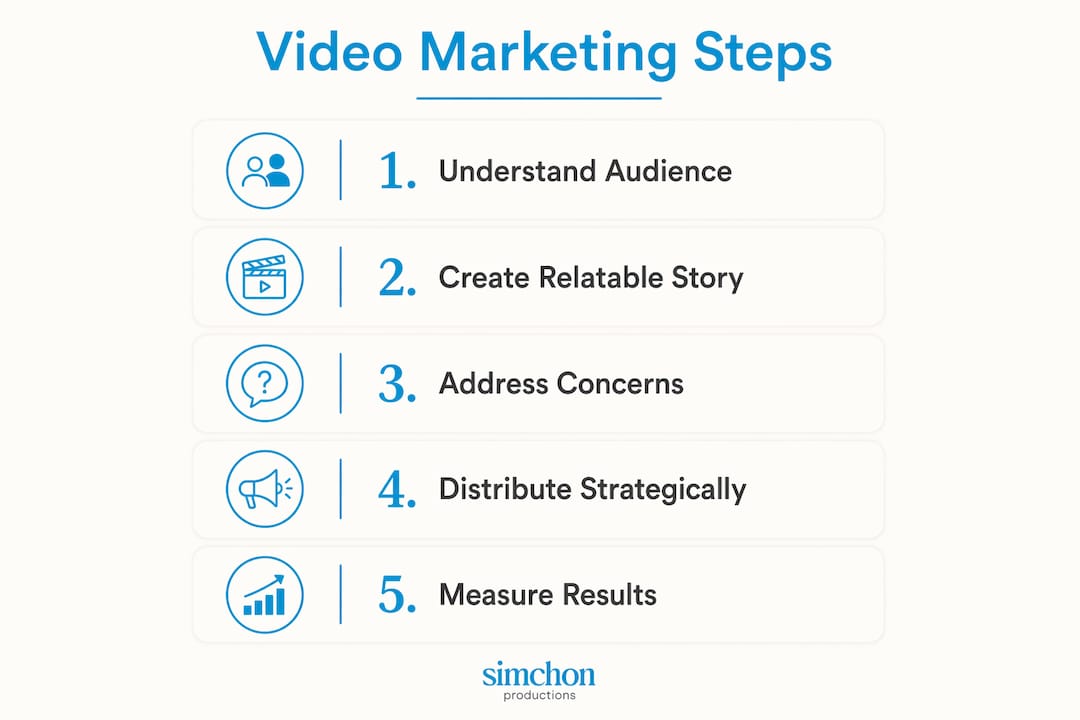
3. What’s the most effective way to distribute family-focused videos?
Families are inherently multi-channel consumers. They discover content on YouTube, share it in Facebook groups, see it on Instagram, and get reminded of it via email. Relying on a single platform leaves most of your audience untouched.
Here’s how to think about each channel:
YouTube: Still the dominant platform for longer-form family content. Parents use it for reviews, tutorials, and service introductions. Kids watch YouTube Kids. Design creative for both.
Facebook and Instagram: Strong for community building, short testimonials, and paid retargeting. Facebook groups for local parents are especially valuable for organic reach.
TikTok: Short-form, authentic clips perform well here. Behind-the-scenes content and quick FAQ answers fit the format.
Email newsletters and parent portals: High-trust channels for families already in your ecosystem. Use video thumbnails linked to hosted content.
Offline touchpoints: Don’t ignore them. Integrating digital and offline channels through community partnerships, local events, and physical signage keeps your brand present where families actually spend time.
Multi-format content strategies that span short-form TikTok videos, Instagram carousels, YouTube reviews, and blog posts engage families at multiple points in the decision process. Consistent messaging across all of these channels is what builds recognition and trust over time.
Timing matters too. Families research school options in late winter and spring. Healthcare decisions often spike after a life event. Community program enrollment follows the academic calendar. Align your distribution schedule with these natural decision windows.
4. How do you measure whether your family video marketing is actually working?
Single-touch attribution models, which credit only the first click or the last click, fail families. Because the decision journey involves 6–12 touchpoints, a last-click model makes your awareness content look worthless and your conversion content look like a miracle worker.
The position-based attribution model is a better fit. It allocates 40% credit each to the first and last touchpoints, then distributes the remaining 20% across intermediate interactions. This reflects how families actually make decisions: they discover you, consider you over time, and then convert.
To make this work in practice:
Use UTM parameters on every video link to track which channel and campaign drove each visit.
Set up both short-term and long-term attribution windows. A 7-day window captures immediate responses; a 30–60 day window captures the gradual conversions typical of high-consideration family decisions.
Track engagement metrics beyond views: watch time, click-through rate, and form submissions tied to specific videos tell you which content is actually moving families forward.
Feed attribution data back into your budget. If your awareness video on YouTube is credited with 40% of first touches, it deserves a proportional share of your spend.
Ongoing testing is how you improve. Run two versions of the same video with different openings, different calls to action, or different lengths. Let the data tell you what families respond to, then do more of that.
Simchon Productions brings family video marketing to life
If you’ve read this far, you know what effective family-focused video marketing requires: emotional storytelling, precise audience targeting, multi-channel distribution, and production quality that earns trust without feeling manufactured.
Simchon Productions does exactly that. Based in New Jersey and serving the tri-state area, they specialize in cinematic brand films, nonprofit videos, school videos, and documentary-style content built around authentic storytelling. Their approach starts with a clear framework: identify the audience, define the core message, and build a film that hits the emotional center of that specific family decision.
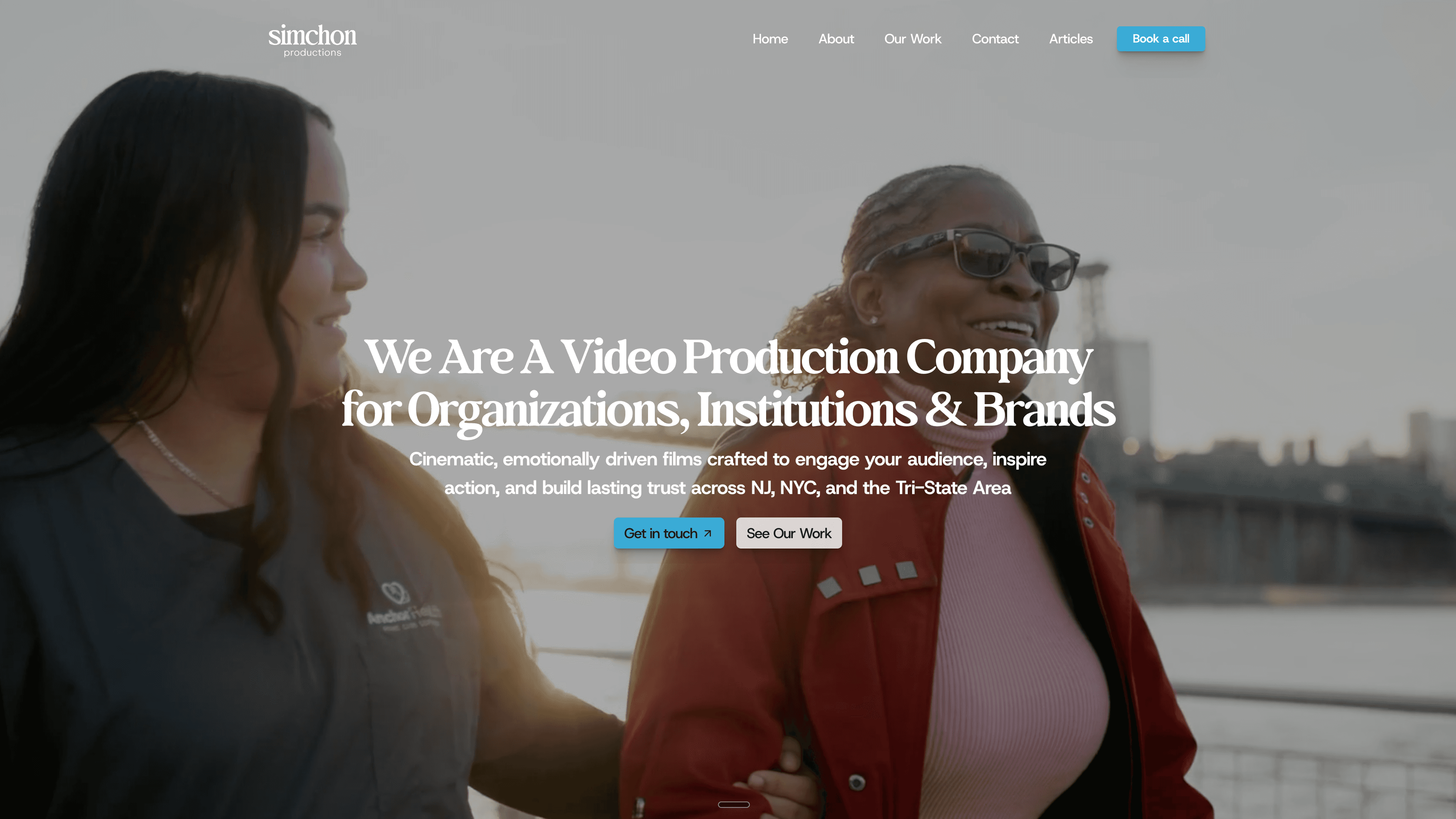
Clients consistently point to two things: the quality of the cinematography and the intentional post-production process that amplifies emotional impact. That combination is what makes a Simchon Productions video feel different from a generic corporate production. It’s not just well-shot. It’s built to connect.
Whether you need a healthcare brand film that builds patient trust, a school video that shows families what your environment actually feels like, or a nonprofit story that moves a community to act, Simchon Productions has the experience to deliver it. See the work firsthand at their video production portfolio, and reach out to start the conversation.
Key Takeaways
Effective family decision video marketing requires emotional authenticity, multi-touch attribution, and consistent distribution across the channels where families actually make decisions.
Point | Details |
|---|---|
Multi-touch attribution matters | Families typically engage with 6–12 touchpoints before deciding; single-touch models undercount most of your marketing impact. |
Position-based model | Allocate 40% credit each to the first and last touchpoints, and 20% across intermediate interactions, to reflect real family decision journeys. |
Authenticity over polish | Clarity and genuine storytelling build more family trust than highly produced but impersonal video content. |
Multi-channel distribution | Families consume content across YouTube, social media, email, and offline channels; consistent messaging across all of them drives recognition. |
Simchon Productions | A New Jersey-based production company specializing in cinematic, emotionally resonant videos for healthcare, education, and community-focused family decisions. |