Start with a one page audience brief and 30 minute kickoff. Use a master edit to pull platform cuts and measure attention, lift, and conversions.

One Page Audience Targeting for Marketers: Brand Films That Convert
Define one marketing objective, pick one audience segment you can dominate, and build your film and distribution plan around that pair before you shoot a single frame. That order matters more than budget or crew size. Your next step: write a one-page audience brief and put a 30-minute kickoff on the calendar this week.
TL;DR:
Audience targeting should start with clear objectives and actions, not broad demographics, to effectively reach those most likely to convert now.
Platform selection influences film format and style, with YouTube long-form building trust, Shorts for discovery, and CTV for household reach with precise targeting.
Creative adaptations must focus on story elements that resonate with specific segments, such as protagonists, benefits, language, and cultural details, while maintaining core brand messaging.
Measuring success relies on attention and lift metrics, not view counts, with pre-set benchmarks for watch time, engagement, and conversion to evaluate campaign impact.
Simchon ProductionsMake Your Audience Feel SeenSimchon Productions creates cinematic brand films with focused messaging and authentic storytelling for organizations across New Jersey and the tri-state area.Explore Simchon Productions
Table of Contents
What audience targeting means for brand films
How to define and segment your target audiences for a brand film
Where to place your film: YouTube, Shorts, CTV, and social
Adapting your creative for each audience segment
How to measure whether your brand film worked
A checklist from audience brief to distribution
Applied framework: audience-driven cinematic brand films
A filmmaker’s take on craft versus measurement
How Simchon Productions helps you produce audience-targeted brand films
Sources
FAQ
What audience targeting means for brand films
Audience targeting for a brand film is not the same job as targeting a paid ad. A 15-second ad wants a click. A brand film wants attention, relevance, and trust, three things you can’t buy with reach alone. YouTube viewers report being 1.5 times more likely to pay attention to video content and 98% more likely to trust creator recommendations compared with other platforms, which is why the AR&T lens beats raw impressions when you’re judging a film’s real performance.
The format you choose should follow the job the film needs to do:
Cinematic long-form fits top-of-funnel trust building, donor stories, and mission films.
Short-form variants fit discovery and re-engagement on social feeds.
A single long film often works when your audience is narrow and decision-heavy, like a hospital board or a school’s admissions committee.
Multiple short cuts work better when you’re trying to reach several sub-segments fast.
Pick the format based on what action you need, not on what looks impressive in a reel.
How to define and segment your target audiences for a brand film
Most teams start with “who’s watching” and get stuck. Start with the objective instead, then work backward to the audience.
Write down the objective (more donors, more applications, more referrals) and the exact action you want viewers to take.
Name who is most likely to take that action right now, not everyone who could someday.
Pull first-party data from your CRM and site analytics to see who already converts, then look for patterns in job title, life stage, or behavior.
Add psychographic and cultural details: what they value, what language they use, what worries them.
Write a short persona brief with a name, the job-to-be-done, the trigger that moves them to act, their preferred platform, and one or two creative hooks that would grab them in the first five seconds.
Keep each brief to one page. A brief nobody can read on their phone during a meeting won’t get used. The goal is a document your editor and your media buyer can both work from without a follow-up call.
Where to place your film: YouTube, Shorts, CTV, and social
Platform choice changes what your film should look and sound like, not just where it lives.
YouTube long-form suits objectives that need credibility and depth, like donor trust or patient confidence, since attention and trust scores run higher there than on most other platforms.
Shorts and TikTok suit discovery and top-of-funnel awareness, where a fast hook matters more than a full story arc.
CTV and streaming suit household-level reach when you want your film to sit next to premium content and you have first-party data to target by address or account.
Every cut should open on a person’s face within the first few seconds, show your brand cue by the five-second mark, carry captions for sound-off viewing, and use a thumbnail that shows emotion, not a logo.
Match the platform to the job the film needs to do, then adjust pacing and length to fit how people actually watch there.
Adapting your creative for each audience segment

Once you know the audience and platform, adjust the story, not just the length. The ABCD framework (Attract, Brand, Connect, Direct) gives you a simple structure: attract attention fast, brand early, connect emotionally, then direct viewers to a clear action.
Across variants, change the elements that speak directly to each segment:
Swap the protagonist so viewers see someone like themselves.
Shift the benefit you lead with based on what that segment cares about most.
Adjust cultural details like language, setting, and music choice.
Keep your core message and brand voice steady across every cut.
Generative AI tools can help you produce more variants faster, and adoption is rising fast across the industry. Most advertisers plan to use gen-AI for video ad production, according to this source. Use it for pacing tests or localized cutdowns, but keep a human editor reviewing every version for tone, accuracy, and accessibility, including captions and audio description.
Pro Tip: Build your master edit first, then pull variants from it instead of writing separate scripts for each segment. It keeps your message consistent and saves real production time.
How to measure whether your brand film worked
Views tell you almost nothing on their own. Watch time, attention, and lift tell you whether the film changed minds.
Track view rate and average watch time as your baseline engagement signals.
Run a brand lift study through Nielsen Brand Lift or a platform’s native lift tool to measure awareness and consideration change.
Where attention scoring is available, use it alongside watch time since it tends to predict campaign impact better than view counts alone.
Tie at least one conversion metric, like donation form completions or application starts, directly back to the film’s distribution window.
Set a realistic target before launch, not after. Most marketers already lean on engagement and conversion metrics to judge video ROI, so decide your benchmark for view rate, lift, or conversions in advance, then use each variant’s results to sharpen the next round of creative.
A checklist from audience brief to distribution
Turn your audience work into a repeatable production workflow.
Fill out an audience brief with objective, action, persona, platform, and one creative hook per segment.
Confirm casting choices reflect the audience’s real look, language, and setting, not a generic stock cast.
Check accessibility needs early: captions, audio description, and any legal release forms for on-camera subjects.
Build your variant edits during post-production, not as an afterthought after the master cut ships.
Tag each file with platform specs and metadata so your distribution team isn’t guessing at aspect ratios.
Attach a measurement hook, like a tracked link or a lift survey, to every variant before it goes live.
Skipping any one of these steps usually shows up later as a rushed edit or a metric nobody can explain.
Applied framework: audience-driven cinematic brand films
Every project should build around a clear audience definition before a single shot list gets written. The framework starts with the same objective-then-audience order covered above: name the action the client needs, then define who is most likely to take it.
For a nonprofit donor film, that might mean centering a single donor’s motivation instead of a generic mission statement, an approach covered in more detail in how nonprofits use brand identity films to grow support. For a healthcare client, it means building patient trust through calm pacing and real staff, a pattern explored in types of healthcare brand films. For a school, it means speaking to prospective families through campus life and outcomes, covered in video’s role in higher education recruitment.
A film built for everyone usually connects with no one.
A filmmaker’s take on craft versus measurement
Bring your filmmaker into the strategy conversation before the shoot, not after the rough cut. A director who understands the audience brief will make better calls on pacing, casting, and tone than one who’s just handed a script.
Cinematic ambition and message simplicity often pull against each other. The best brand films pick one clear idea and let the visuals carry the emotion. Release one variant, watch the data, then adjust the next one. Iteration beats perfection on the first try.
— Tzvi Simchon
How Simchon Productions helps you produce audience-targeted brand films
The company produces various types of videos for organizations, each built from an audience-first brief before production starts.
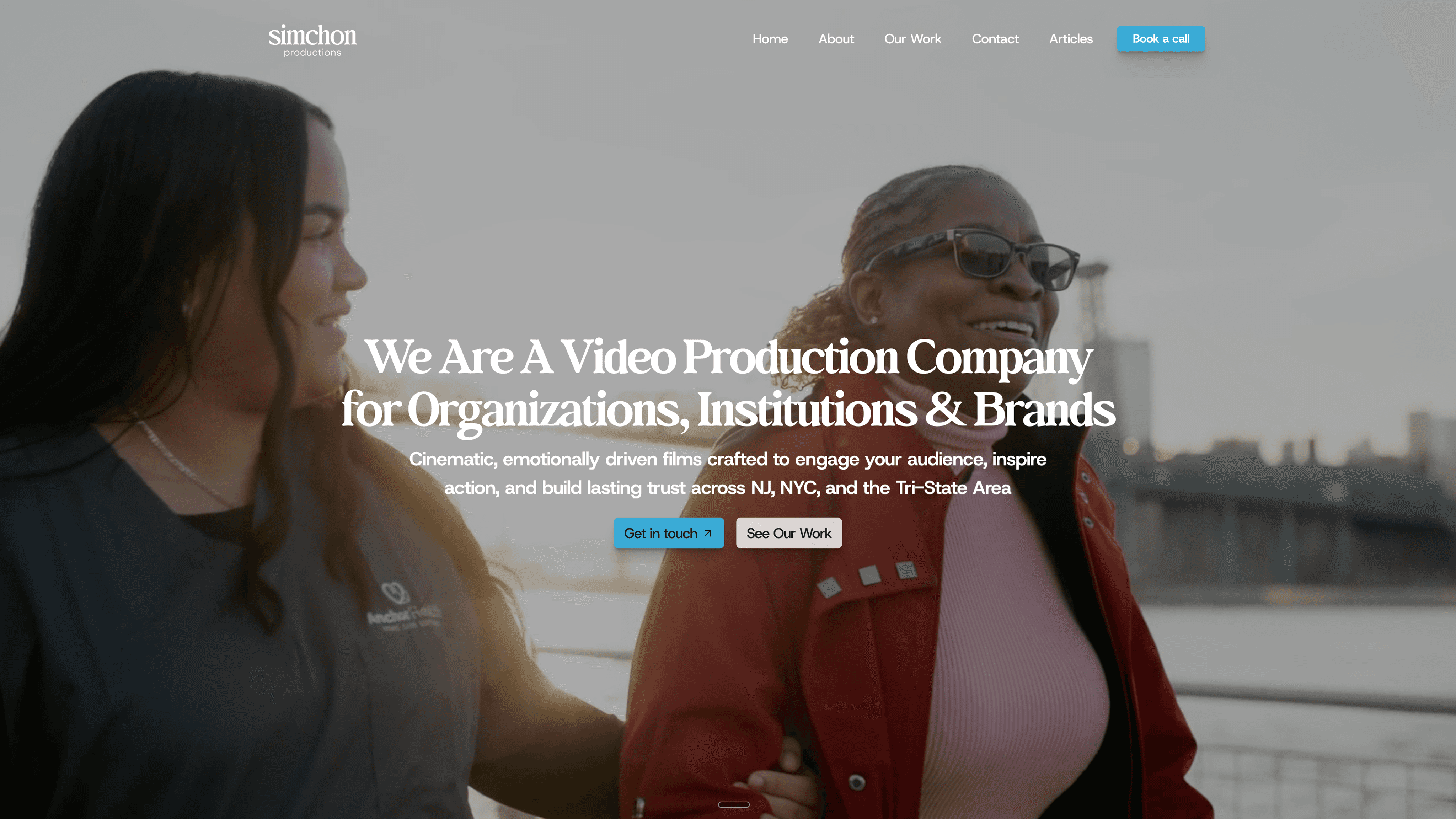
A first consult walks through your objective, your priority audience, and what a film built for that pair could look like. Visit Simchon Productions to request a quote and start the conversation.
Sources
For deeper reading, Think with Google’s research covers why YouTube performs well on attention and trust. Edelman’s 2025 Trust Barometer explains how cultural relevance shapes brand trust. For creative variant strategies, see Atelier by RASA’s case studies.
FAQ
Who are the target audiences for brand films?
Target audiences for brand films are the specific groups most likely to take the action the film is built for, such as donors, patients, prospective students, or customers. The audience is defined by the objective first, then narrowed using first-party data and behavioral patterns, not by demographics alone.
What is the 3-3-3 rule in marketing?
Definitions of the 3-3-3 rule vary across marketing teams, and there’s no single agreed standard tied to brand film targeting. A common version refers to structuring a message around three key points delivered within the first three seconds across three formats, but treat it as a general guideline rather than a fixed rule.
What are the four types of target audiences?
Audiences for video marketing are commonly grouped by demographic traits, psychographic traits like values and interests, behavioral patterns like past purchases, and need-based or occasion-based triggers. Most brand film briefs blend at least two of these categories to build a working persona.
What is the target audience in branding?
The target audience in branding is the specific group a brand designs its messaging, tone, and visuals to resonate with, based on shared values, needs, or behaviors. A strong brand narrows this group deliberately, since trust rises when a brand reflects real cultural relevance rather than trying to appeal to everyone.