A production-tested checklist for nonprofit video releases: what to sign before you shoot, music and stock licenses, COPPA and privacy checks, and reuse...

Before You Film: Nonprofit Video Releases for On Set and Post Use
Before you shoot a single frame, lock down signed releases for every person, location, and piece of music in your video, plus guardian consent for any minors involved. Document permission for third-party footage, photos, or brand logos too. Fair use is not a free pass for nonprofits, so if you are relying on it, know that courts decide case by case.
TL;DR:
Nonprofits must secure signed releases for all individuals, locations, music, and third-party content before filming to avoid legal issues.
Guardian releases are essential for filming minors, and footage of children without guardian consent should never be published or used publicly.
Fair use does not automatically apply to nonprofit videos using outside content; licensing is often safer than relying on uncertain fair use claims.
Obtain both sync and master licenses for music, ensuring the scope matches platform coverage, duration, and geographic region of distribution.
Organizing and tracking signed releases, license expirations, and attribution details prevent legal problems and streamline post-production workflows.
Simchon ProductionsCreate A Nonprofit Film That ConnectsSimchon Productions creates cinematic nonprofit videos with authentic storytelling and focused messaging that builds audience connection and trust.Explore Simchon Productions
Table of Contents
What types of release forms do nonprofit video teams actually need?
How do you handle consent when minors are on camera?
Does fair use protect nonprofit videos that use outside content?
What music and stock footage licenses do you actually need?
What privacy and COPPA checks should you run before publishing?
How should you organize releases and files to avoid legal headaches?
Do you need to credit the people and creators in your video?
How do you handle donor names, logos, or sponsored segments in your video?
Can you reuse old footage for a new campaign without new releases?
What release mistakes cause the most legal trouble for nonprofits?
What if you filmed someone without getting a signed release?
How Simchon Productions builds releases and rights into every nonprofit shoot
Need help managing releases and rights for your next nonprofit video?
Sources
FAQ
What types of release forms do nonprofit video teams actually need?
You need four basic releases on most shoots: talent (also called model) releases, location releases, property releases, and music clearances. A talent release covers anyone who appears on camera, staff, volunteers, donors, or beneficiaries. A location release covers private property where you film, and a property release covers objects, art, or branded items that show up in the frame. Music clearance is its own category, covered in detail further down.
Every release should include the same core clauses. Here is what coordinators should check before anyone signs:
Names of both parties and the date of filming.
Grant of rights language that spells out how the footage can be used, edited, and shared.
Media and territory scope, meaning which platforms and which countries the footage can appear in.
Duration, meaning whether the release expires or covers future use.
Compensation terms, even if the answer is “none.”
Revocation terms, so everyone knows if and how consent can be withdrawn.
Signature, printed name, and date.
A short grant-of-rights clause might read: “I grant [organization] the right to record, edit, and use my image and voice in video content for promotional, fundraising, and educational purposes, in any media, without compensation.”
Collect signatures before the camera rolls whenever possible, not after. Digital signing tools let you capture consent on a tablet during setup, and you should link each signed release to the specific clip or file name right away so nothing gets lost in the edit.
Pro Tip: Keep a small folder of blank releases and a pen in your gear bag. Phones die, tablets glitch, and paper never runs out of battery.
How do you handle consent when minors are on camera?
Filming children requires a separate guardian release, not just a verbal yes from a teacher or parent standing nearby. The guardian, not the child, signs the release, and you should collect a phone number or email in case you need to confirm consent later.
A few production habits make this easier:
Verify the child’s age before filming starts, especially at school or camp events.
Use a release written specifically for guardians, separate from your adult talent release.
Avoid asking children personal or sensitive questions on camera.
Blur or cut footage of any child whose guardian has not signed.
Guardian consent for appearing on camera is different from the rules that apply once you publish online. If your video lives on a platform that collects data from visitors, and that platform or your content is directed at children, the FTC’s COPPA guidance may apply to how you handle that data, which is covered later in this article.
Does fair use protect nonprofit videos that use outside content?
Nonprofit purpose alone does not qualify your video for fair use. Fair use is a legal defense, not a right, and courts weigh four factors every time: the purpose and character of your use, the nature of the original work, how much of it you used, and whether your use harms the market for the original. The U.S. Copyright Office’s fair use guidance confirms that transformative use, meaning you add new meaning or commentary rather than just copying, tends to weigh in your favor.
One documented example: in Nat’l Ctr. for Jewish Film v. Riverside Films, a court found that using short clips from a documentary was transformative and did not harm the market for the original film, partly because the amount used was small.
Before you lean on fair use, run through this checklist:
Are you commenting on, critiquing, or adding context to the original work, rather than just using it as background?
Is the amount you are using as small as it can be while still making your point?
Could your use replace the original in the market, even partially?
Have you written down your reasoning in two or three sentences, in case someone asks later?
Fair use depends on case-specific factors courts weigh individually, according to Penn State’s copyright basics guide, and that uncertainty is exactly why most nonprofits choose to license instead of argue fair use when the stakes are high.
When in doubt, get written permission. It costs less than a legal dispute.
What music and stock footage licenses do you actually need?
Music requires two separate permissions: a sync license, which lets you pair the song with your video, and a master license, which covers the specific recording you want to use. You typically need both unless you are using royalty-free or licensed library music built for this purpose.
For nonprofit budgets, three options work well:
Production music libraries that sell pre-cleared sync and master rights together.
Creative Commons music, as long as you follow the attribution terms exactly as written.
A composer who writes an original piece and signs a written rights assignment to your organization.
Before you finalize any license, confirm the scope matches your plans:
Which platforms are covered, including YouTube, Instagram, and your own website.
How long the license lasts, and whether it renews or expires.
Which countries or regions are covered.
Whether you can sublicense the footage if a partner organization wants to reuse it.
Pro Tip: Never assume a platform’s built-in music library covers your use everywhere. Save the license confirmation email or PDF, because “I thought it was free” is not a defense if someone challenges your use later.
What privacy and COPPA checks should you run before publishing?
Run a quick privacy check before any video goes live, especially if your content involves children or collects visitor data. The FTC’s COPPA guidance explains that COPPA generally applies to commercial sites and services directed at children, and while many nonprofits fall outside strict enforcement, the FTC still encourages nonprofits to post privacy policies and consider these protections when children are part of the audience.
A few habits reduce your exposure:
Limit how much personal data you collect from site visitors, especially near child-focused content.
Avoid targeted tracking or ad pixels on pages built for a child-directed video.
Publish a plain-language privacy notice near any video that includes minors.
Have a clear process for honoring a parent’s request to remove footage of their child.
Keep signed releases and raw footage stored securely, with a retention policy that states how long you keep each, so a takedown request does not turn into a scramble.
How should you organize releases and files to avoid legal headaches?
A simple three-stage workflow keeps releases from slipping through the cracks.
Preproduction: audit any third-party content you plan to use, print or load your release forms, and prepare a short consent script so whoever collects signatures explains things the same way every time.
On set: assign one person to collect and verify releases before wrap, not after. Digital signing on a tablet works well for fast-moving events.
Postproduction: link every signed release to its matching file name, store originals in a secure shared drive, and track when any licensed music or stock footage expires.
A simple folder structure helps everyone stay organized:
A master folder per project with subfolders for releases, raw footage, and licensed assets.
A spreadsheet or metadata field marking each clip as “signed,” “pending,” or “no release,” so editors never cut in footage that has not cleared.
A note of the music license expiration date next to the final export file.
This kind of system pairs well with the post-production workflow nonprofits use for storytelling, where linking assets to permissions happens before anything reaches the final cut.
Do you need to credit the people and creators in your video?
Moral rights give creators some say over how their work is credited and presented, separate from copyright ownership itself. In the United States, moral rights are narrower than in many other countries and apply mainly to visual art under the Visual Artists Rights Act, but the underlying idea still matters for video production: give credit where a contributor, composer, or partner organization expects it, and get it in writing when credit is part of the deal.
If a composer wrote an original score for your nonprofit video, your written agreement should state whether they require on-screen credit, and if so, exactly how their name should appear. The same goes for photographers whose stills you incorporate, or a partner nonprofit whose footage you are using with permission. Spelling out attribution terms in the release itself avoids a disagreement after the video is already published.
Donors and public figures sometimes expect their name or title to appear a certain way too, especially in a donor film or annual report video. Confirm exact spelling, title, and preferred credit wording during the release process, not during final review when changes are harder to make.
None of this replaces a copyright release, which covers your right to use the footage. Attribution is a separate, additional commitment that protects your working relationship with the people who helped make the video possible.
How do you handle donor names, logos, or sponsored segments in your video?
Donor names, company logos, and sponsored segments each carry their own permission requirements, separate from the general talent release. If a corporate sponsor’s logo appears in your video, get written sign-off on exactly how and where the logo can be shown, including whether it can appear in social cutdowns or only the full-length version.
Donor recognition videos need extra care. A donor may agree to appear on camera but have specific wording they want used for their name, gift amount, or family foundation. Put these preferences in writing as part of the release, not as a verbal understanding, since a title or spelling error in a published donor film can create an awkward and avoidable conversation.
Sponsored content inside a nonprofit video, such as a segment thanking a corporate partner, should also disclose the relationship clearly if required by your organization’s own policies or by the platform where you publish. Keep a simple written record of what each sponsor approved, including any required disclaimer language, so there is no confusion if the video gets reused in a future campaign.
Can you reuse old footage for a new campaign without new releases?
Check the original release’s duration and scope before reusing any footage. Some releases are written for one specific use, like a single fundraising campaign, while others grant broader rights that cover future edits, new platforms, or entirely different videos.
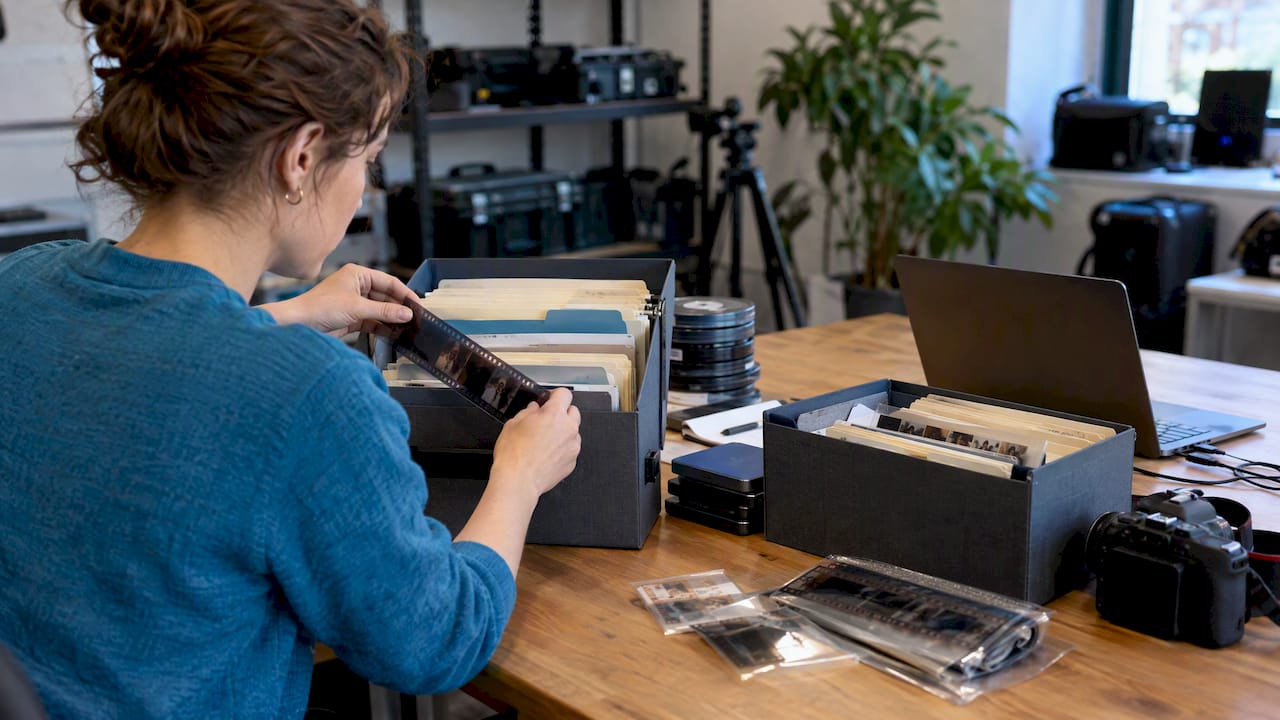
If your organization’s releases do not specify a clear duration or scope for future use, treat that as a gap to fix going forward. Write new releases that explicitly grant rights for “any future use” or name specific likely uses, such as annual reports, social media cutdowns, or archival storytelling.
For footage already in your archive without a clear reuse clause, your safest options are to contact the person for a new signed release, or to limit reuse to the original approved purpose only. Planning for reuse from the start, rather than renegotiating later, saves time and keeps your archive usable for years. A development team planning a university fundraising campaign benefits especially from footage that was cleared broadly the first time.
What release mistakes cause the most legal trouble for nonprofits?
The most common mistake is treating verbal consent as good enough. A quick nod on set is not a signed release, and it leaves your organization with nothing to show if someone later objects to how their image was used.
A second common pitfall is using a generic release template that does not name your organization, the specific project, or a clear scope of use. Vague language creates vague protection. A third pitfall is forgetting music licensing entirely until the edit is nearly finished, which forces rushed decisions and sometimes unlicensed tracks slipping into a final cut.
Watch for these specific risks:
Releases signed by the wrong person, such as a teacher signing for a student instead of the guardian.
No written record of which release matches which clip, causing confusion during editing.
Assuming a platform’s music library covers every use case, including paid promotion.
No retention policy, so releases get lost by the time a question comes up years later.
Building these checks into your production workflow from the start, rather than fixing them after a complaint, is the difference between a smooth campaign and a legal scramble.
What if you filmed someone without getting a signed release?
Reach out to the person as soon as possible and ask them to sign a release retroactively, explaining clearly how the footage will be used. Most people say yes when asked directly and given the full context, especially if they already appeared on camera willingly.
If you cannot reach the person, or they decline to sign, your safest move is to avoid using their footage in anything public. Blur their face, cut the segment, or replace it with other footage rather than risk using unreleased material.
Going forward, build a habit of collecting releases the moment you start filming, even for informal behind-the-scenes clips you think you might use later. A quick phone release captured on the spot avoids this entire problem next time, and it takes less time than tracking someone down weeks later.
How Simchon Productions builds releases and rights into every nonprofit shoot
On nonprofit projects, production starts with a clear framework for identifying the audience and the story before a single release form goes out, which shapes who needs to sign what. Guardian consent, talent releases, and location paperwork are handled during preproduction, not scrambled together on set.
Planning for reuse matters just as much as the shoot itself. A donor film built with broad rights from the start can become social cutdowns, an annual report segment, or a future campaign asset without renegotiating permissions, which helps keep costs and legal friction down.
— Tzvi Simchon
Need help managing releases and rights for your next nonprofit video?
Nonprofit teams juggling releases, music clearances, and guardian consent on top of everything else a video shoot requires often find that the paperwork is where projects stall. Simchon Productions builds release management and rights clearance into its nonprofit video production process, so your team is not tracking down signatures after the fact.
Whether you need a donor film, an event film, or a full mission-story production, the team handles the legal groundwork alongside the creative work.
Request a project quote for your nonprofit’s next video.
Ask about template release forms for your own in-house shoots.
Reach out through Simchonproductions to start the conversation.
This article is general information, not a substitute for advice from a qualified lawyer. Consult a qualified legal professional about your own circumstances before acting on anything here.
Sources
FAQ
What is the 33% rule for nonprofits?
If you have seen this term applied to nonprofit finances or fundraising thresholds, it is not part of federal release or copyright guidance, so it does not apply to video permissions or rights clearance.
What are the top 10 most successful nonprofit fundraisers?
This article focuses on video release and copyright compliance, not fundraiser rankings, and no verified list applies universally across nonprofits. What matters for your video content is securing proper releases and permissions so your fundraising videos can be used and reused without legal risk.
How much should a 3 minute video cost?
Costs vary widely based on production scope, location, and crew size, and no single industry-wide figure applies to every nonprofit video. Simchon Productions provides custom quotes based on each project’s scope, so reach out directly for pricing specific to your video.
What is the 80/20 rule for nonprofits?
There is no established rule governing nonprofit video releases, copyright, or COPPA compliance that involves precise percentages. If you encountered such a term in a fundraising or donor-retention context, it is unrelated to the legal permissions and release requirements covered in this guide.