A filmmaker first playbook for admissions directors: brief vendors, capture a flagship testimonial in one shoot day, deliver in 6–8 weeks, and measure...

College Admissions Video Made by Filmmakers for Admissions Directors
Your first admissions video investment should be a student-story testimonial (60 to 90 seconds) paired with a short campus highlight reel. This combination works because prospective students trust peer voices over polished brand copy, and admissions offices need one flagship asset for the homepage. Brief your vendor now for a single shoot day that produces both (typical shoot day), plus social cutdowns from the same footage.
TL;DR:
Focus on collecting student testimonials and campus highlights in a single shoot day to create authentic, relatable content for prospective students.
Prioritize producing ongoing testimonial libraries before investing heavily in a flagship film to build credibility and trust over time.
Ensure videos are published across platforms where Gen Z students watch most, like social media and program pages, and track metrics such as view rates, inquiry increases, and application lift.
Budget 6 to 8 weeks for production, with costs ranging from a few thousand dollars for social cutdowns to tens of thousands for full highlight reels, depending on scope.
Develop a detailed brief covering objectives, target audience, core messages, deliverables, usage rights, timeline, approval process, and budget to avoid delays and misunderstandings.
Simchon ProductionsTell Your School’s Story ClearlySimchon Productions creates cinematic school videos with authentic storytelling, focused messaging, and emotional impact for admissions audiences.Visit Simchon Productions
Table of Contents
What Should a College Admissions Video Achieve?
Which Video Formats Should You Commission First?
How Long Does Production Take and What Should You Budget?
What Belongs in the Brief and Vendor Questions?
Where Should You Publish and What Should You Measure?
What Should You Expect on Shoot Day and in Post?
Why Most Schools Get the Order of Operations Backward
How Simchon Productions Can Help You Get Started
Sources
FAQ
What Should a College Admissions Video Achieve?
A college admissions video needs a specific job. Without one, you end up with a pretty film that nobody can point to on an enrollment funnel report.
Set goals at three funnel stages. Awareness videos build name recognition among prospective students who haven’t applied yet. Consideration videos help applicants compare your programs to other schools. Yield videos push admitted students toward the deposit deadline.
Each stage needs its own audience and its own success measure:
Awareness: prospective undergraduates browsing search and social; measure video view rate and inquiry lift.
Consideration: applicants and their parents comparing programs; measure time on program pages and application starts.
Yield: admitted students deciding between offers; measure deposit rate and portal engagement.
Donor and graduate audiences: adult learners and alumni; measure inquiry form completions and giving-page traffic.
Pro Tip: Write your KPI before you write the script. If you can’t name the number you expect to move, the video doesn’t have a job yet.
Nearly all Gen Z prospective students already live on video platforms, and most say they’d rather watch a virtual tour than flip through a brochure. That preference should decide your production order, not your instinct about what looks impressive.
Which Video Formats Should You Commission First?
Order formats by funnel stage, starting with the flagship highlight reel and student testimonials, then layering in program and social content as budget allows.
Flagship campus highlight (2 to 3 minutes). This is your homepage anchor and the video you’ll show at college fairs. Use it for broad awareness and as the source footage for shorter cuts.
Student-story testimonials of short duration. Real students, unscripted or lightly scripted, talking about their actual experience. These consistently outperform scripted brand spots because viewers identify with the narrator, not the institution.
Program deep dives and faculty intros (3 to 5 minutes). These live on individual department pages and answer the “what will I actually study” question for serious applicants.
Social cutdowns and admitted-student films (15 to 90 seconds). Vertical, platform-native, built for Instagram and TikTok, and often the cheapest deliverable when cut from existing footage.
Consider drone shots or a guided virtual tour when your campus itself is a selling point, like a waterfront quad or a distinctive historic building. Skip 360-degree tours if your campus is compact or if budget is tight. They can cost more to shoot and edit than a well-composed walking tour, and most prospective students still watch a normal video first.
Some personalized video pilots, like the one run at Villanova School of Business, show that admitted students respond strongly to content that feels made for them specifically, not for a general audience.
How Long Does Production Take and What Should You Budget?
A standard flagship-plus-testimonial package takes 6 to 8 weeks from booking to final delivery. Rushing this timeline is the single most common reason schools end up with footage that doesn’t match the season they need it for.
Here’s the realistic schedule breakdown:
Booking lead time: 2 to 4 weeks before your target shoot window, especially during fall and spring semesters when campuses are busiest.
Preproduction: 1 to 2 weeks for script, shot list, location permissions, and student talent scheduling.
Shoot day(s): typically 1 to 2 days for a combined highlight and testimonial package (typically 1 to 2 day shoot).
Editing and review rounds: 2 to 3 weeks, with two rounds of revisions built in.
Budget ranges vary by asset:
Asset type | Typical budget |
|---|---|
Social cutdown | a few thousand dollars |
Student testimonial | a few thousand dollars |
Recruitment highlight reel | several thousand to tens of thousands of dollars |
Full content library | tens of thousands of dollars or more |
These recruitment video pricing ranges shift based on crew size, number of shoot days, and how many deliverables come from one production. Bundling always lowers your per-asset cost, since the vendor shoots more footage in fewer trips.
Schools that shift from one-off hero films to a continuous production cadence see measurable results. Industry estimates put the yield lift at 2 to 5 percentage points when video output moves from occasional to ongoing.
To avoid approval delays, route your rough cut to no more than three stakeholders (admissions director, communications lead, one dean) and set a 5-business-day review window in the contract.

What Belongs in the Brief and Vendor Questions?
Your brief needs ten elements, and your vendor call needs six pointed questions. Skip either and you’ll spend weeks fixing avoidable problems after the shoot.
A complete brief covers:
Primary objective (awareness, consideration, or yield)
Primary audience (undergraduate, graduate, adult learner, parent)
Core messages, no more than three
Full deliverables list with exact formats and dimensions
Usage rights and how long footage stays usable
Caption and accessibility requirements
Firm timeline with shoot date and delivery date
Number of approval rounds included
Budget range, not a single number
Point of contact for scheduling student talent
Pro Tip: Ask every vendor how they handle non-professional talent on camera. A production company that has never coached a nervous 19-year-old through an interview will waste half your shoot day.
Ask vendors directly: How many campuses have you filmed? What’s your turnaround time for a first draft? Do you carry production insurance and pull campus permits yourselves? What’s your typical crew size for a one-day shoot? Who owns the raw footage after delivery? Can you deliver caption files for accessibility compliance?
Watch for red flags: vague deliverable lists, no sample production timeline, no clear process for casting student talent, or a demo reel padded with stock footage instead of real campus work. Operational fit, meaning a partner who understands academic calendars and approval chains, matters more than camera specs.
Where Should You Publish and What Should You Measure?
Publish your admissions video wherever prospective students already spend time researching schools: your admissions landing page, individual program pages, the admitted-student portal, email nurture sequences, and paid social.
Placement matters as much as production quality. Testimonial videos placed near the call-to-action on program pages convert better than the same video buried on a general “about us” tab.
Track these metrics against your original KPI:
View rate and completion rate (are people finishing the video?)
Click-to-inquiry rate from video pages
Application lift among students who watched versus those who didn’t
Deposit rate changes among admitted students exposed to yield content
Connect video analytics to your CRM so you can trace a student from first view to enrolled deposit, not just to a form fill. Run A/B tests on thumbnails, headline copy, and CTA placement. Thumbnail changes move click rate fast; application and deposit changes take a full recruitment cycle to show up.
Refresh flagship footage every 2 to 3 years. Outdated campus visuals, old signage, a building that’s since been renovated, read as a warning sign to families doing their research.
What Should You Expect on Shoot Day and in Post?
Simchon Productions builds every school project around one question: who is this student talking to, and what do they need to feel by the end of the video? That answer shapes casting, location choices, and the edit before a single frame gets shot.
On a typical shoot day:
Plan for 8 to 12 student interviews to build a usable voice library for multiple future cutdowns, not just the one project in front of you.
Secure written permissions for every student and location before the crew arrives, not the week after.
Capture location sound and B-roll from multiple angles so the edit has options beyond the obvious shot.
In post-production, expect two structured revision rounds, delivery in every format your platforms need (vertical, square, widescreen), caption files for accessibility, and an archive of raw masters your team can pull from later without booking a new shoot.
Why Most Schools Get the Order of Operations Backward
The biggest mistake I see is schools chasing the cinematic flagship film before they’ve locked down a repeatable pipeline for student stories. A gorgeous 3-minute hero video is worth little if it sits alone on a homepage for four years while every program page still runs stock photography.
The research backs this up: video that centers real students as narrators builds credibility through identification, not production polish. That’s a structural fact about how people trust content, not a stylistic preference.

Conventional advice tells schools to save budget for one big annual film. I’d flip that. Spend on a multi-deliverable shoot day that produces a testimonial library alongside your flagship reel, then treat video as a standing line item, not a one-time capital project. Schools running continuous video programs report meaningfully better yield than schools that shoot once every few years and hope the footage ages well.
Prioritize authenticity over gloss, cadence over one-time spectacle, and measurement over instinct. Everything else in the commissioning process follows from getting those three things right first.
— Tzvi Simchon
How Simchon Productions Can Help You Get Started
Choosing a single video production company instead of multiple freelancers can simplify admissions season. One crew, one shoot day, and you walk away with a flagship highlight reel, student testimonials, and platform-ready social cutdowns instead of piecing footage together from three separate vendors.
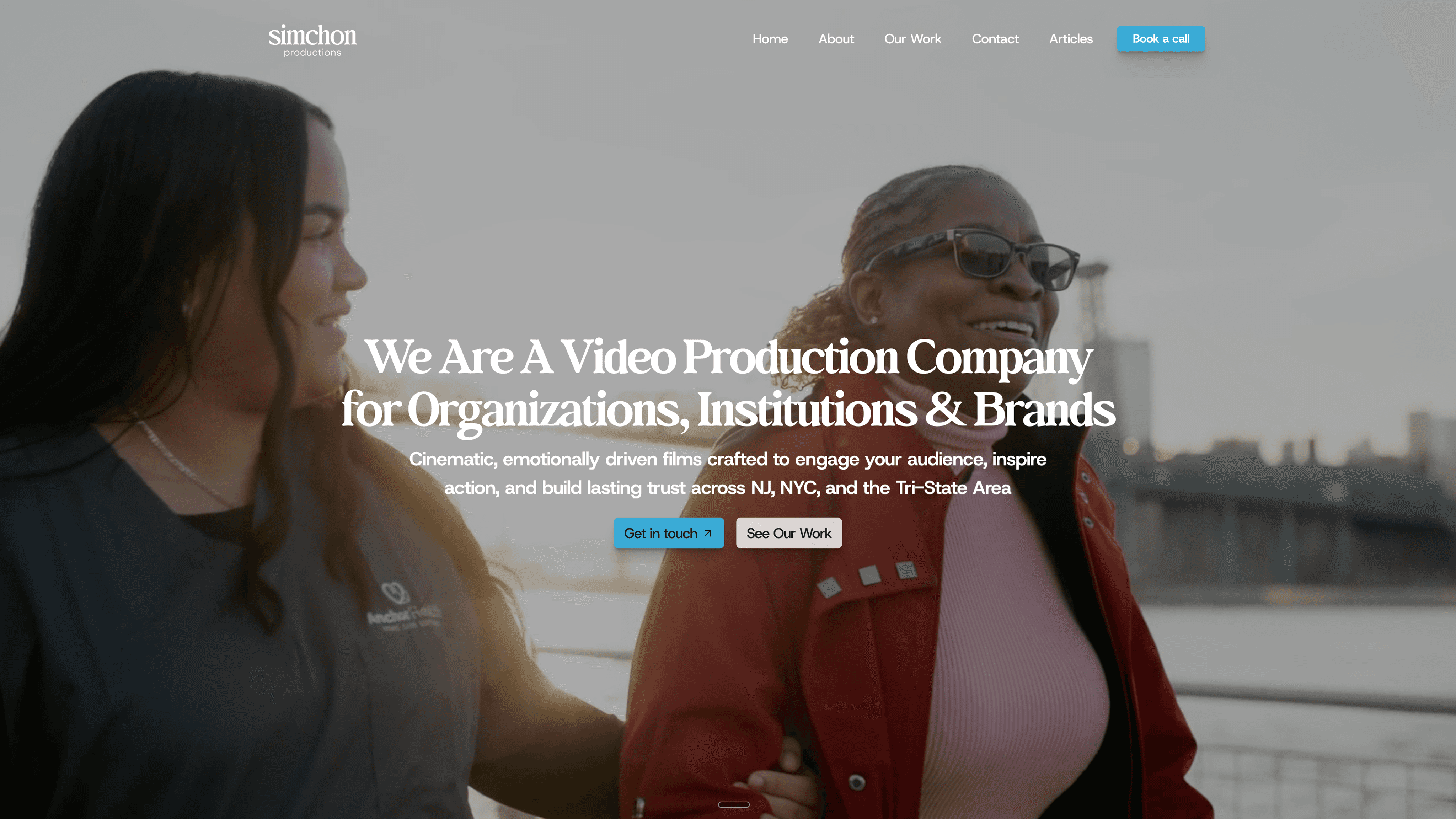
This video production company typically uses a focused brief, schedules shoot days to capture multiple deliverables, and follows a post-production process designed to meet caption and format requirements efficiently. They produce cinematic campus tours, student-story films, faculty and program features, and social cutdowns useful for admissions campaigns.
The typical workflow lasts approximately 6 to 8 weeks from initial contact to final delivery, aligning with common admissions office planning timelines. You can browse examples of past school and institutional projects on our video production portfolio, or reach out directly through Simchon Productions to request a quote and get a shoot date on the calendar before your next recruitment cycle starts.
Sources
FAQ
How Long Should a College Admissions Video Be?
A flagship campus highlight should run 2 to 3 minutes, while student testimonials work best at 30 to 90 seconds and social cutdowns should stay under 90 seconds.
How Much Does a College Admissions Video Cost?
Individual assets range from a few thousand dollars for a simple testimonial to several thousand to tens of thousands of dollars for a full recruitment highlight reel, with bundled libraries costing tens of thousands of dollars or more.
How Often Should We Update Our Admissions Video?
Refresh flagship footage every 2 to 3 years, since outdated campus visuals signal to prospective families that your marketing materials are stale.
What Should Go Into a Video Production Brief for a College?
Include your objective, primary audience, core messages, exact deliverables, usage rights, accessibility requirements, timeline, approval rounds, and budget range.
Does Simchon Productions Produce School and Admissions Videos?
Simchon Productions produces cinematic school videos, including student-story films and campus highlight reels, for institutions across New Jersey and the greater NYC area.