Producer advice on commissioning documentary-style video for nonprofits, schools, and clinics: budgets, a 6–12 week timeline, required releases, and final...

Documentary-Style Video for Nonprofits, Schools and Clinics: A 6–12 Week Plan
A documentary-style video is a cinematic, interview-driven film that uses real people, observational footage, and voiceover to tell an organization’s story, not a scripted commercial. Commission one when your goal is trust: donor stories, patient testimonials, admissions films, or staff recruiting. Skip it if you need a fast, tightly controlled 15-second ad. Below, you’ll find budgets, timelines, a preproduction checklist, and how to vet a production partner.
TL;DR:
Documentary-style videos typically start at costs above $5,000 to $15,000 due to longer preproduction and shoot durations.
The production timeline generally spans six to twelve weeks, including discovery, filming, and multiple review rounds, which is longer than standard commercial projects.
Preparation requires signed releases, a clear objective-focused brief, and confirmed consent and insurance before filming begins to avoid delays.
Producing authentic results depends on natural lighting, real sound, open-ended questions, and footage that reflects real environments and subjects’ emotions.
Effective evaluation of a production partner includes reviewing full sector-specific work samples, understanding their process, and confirming experience with consent and access issues.
Simchon Productionssimchonproductions.comTell Your Story Through FilmSimchon Productions creates cinematic, documentary-style films that connect organizations with audiences through authentic storytelling.Explore Simchon Productions
Table of Contents
When should you use documentary style instead of a commercial?
What budget and timeline should you plan for a documentary film?
What must be ready before a camera arrives?
What production techniques create authentic results?
What deliverables and file rights should you require?
How do you evaluate a documentary production partner?
A producer’s note: priorities and expectations
How Simchon Productions helps you commission a documentary-style film
Sources
FAQ
When should you use documentary style instead of a commercial?
Documentary style wins when your primary goal is trust, not a quick sale. Nonprofits building donor confidence, hospitals showcasing patient outcomes, and schools recruiting families all benefit from letting real people talk instead of reading a script.
Documentary-style approaches are reported to be 2.3 times more trustworthy than traditional branded ads, and they drive far higher organic sharing. That matters most when your audience doesn’t know you yet.
Choose documentary style when your goal is:
Building trust with donors, patients, or prospective families who’ve never engaged with your organization
Recruiting staff or students by showing culture instead of describing it
Capturing a mission story that will run for years, not one campaign cycle
Creating content people want to share because it feels real
A traditional branded or commercial video still makes sense when you have a hard deadline, a strict message to deliver word for word, or you’re producing a short paid ad spot where control matters more than authenticity.
What budget and timeline should you plan for a documentary film?
Budget for a documentary-style organizational film typically starts above the $5,000 to $15,000 range that covers a basic branded video, because access, discovery, and real moments take longer to capture. Reporting on branded video production shows documentary-style storytelling commonly requires higher budgets due to extended preproduction and shoot days.
Pro Tip: Ask your production partner to break the quote into discovery, shoot days, and edit passes. If a proposal only lists one lump number, you can’t tell whether you’re paying for craft or guesswork.
Typical schedule stages:
Discovery and prep: 1 to 3 weeks to lock subjects, locations, and releases
Shoot window: flexible, often spread across several days to catch real moments rather than staged ones
Edit and review: 2 to 4 rounds of feedback over several weeks
Documentary projects generally need six to twelve weeks from discovery to final edit, compared to two to four weeks for a standard commercial.
Plan your final deliverables around distribution needs: a 3 to 5 minute main film for your website and events, plus 60, 30, and 15 second cutdowns for social platforms and paid placement.

What must be ready before a camera arrives?
Before any camera arrives, you need a signed creative brief, cleared releases, and a locked shoot schedule. Missing any one of these stops production, sometimes mid-shoot.
Follow this order:
Write the brief around audience and outcome, not script. Name who watches this film and what you want them to feel or do next. A clear objective and defined audience matters more than a scripted concept, because editors build the story in the edit from real interviews and footage, not from a script written in advance.
Secure signed talent and location releases for every person and property on camera, before the shoot day, not after.
Confirm consent requirements specific to your sector. Healthcare organizations need HIPAA-compliant patient consent forms. Schools need parental permission for any minor appearing on camera. Neither can be waived after the fact.
Confirm insurance coverage for your production partner, especially for shoots on hospital or school property.
Build a contact list and schedule window with backup dates, since documentary shoots depend on real access, and access shifts.
Prep your interview subjects with a short conversation about topics, not scripted answers, so they stay natural on camera.
Get internal sign-off early from legal, communications, and leadership so the brief doesn’t change mid-production.
Preproduction guides consistently point to discovery research and careful scheduling as the unseen work that separates a film that feels staged from one that feels real. For nonprofits specifically, Simchon Productions’ mission story best practices walk through how to prep subjects and align stakeholders before the shoot.
What production techniques create authentic results?
Authentic documentary footage comes from natural light, real sound, and interview questions that invite honest answers, not a rehearsed take. Best-practice guidance points to real subjects, minimal scripting, and strong cinematography as the core techniques that build audience trust.
Watch for these craft signals when reviewing a production partner’s samples:
Lighting: natural or naturalistic lighting that doesn’t scream “studio,” letting the environment feel lived in
Sound: lavalier mics on every speaking subject, plus ambient room tone; production sound matters more than extra camera angles
Camera movement: handheld or slow, observational movement rather than locked, formal shots
Interview prompts: open-ended questions (“Tell me about the day you found out…”) instead of yes-or-no questions
B-roll strategy: footage that illustrates what the subject is saying, shot during or right after the interview, not stock footage dropped in later
Pro Tip: During the interview review, ask the editor when they choose to let a quote breathe versus cutting to B-roll. That single editorial decision does more for emotional impact than any amount of extra polish.
Editors typically build the narrative arc in the edit itself, working from an interview outline and a loose shot list rather than a fixed script written before the shoot. Voiceover, when used, should fill gaps between interviews, not narrate over them.
What deliverables and file rights should you require?
You should require a final film, short cutdowns, captions, and full usage rights in writing before signing a contract. Verbal promises about “unlimited use” don’t hold up later.
Deliverable | Typical spec |
|---|---|
Main film | 3 to 5 minutes for web |
Social cutdowns | 60, 30, and 15 second versions, vertical and square crops |
Captions and transcript | Burned-in or SRT file, full transcript for accessibility |
Stills | High-resolution photo grabs from the shoot |
Archival master | ProRes or uncompressed master file for future re-edits |
A longer documentary film can be reshaped into shorter segments for LinkedIn, YouTube, and internal presentations, so ask for source files, not just finished exports.
On rights, request unlimited web and social usage with no expiration date, and avoid contracts that limit you to one platform or one year of use. Always request the archival masters, since re-editing later without them means starting over. Simchon Productions’ post-production guide for nonprofit storytelling breaks down what a full deliverable package should include.

How do you evaluate a documentary production partner?
You evaluate a production partner by their sample work, sector experience, and how clearly they explain their process, not by price alone. A polished reel means nothing if they can’t handle a hospital’s consent paperwork or a school’s parental release process.
Watch full samples, not just highlight reels, and check whether the subjects look comfortable or coached.
Ask about sector experience directly. A team that’s shot patient testimonials or admissions films knows the consent and access issues before you raise them.
Ask exact process questions: How many shoot days does this budget include? How many revision rounds are in the edit? Who carries production insurance? Who manages releases, you or them?
Request references or case studies, not just testimonials on their site.
Watch for red flags: no sample work in your sector, vague language about usage rights, or a proposed schedule that doesn’t match what documentary access actually requires.
A partner who can’t answer the release and insurance questions clearly on a first call usually can’t handle them on set either.
A producer’s note: priorities and expectations
Audience clarity and access decide the film’s outcome more than any camera or edit trick. I’ve seen shoots stall for weeks over a single unsigned consent form, so lock that first. Expect authenticity to take longer than polish. A documentary-style film rewards patience, not a rushed schedule.
— Tzvi Simchon
How Simchon Productions helps you commission a documentary-style film
A professional production company can provide a faster path to a documentary-style film than assembling a freelance crew yourself, often offering frameworks for audience engagement. The company produces brand films, nonprofit videos, event films, school videos, and healthcare marketing videos for organizations in regional markets, handling consent and access issues common in these sectors.
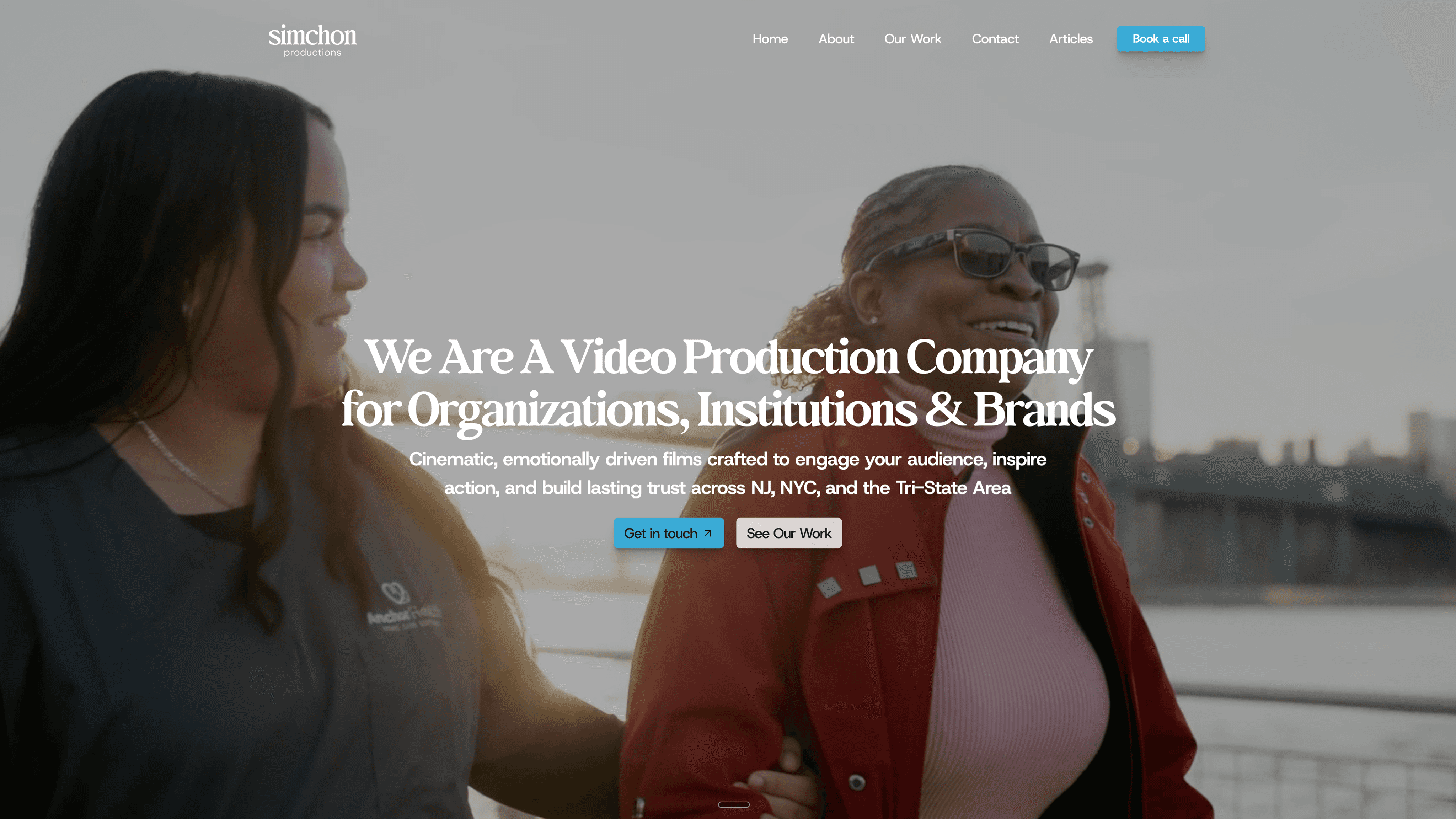
The approach often centers on identifying the audience first, then building cinematography and postproduction around what fosters trust. Key factors include cinematography quality, intentional editing choices, pacing, quote selection, and sound design to enhance emotional impact. Simchon Productions’ work on patient trust and healthcare storytelling shows this in practice: see why cinematic video builds lasting patient trust and patient testimonial video examples for healthcare-specific case studies.
If your organization is ready to move from planning to production, request a quote from Simchon Productions and start the conversation about your audience, timeline, and budget.
Sources
External sources: Branded vs. Documentary Video, Brand Documentary Filmmaking, How Brands Build Trust. See also Simchon Productions’ community impact video guide.
FAQ
How much does a documentary-style video cost?
Basic branded videos often start around $5,000 to $15,000, while documentary-style projects usually cost more due to longer preproduction and shoot days.
How long does a documentary-style film take to produce?
Most documentary projects take six to twelve weeks from discovery through final edit, longer than a standard commercial shoot.
Do I need a script for a documentary-style video?
No. A clear brief with defined audience and outcome matters more than a script, since editors build the narrative from real interviews and footage during the edit.
What consent do I need for patients or students on camera?
Healthcare subjects need HIPAA-compliant consent forms, and any minor on camera needs signed parental permission, both secured before the shoot, not after.
How long should the final video be?
Plan for a 3 to 5 minute main film plus 60, 30, and 15 second cutdowns for social platforms and paid distribution.
Does Simchon Productions work with schools and healthcare organizations?
Yes. Simchon Productions produces documentary-style films for nonprofits, schools, and healthcare agencies across the New Jersey and NYC tri-state area, with direct experience in admissions, donor, and patient storytelling.