Commission a school virtual tour video: runtimes, timelines, budgets, consent, and reuse for admissions and development teams.

Commission a School Virtual Tour Video for Admissions & Development
A school virtual tour video is a cinematic, story driven campus film built for admissions and fundraising, not an interactive 360 walkthrough. The best ones run 2:00 to 2:30 as a hero cut, paired with 60, 30, and 15 second edits for social and email. Done well, it turns a campus visit into an emotional first impression that drives inquiries and gifts before a family ever sets foot on campus.
TL;DR:
The ideal hero film for schools runs 2:00 to 2:30 minutes, focusing on a single message, with shorter social edits for maximum engagement.
Production typically takes 4 to 8 weeks, with pre-production at least twice as long as shoot days, and contingency planning is crucial for fixed deadlines.
Budget ranges vary from basic interviews with limited footage to full cinematic productions, influenced by crew size, equipment, locations, and post-production complexity.
Filming should concentrate on one clear audience and message, capturing authentic moments with guided interviews, multiple angles, and high-quality sound.
The final film should include accessible, high-resolution files in 4K, with formats optimized for web, social, and captioning, prioritizing storytelling over flashy graphics.
Simchon ProductionsTell Your School’s Story Through FilmSimchon Productions creates cinematic school videos with authentic storytelling, focused messaging, and high-quality cinematography for deeper audience connection.Explore school film production
Table of Contents
What Runtime and Deliverables Should We Plan For?
How Long Does Production Take and What Timeline Should We Set?
How Much Will a Cinematic School Virtual Tour Video Cost?
What Should Be Filmed: Story Elements and Shot Priorities
How Should Schools Distribute and Repurpose the Film?
What Questions Should We Ask When Hiring a Production Company?
What Technical Specs and Quality Standards Matter?
How Do We Script and Storyboard for a School Tour Film?
Can Interactive Elements Improve a School Tour Film?
What Do Successful School Tour Videos Look Like?
How Does Simchon Productions Approach School Films?
Ready to Plan Your School’s Film?
Sources
FAQ
What Runtime and Deliverables Should We Plan For?
Plan for a 2:00 to 2:30 hero film as your main admissions asset. Research from Mission Minded backs this up: shorter, focused films that pick one message outperform longer films that try to cover everything about a school in one sitting.
Build your brief around a full deliverable set, not just one video. A single shoot day can generate all of these if you plan for them up front:
Hero film: 2:00 to 2:30, the anchor for your website and open house pages
60 second cutdown: for email campaigns and longer social posts
30 second cutdown: for paid social and pre roll ads
15 second cutdown: for Stories, Reels, and TikTok
Vertical or square edits: mobile devices drive roughly 63% of web traffic, so a horizontal only film wastes half your audience
Ask for a 4K master file, H.264 or H.265 web MP4s sized for each platform, SRT caption files for accessibility, and separate versions with and without a music bed for voiceover flexibility.
How Long Does Production Take and What Timeline Should We Set?
Production runs on five phases: brief, pre-production, production, post-production, and delivery. Each phase has a job, and skipping one usually costs you a reshoot later.
Brief: define audience, message, and deliverables, usually one to two weeks
Pre-production: scripting, location scouting, interview planning, and consent paperwork
Production: the shoot days themselves, where the story actually gets captured
Post-production: editing, color, sound mix, and motion graphics
Delivery: final exports, captions, and platform-specific versions
For a single-location interview project, expect 4 to 6 weeks total with one to two shoot days. A cinematic multi-location program with faculty interviews, classroom coverage, and campus b-roll typically runs 6 to 8 weeks or longer with three to five shoot days, according to timeline benchmarks from ThinkBranded Media.
Pro Tip: Pre-production should take at least twice as long as your actual shoot days. That buffer protects the shoot from surprises and keeps you out of expensive reshoot territory.
Build in one to two weeks of contingency if your launch is tied to a fixed date like an open house. Weather, approval delays, and school calendar conflicts are the most common reasons projects slip.
How Much Will a Cinematic School Virtual Tour Video Cost?
Budgets for school films generally fall into three tiers, and every number below is a range, not a quote you can lock in without a real conversation about your specific campus and goals.
Small or introductory projects: a single interview subject, limited b-roll, and one shoot day
Mid-range projects: multiple interviews, classroom coverage, and a proper hero film plus cutdowns
Cinematic multi-day programs: several locations, drone footage, custom motion graphics, and a full asset library
Several factors move the price inside those tiers:
Crew size and experience level
Number of shoot days and campus locations
Specialty equipment like drones, gimbals, or cranes
Custom motion graphics or animated title sequences
Music licensing fees
Travel costs for multi-campus or out-of-region shoots
If you have to choose where to spend more, put it into story development and post-production craft. A well-planned interview script and a skilled edit turn ordinary footage into something that actually moves a donor or a prospective family. Extra drone shots rarely change minds the way a well-told story does.
What Should Be Filmed: Story Elements and Shot Priorities
Pick one audience and one clear message before you write a single line of script. A film trying to speak to prospective families, alumni donors, and current parents at once usually ends up speaking to none of them clearly.
Choose your protagonist: a student, a teacher, or a family, not the institution itself
Use guided interviews, not scripts: asking open questions and letting subjects respond naturally produces the authentic lines that make an edit sing, a technique Mission Minded points to as a key difference between films that connect and films that feel staged
Build your shot list around these priorities: exterior establishing shots of campus, active classroom learning moments, close emotional reactions during interviews, faculty profile moments, facility details like labs or libraries, and candid hallway or lunchroom life
Capture coverage, not just one angle: multiple takes and multiple camera angles give your editor room to build rhythm instead of cutting the same shot three times
Treat sound as equal to picture: lavalier mics on every interview subject and a quiet room matter more than a fancy camera move
Consent and safeguarding come before any of this. Every minor on camera needs signed parental consent, and your production partner should have a documented process for collecting and storing those forms, along with a plan for filming that avoids disrupting actual class time, a standard practice among education focused crews per Paper Films.
Pro Tip: Schedule interviews for the first half of the day when subjects are less tired and classrooms are calmer. A 2:00 PM interview after a full day of school rarely gets you the same energy as a 9:00 AM one.
How Should Schools Distribute and Repurpose the Film?
Put your hero film on your admissions landing page and your donor page, since that is where a longer, emotional watch earns the most attention. Shorter cutdowns belong in email campaigns and organic social posts, while vertical edits go straight to Reels, TikTok, and Stories.
A single well-planned shoot can supply every one of these audience specific edits, which keeps your budget centered on production quality instead of repeat shoot days. Mission Minded notes that companion videos and cutdowns cost far less to produce in the edit bay than they do to shoot separately, as long as you plan for them at the brief stage.
Track these metrics against your goals:
Inquiry form submissions after video views
Tour or open house sign ups
Landing page conversion rate
Donor engagement metrics like gift page visits after a fundraising film launch
Video view-through rate to gauge whether people watch past the first ten seconds
What Questions Should We Ask When Hiring a Production Company?
Ask about experience filming in schools before anything else, since a crew that has never worked around a school day will disrupt more than they capture. Use this checklist during vendor conversations:
What safeguarding and parental consent process do you use for filming minors?
Can you show sample deliverables at the runtime and format we need?
How many revision rounds are included, and what do additional rounds cost?
Who owns usage rights to the final footage, and for how long?
What is your realistic timeline from brief to delivery for our scope?
Who is the single point of contact and approver on our side during the project?
Evaluate proposals against a simple rubric: storytelling skill shown in their portfolio, demonstrable experience in education settings, a clear written deliverable list, and transparency about fees and revision limits. Ask for a client reference you can actually call.
Watch for red flags. Vague deliverable lists, open-ended pricing with no cap, no mention of a safeguarding plan for minors, and poor documentation of usage rights are all signs to slow down and ask more questions before signing anything.
What Technical Specs and Quality Standards Matter?
A school virtual tour video needs a 4K master file at minimum, even if your final web deliverables get compressed down for streaming. Shooting in 4K gives your editor room to reframe and crop without losing sharpness, which matters when you need both horizontal and vertical versions from the same footage.
Frame rate matters more than most marketing teams realize. Standard narrative footage should run at 24 or 30 frames per second for a cinematic look, while any slow motion b-roll of campus life or sports needs 60 frames per second or higher to hold up when slowed down in the edit.
For web delivery, request H.264 or H.265 encoded MP4 files, since these formats balance quality and file size for fast loading on school websites. Audio should be delivered as a separate stereo mix alongside the final video file, in case your web team needs to adjust levels for their platform.
Accessibility should not be an afterthought. Every version of the film needs an SRT caption file, and your production partner should burn in open captions on any social cutdown meant for sound-off viewing, since most social platforms autoplay muted. Color grading should stay natural rather than heavily stylized, since an overly filtered look can undercut the authenticity families are looking for in an admissions film.
Ask your production partner to deliver a compressed low-resolution proxy file alongside the master, so your web and social teams can preview edits quickly without downloading massive files every time.

How Do We Script and Storyboard for a School Tour Film?
Start every script with a one-line message, not a shot list. If you cannot summarize what you want a viewer to feel or believe after 90 seconds, the script is not ready yet.
Write an interview guide instead of a word-for-word script for on camera subjects. Prepared, open-ended questions like “what surprised you most about this school” produce natural, quotable answers, while a memorized script almost always reads stiff on camera.
Build your storyboard around a simple three-act structure: open on an emotional hook, usually a student or family moment, move into the proof points like academics and facilities, and close on a clear call to action pointing toward a tour, application, or gift. This mirrors how most successful admissions films are structured, and it gives your editor a map before a single clip gets cut.

Sequence your b-roll list by location and time of day during pre-production, not on set. Knowing you need morning arrival shots, midday classroom coverage, and afternoon activity footage before you show up saves hours of scrambling on shoot day.
Leave room in the storyboard for unscripted moments. Some of the strongest lines in a school film come from an unplanned exchange between a teacher and student that no storyboard predicted, so build in time to capture life happening rather than only staged setups.
Can Interactive Elements Improve a School Tour Film?
Yes, but interactive elements should support the story, not replace it, since a school virtual tour video in this sense is a narrative film first. Clickable chapter markers on a landing page let viewers jump to academics, athletics, or arts sections within one longer film without needing separate video files for every department.
Embedded calls to action work well when timed to the end of an emotional beat. A “schedule a tour” button that appears right after a student describes a turning point moment converts better than one sitting static below an embed player the whole time.
Some schools add simple on-screen text overlays with enrollment stats or program names as chapter transitions, which helps viewers track where they are in a longer cinematic piece without breaking the emotional flow with a hard cut to graphics. Interactive polls or quizzes embedded next to a video on a landing page can also capture inquiry information, turning a passive watch into an active lead capture moment.
Keep the film itself free of heavy on-screen interface clutter. The cinematic quality that makes these films effective comes from letting the story breathe, so save interactivity for the webpage surrounding the embed, not the video frame itself.
What Do Successful School Tour Videos Look Like?
Strong school films tend to share one trait: they pick a single family or student and follow that person’s actual experience rather than trying to summarize an entire institution in one film. A hero film built around a senior describing why they chose the school, paired with classroom and campus footage that supports her specific story, tends to hold attention longer than a film built as a checklist of programs.
Fundraising focused films often follow a similar pattern but center on impact. A film that shows a named scholarship recipient describing what a gift made possible, then closes with a direct ask, connects with donors more effectively than a general campaign overview covering every fund at once.
Multi-campus systems and school networks have had success producing one central brand film alongside shorter, school-specific edits from the same shoot days, a structure documented by education production specialists at Paper Films. This lets a network tell one consistent story while still giving each campus content that feels local and specific to its own families.
The common thread across effective examples is restraint. The films that perform best resist the urge to show every classroom, every sport, and every club, and instead trust one strong story to represent the whole school.
How Does Simchon Productions Approach School Films?
Simchon Productions builds every school film around one audience and one message, then backs that strategy with cinematic camera work and a deliberate post-production process that keeps the emotional through line intact from first cut to final export. That framework matters more than any single camera or lens choice.
On set, planning happens around the actual school day, not against it, with shoot schedules built to avoid pulling students out of core instructional time. Consent forms and safeguarding steps get handled before cameras roll, not scrambled together on shoot day.
A single well-planned shoot with Simchon Productions typically produces a hero film alongside multiple audience-specific cutdowns, giving admissions and development teams a full library of usable assets from one production window instead of separate projects for every channel.
— Tzvi Simchon
Ready to Plan Your School’s Film?
A production company can work with private schools, colleges, and K-12 institutions on cinematic admissions films, multi-video shoot days, fundraising films, and coordinated programs for schools with multiple campuses. If your team is choosing between a basic testimonial video and a fully produced cinematic film, some companies specialize in story-driven production built specifically for schools that need real recruitment and donor results, not just footage of hallways.
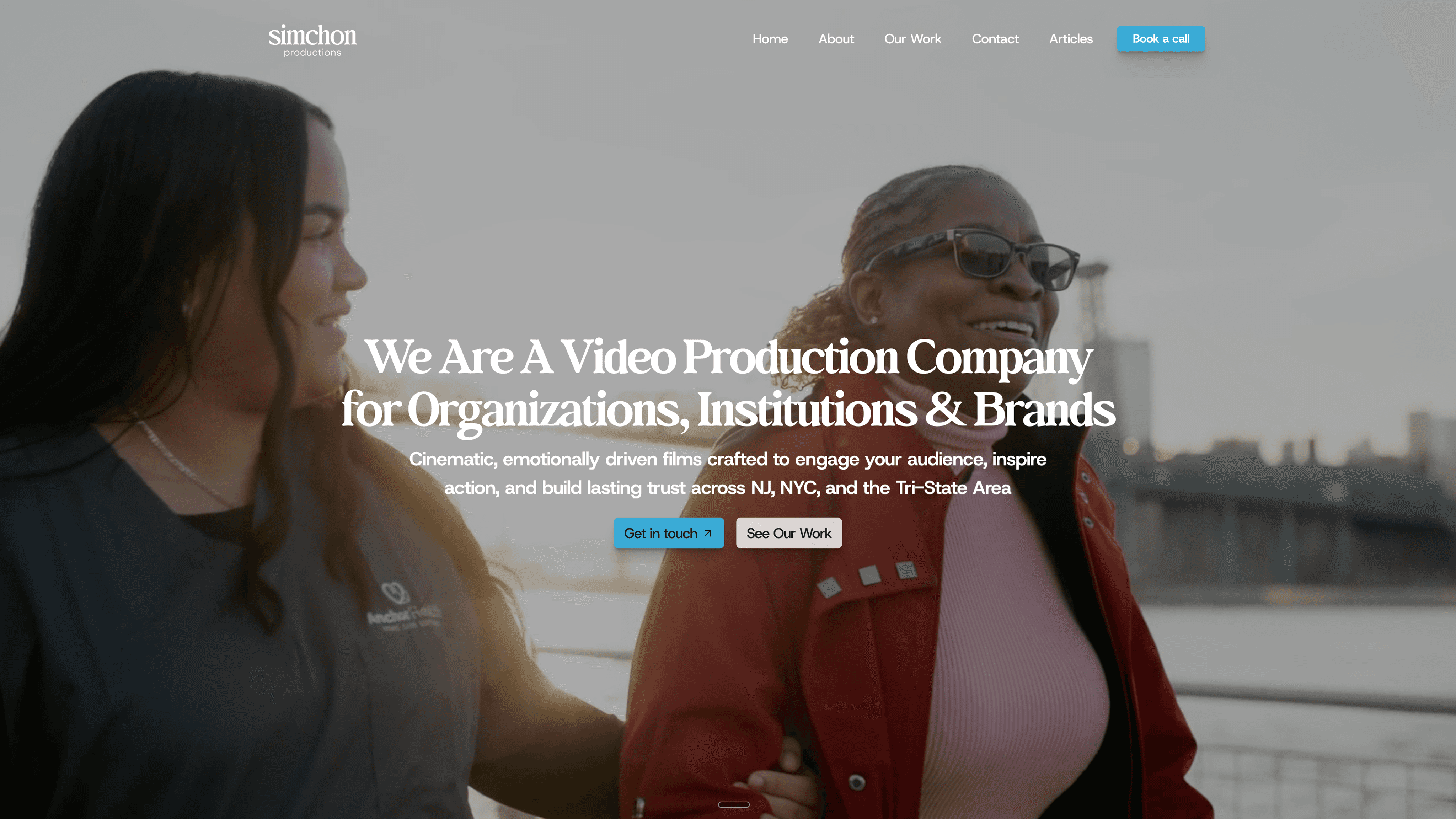
A short call or email with the team gets you a sample production timeline, a look at example deliverables like the hero film and cutdown package, and an indicative budget range based on your campus and goals. Visit Simchon Productions to start that conversation, and review past education sector work on the video production portfolio before you reach out.
Sources
Runtime and engagement data in this guide comes from Mission Minded, and timeline benchmarks come from ThinkBranded Media and Storyflow. For related reading, see how video supports university fundraising and K-12 video strategy.
FAQ
How Long Should a School Tour Video Be?
Aim for a 2:00 to 2:30 hero film, backed by Mission Minded’s research showing shorter, focused films outperform longer ones. Pair it with 60, 30, and 15 second cutdowns for social and email.
How Many Shoot Days Does a School Film Need?
A single-location interview project usually needs one to two shoot days, while a cinematic multi-location program often runs three to five shoot days across a school or campus.
Can One Shoot Produce Multiple Videos for Different Audiences?
Yes, a well-planned shoot day can generate a hero film plus multiple audience-specific cutdowns for admissions, fundraising, and social media, since companion edits cost far less to produce than separate shoots.
What Consent Is Required to Film Students on Campus?
Every minor appearing on camera needs signed parental consent collected before filming, and a documented safeguarding process should be in place with your production partner ahead of any shoot day.