See U.S. event video cost ranges ($500–$5,000+), learn the main price drivers, and use a practitioner-tested checklist to request comparable quotes.

U.S. Event Video Cost: Budgets from $500 to $5,000+ and Quotes
Most event videos cost in a broad range from entry-level budgets to high-end multi-camera productions that can exceed several thousand dollars. Thumbtack’s national data puts the average hire around $900 to $1,025, with a median near $961. The biggest price movers are coverage hours, crew size, and how much editing you need. Your next move: write down your event details and request quotes from two or three vendors before you decide.
TL;DR:
Spending $900 to $1,025 covers most standard events, but budgets significantly increase with additional coverage hours, crew size, or post-production needs.
Entry-level videography costs $500 to $1,500 with basic coverage, while mid-range professional packages range from $1,500 to $5,000, often including multiple cameras and highlights.
Large or multi-day hybrid events with live streaming can push costs into five figures, requiring extra technical crew and extended post-production efforts.
Regional price premiums in major cities like New York can add 30% to 60% to baseline rates, and discounts are often available for nonprofits and schools.
Essential cost factors include crew size, coverage hours, editing depth, licensing rights, and logistical expenses like travel and permits.
Table of Contents
How Much Does Event Video Cost by Tier?
What Factors Drive Event Video Pricing Up or Down?
What Do Sample Event Video Budgets Look Like?
What Should You Ask Before Hiring an Event Videographer?
How Does Simchon Productions Scope an Event Video Project?
What Actually Improves an Event Video on a Tight Budget?
How Do You Request a Quote From Simchon Productions?
Where Does This Pricing Data Come From?
Sources
FAQ
How Much Does Event Video Cost by Tier?
Event video pricing breaks into three clear tiers, and knowing which one matches your event saves you from overpaying or underbuying. Each tier includes different levels of crew, gear, and editing time.
Entry-level ($500 to $1,500). This covers a single videographer with one camera for a few hours. You’ll get a short highlight reel, usually two to four minutes, with basic color correction. What’s usually excluded: multiple angles, drone footage, same-day edits, and full-length ceremony or session recordings. This tier works for small school events, short award ceremonies, or a single keynote speech.
Mid-range professional ($1,500 to $5,000). This is where most corporate events and mid-size galas land. You get one to two cameras, a trained editor, and deliverables that usually include a polished highlight video plus individual speaker clips or testimonial cuts. Videographer shows a typical corporate shoot at four hours with one camera running $900 to $1,500, and that number climbs fast once you add a second camera or extend the day.
High-end production ($5,000 and up). Multi-camera crews, multi-day coverage, and broadcast-quality output push budgets into five figures. Hybrid events with live streaming are a major driver here. According to AVIXA’s hybrid event production guidance, live-streamed and hybrid formats require extra technical crew and encoding workflows that raise both on-site and post-production costs.
Entry: $500 to $1,500, one camera, short highlight reel
Mid-range: $1,500 to $5,000, one to two cameras, edited highlights plus speaker clips
High-end: $5,000+, multi-camera, multi-day, or livestream production
Regional location matters too. New York City and other major metros commonly carry a premium of 30% to 60% above baseline rates, according to Peerspace’s pricing research. Nonprofits and schools sometimes qualify for discounted packages, so it’s worth asking directly.
What Factors Drive Event Video Pricing Up or Down?
Five factors control most of your final invoice: crew size, coverage hours, editing depth, licensing needs, and logistics. Understanding each one lets you cut costs in the right places instead of guessing.
Crew size and camera count. A single shooter with one camera is your cheapest option. Adding a second camera for stage coverage or crowd reaction shots typically adds several hundred dollars, since you’re paying for a second operator and more footage to sync in editing.
Coverage hours. Half-day shoots (four hours) cost less than full-day coverage, and most vendors charge overtime once you cross an agreed threshold, often at 1.5 times the hourly rate.
Post-production depth. A quick highlight reel takes far less editing time than a full documentary-style edit. Editing often costs as much as the shoot day itself, and adding subtitles, multiple social cuts, or extra revision rounds all extend the bill and the turnaround.
Rights and licensing. Licensed music, speaker release forms, and usage windows (internal use versus public marketing) can add cost, especially if you need broadcast or long-term commercial rights.
Logistics. Travel fees, parking, venue insurance requirements, and permit costs are easy to overlook until they show up as line items.
Pro Tip: Ask your videographer for a flat day rate instead of an hourly one whenever your event runs longer than four hours. Flat rates protect you from surprise overtime charges when the keynote speaker runs long.
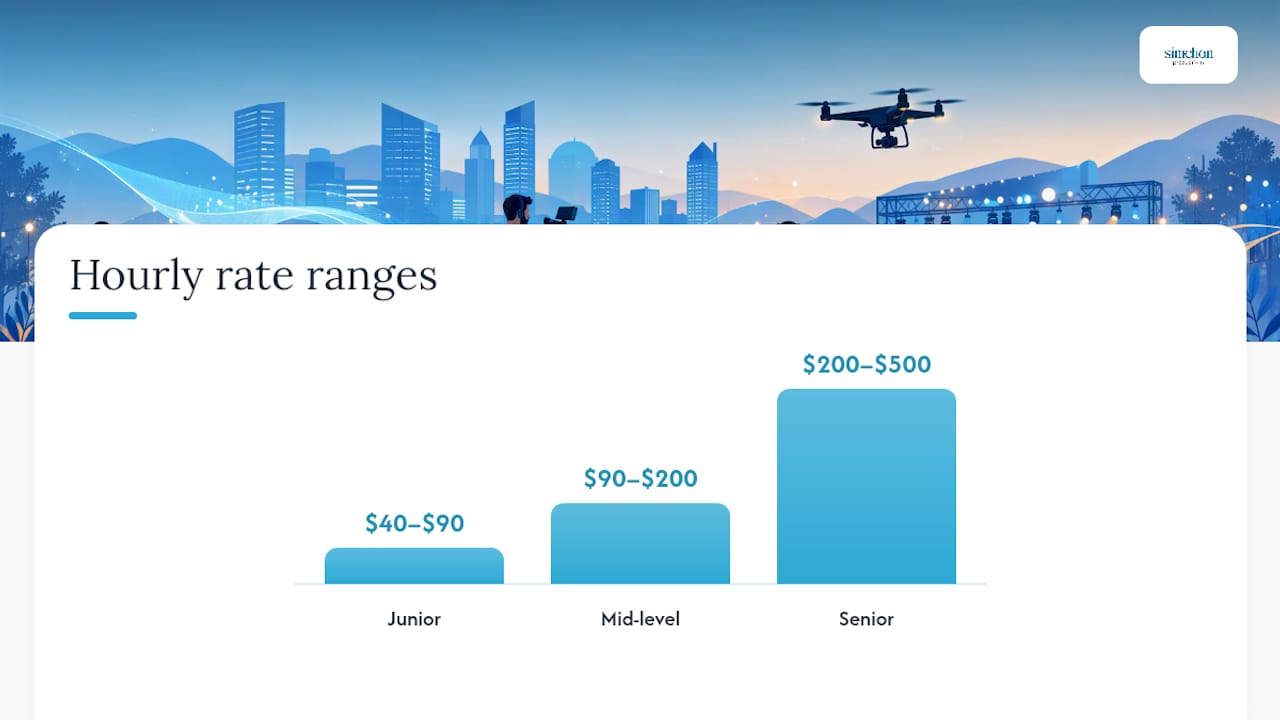
Freelancer experience level also shifts pricing. Junior freelancers often charge $40 to $90 an hour, mid-level shooters run $90 to $200, and senior professionals charge $200 to $500 an hour.
What Do Sample Event Video Budgets Look Like?
Sample budgets give you a starting point to bring into vendor conversations, and most common event types fall into predictable price bands.
Videographer.com’s cost guide lists a comparable corporate shoot at four hours with one camera around $900 to $1,500, which lines up closely with the ranges above. Highlight reels turn around faster than full edits because they require less footage review and fewer color and audio passes.
Once an event stretches past a single day, or you need same-day social clips alongside a full documentary edit, expect the budget to jump into the high-end tier. Multi-day conferences with breakout sessions or livestream components can push budgets higher due to the need for multiple crews covering different rooms.
What Should You Ask Before Hiring an Event Videographer?
Send your event details upfront and ask direct questions about deliverables, backup plans, and contracts before you compare a single price. This is the single fastest way to get quotes you can actually compare side by side.
What to send every vendor:
Full event schedule and run of show
Expected deliverables (highlight reel, full edit, social cuts)
Final use case (internal training, public marketing, fundraising appeal)
Venue details and any AV restrictions
Questions to ask:
What’s your turnaround time for the first draft?
Do you have a backup camera and backup shooter if someone gets sick?
Can I see bios or reels for the specific crew assigned to my event?
Do you carry liability insurance, and can you provide a certificate for my venue?
Who owns the raw footage and final files after delivery?
Upwork’s videographer pricing guidance notes that deliverable scope, not just hours booked, drives most of the price variation between quotes. Compare line items rather than bottom-line totals.
Three red flags in a quote: vague deliverable language (“we’ll cover the event”), no written contract, and no mention of an audio plan. Audio is the single most common failure point in event video, and a vendor who doesn’t mention it hasn’t thought through your event.

Read our full hiring checklist for a deeper breakdown of RFP language that protects you.
How Does Simchon Productions Scope an Event Video Project?
Simchon Productions builds every quote around three questions: how many hours, how many cameras, and what final deliverables the client actually needs. This keeps estimates honest and avoids padding.
School events: typically one to two cameras, half-day coverage, and a highlight reel built for admissions and social use.
Fundraisers and galas: often two cameras to capture stage moments and donor reactions, paired with a highlight video plus standalone testimonial clips.
Brand and corporate events: scoped around specific final use, whether that’s a recap for internal leadership or a public marketing piece.
Simchon Productions builds cinematic storytelling into every tier, not just the top-end packages, and offers discounted rates for qualifying nonprofits and schools. Browse the portfolio to see finished examples across each scope, and read more on how cinematic event video supports marketing and fundraising.
What Actually Improves an Event Video on a Tight Budget?
If your budget is small, put your money into clean audio and a tight highlight edit before you pay for a second camera. Bad audio ruins a video faster than a missing angle ever will.
Add a second camera only when you need speaker cutaways or reaction shots during a keynote. Simple fixes, like moving a light source or clearing clutter behind the podium, often improve the final product more than extra gear.
— Tzvi Simchon
How Do You Request a Quote From Simchon Productions?
Simchon Productions is the direct alternative to piecing together freelancers on your own. Instead of chasing separate quotes for shooting, editing, and licensing, you get one team that scopes the whole project and gives you a single number upfront.
Simchon Productions handles brand films, nonprofit videos, school events, galas, and corporate event coverage across New Jersey, New York City, and the wider tri-state area. To get an accurate quote, send your event date, schedule, expected deliverables, and how you plan to use the final video (internal, public marketing, fundraising). Most requests get a reply with a scoped estimate within a few business days.
Visit the Simchon Productions site to start your quote request and review recent project examples before your next event.
Where Does This Pricing Data Come From?
These ranges come from Thumbtack, Videographer.com, and industry pricing guides covering event videography nationwide. Local rates vary, so confirm NYC or metro-area quotes against your specific market.
Sources
FAQ
How much does a 2 minute highlight video cost?
A two-minute highlight video typically costs $500 to $1,500 for entry-level coverage, or $1,500 to $5,000 with a mid-range crew and more editing time.
How much for a videographer for 2 hours?
Two hours of single-camera coverage usually runs $80 to $400, based on freelancer hourly rates of $40 to $200 per hour depending on experience level.
What should I charge or expect to pay for a 4 minute video?
A four-minute edited video, including a full day of shooting and post-production, commonly falls between $1,500 and $4,000 depending on crew size and revision rounds.
What is a reasonable budget for event videography?
A reasonable starting budget is $900 to $1,025, based on Thumbtack’s national average data, though mid-size events with more deliverables often run $1,500 to $5,000.
Does Simchon Productions offer discounts for nonprofits or schools?
Simchon Productions offers discounted pricing tiers for qualifying nonprofit and school clients, similar to discount structures common across the videography industry…