Discover the hospital video production process explained. Learn how to create compliant, effective videos that drive patient engagement and meet...

Hospital Video Production Process Explained for Marketers
Hospital video production is the methodical creation of video content designed to meet healthcare regulations, patient education needs, and marketing goals within a hospital setting. Unlike standard corporate video, this process carries legal weight. HIPAA compliance, 42 CFR Part 2 requirements, and medical-legal review workflows shape every phase from script to final delivery. The hospital video production process explained here covers pre-production through distribution, giving healthcare marketing professionals a clear framework to plan, execute, and measure video projects that actually move patients to action.
What are the key phases in hospital video production?
The hospital video production process follows three core phases: pre-production, production, and post-production. Each phase carries healthcare-specific requirements that do not exist in standard commercial video work. Skipping steps in any phase creates compliance risk and costly rework.
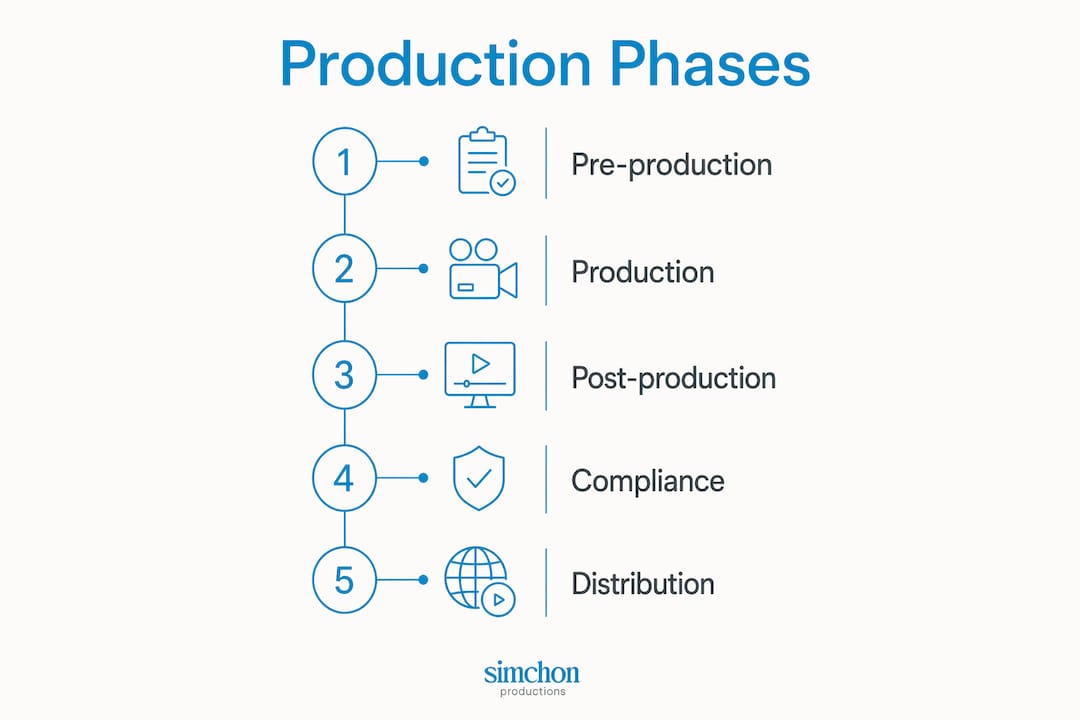
Pre-production: scripting and approvals
Pre-production is where most hospital video projects succeed or fail. The script is the foundation, and starting from approved clinical documents dramatically reduces rework and accelerates approval cycles. Most delays trace back to inaccuracies at the script stage, not to post-production aesthetics. That means your clinical team must own the first draft, not the marketing team.

Once a script exists, it enters medical-legal-regulatory (MLR) review. MLR reviews typically take 5–10 days, and using pre-approved templates can reduce that overhead by 30–50%. Build that window into your project calendar from day one. Rushing this step is the single fastest way to add weeks to your timeline.
Pre-production also covers location scouting with privacy zoning in mind, casting or identifying patient and clinician participants, and securing signed authorizations before any camera rolls.
Production: filming with compliance built in
Production is the on-set phase. In a hospital environment, this means working around active clinical operations, respecting patient privacy zones, and following filming protocols that prevent accidental capture of protected health information (PHI). Crew members need a briefing on HIPAA basics before they enter any clinical space.
Overall healthcare video production timelines range from 3–12 weeks, depending on the complexity of clinical review and the number of stakeholders involved. A simple awareness video may wrap in three weeks. A multi-department patient education series can take three months. Plan accordingly.
Post-production: editing, captioning, and quality assurance
Post-production in healthcare video is not just about color grading and music. Every edit must preserve clinical accuracy. A cut that removes context from a physician’s statement can create a misleading medical claim. Quality assurance at this stage includes a clinical review of the final cut, not just a marketing review.
Captioning is non-negotiable. Accessibility standards require captions for patient-facing content, and many hospital systems mandate compliance with the Americans with Disabilities Act (ADA) for all public-facing media. Final delivery also includes format optimization for each distribution channel, whether that is a patient portal, YouTube, or a waiting room screen.
Pro Tip: Build a two-stage review into post-production: one pass from your clinical team for accuracy, and one pass from your legal team for compliance. Running them simultaneously saves days.
How do hospitals ensure regulatory compliance and patient privacy?
Regulatory compliance is not a checklist item you complete at the end. HIPAA and 42 CFR Part 2 compliance require signed patient authorizations, filming protocols that prevent PHI exposure, and privacy zoning on every set. These requirements apply from the first day of pre-production through final delivery and archiving.
The core compliance requirements for hospital video production include:
Signed patient authorizations. Every patient who appears on camera needs a release that specifies how the footage will be used, on which platforms, and for how long.
Business Associate Agreements (BAAs). Any external video production company handling footage that could contain PHI must sign a BAA with the hospital before production begins.
Privacy zoning on set. Designate clear boundaries on location where cameras cannot point. Post signage. Brief every crew member.
PHI scrubbing in post-production. Review every frame for visible patient records, whiteboards, computer screens, or identification badges that could expose PHI.
Ethical storytelling standards. Avoid sensationalism, misleading before-and-after framing, or content that exploits patient vulnerability for emotional effect.
“Trust is the most vulnerable asset in healthcare communications. Transparency and ethical storytelling are not optional extras. They are the foundation of patient credibility. Use comprehensive, HIPAA-compliant releases that clearly detail every intended use of the footage.”
The authorization process deserves special attention. A release signed for internal training use does not cover public social media distribution. Your release forms must be specific, and your legal team must approve the language before production begins. Reusing a generic release form from a non-healthcare project is a compliance risk that can result in significant penalties.
What strategic approaches maximize hospital video effectiveness?
A connected video strategy is the most efficient approach to hospital video production. One shoot can generate multiple assets across platforms and audience needs, which optimizes clinician schedules and keeps messaging consistent across departments. Filming a physician for a patient education video? Capture B-roll of the department, a short recruitment clip, and a 30-second awareness cut in the same session.
The table below shows how a single production day can yield content across four content categories.
Content type | Typical length | Primary use |
|---|---|---|
Patient story | 2–4 minutes | Website, social media |
Educational procedure video | 2–4 minutes | Patient portal, waiting room |
Awareness clip | 60–90 seconds | Social media, paid ads |
Recruitment video | 90–120 seconds | Careers page, LinkedIn |
Hospitals typically produce 2–4 patient stories, 4–6 educational videos, and 3–4 awareness videos monthly to meet their marketing and communication goals. That volume is only sustainable when production is planned as a connected system, not as individual one-off projects.
Video length also matters more than most marketing teams realize. Patient education videos perform best at 60–90 seconds for awareness content and 2–4 minutes for detailed procedures. Longer does not mean more informative. A tightly edited 90-second video on post-surgical care will outperform a rambling five-minute version every time.
Pro Tip: Map your annual marketing calendar before scheduling a single shoot. Identify which months need patient stories, which need awareness content, and which need recruitment videos. Then batch your shoots to cover multiple months in one production block.
Integration with your hospital’s digital distribution plan is the final piece. A video that lives only on YouTube misses patients in the waiting room. A video formatted only for a 16:9 screen fails on Instagram. Distribution planning belongs in pre-production, not as an afterthought after the edit is locked.
What are common challenges in hospital video production?
Hospital video projects face obstacles that standard commercial productions do not. Knowing them in advance lets you build solutions into your workflow before they become delays.
Script-level clinical inaccuracies. The most costly delays come from inaccurate scripts, not from production problems. Clinical teams must review and approve scripts before any production resources are committed.
Clinician scheduling conflicts. Physicians and nurses operate on unpredictable schedules. Build two or three backup filming windows into every production plan. Never schedule a single shoot day with no contingency.
Multi-department coordination gaps. When cardiology, oncology, and marketing each run separate video projects, the hospital ends up with redundant footage, inconsistent branding, and wasted budget. A centralized video production calendar prevents this.
MLR review bottlenecks. Medical-legal review is necessary, but it can stall a project for weeks if not managed proactively. Submit scripts for review as early as possible, and use pre-approved templates wherever the content allows.
AI-assisted production tools. AI-assisted scripting and editing tools can reduce iteration times from days to minutes, with medical reviewers refining AI-generated drafts rather than writing from scratch. This approach maintains review rigor while accelerating the early stages of production.
The pattern across all these challenges is the same: problems that surface late in production cost far more to fix than problems caught early. A clinical inaccuracy found in post-production means reshooting. The same inaccuracy caught at the script stage costs one revision cycle.
Key takeaways
The hospital video production process requires clinical accuracy, regulatory compliance, and connected content planning to deliver measurable results for healthcare marketing teams.
Point | Details |
|---|---|
Start scripts from clinical documents | Scripts built on approved clinical materials reduce rework and speed up MLR review cycles. |
Build compliance into every phase | HIPAA, 42 CFR Part 2, and BAAs must be addressed from pre-production through final delivery. |
Use a connected shoot strategy | One production day can yield patient stories, educational clips, and awareness content simultaneously. |
Match video length to content type | Awareness videos perform best at 60–90 seconds; detailed procedures work at 2–4 minutes. |
Plan distribution before you shoot | Format and channel decisions made in pre-production prevent costly reformatting after delivery. |
What I’ve learned from working on healthcare video projects
The biggest mistake I see hospital marketing teams make is treating video as a creative project rather than a clinical communications project. The moment you approach it as purely creative, compliance becomes an obstacle instead of a foundation. Every decision, from casting to script to edit, carries clinical and legal weight.
The second thing I have learned is that cinematic quality builds patient trust in ways that phone-shot content simply cannot replicate. Patients judge a hospital’s competence partly by how it presents itself. A poorly lit, shaky video of a physician does not inspire confidence. A well-produced, thoughtfully edited piece signals that the hospital takes quality seriously across the board.
The connected content strategy is also something I wish more hospital marketing teams adopted earlier. I have seen organizations spend their entire annual video budget on one flagship brand film, then scramble for content the rest of the year. Batching shoots and planning for multiple outputs from a single production block is not a budget trick. It is the only way to maintain consistent volume without burning out your clinical staff or your budget.
Finally, the hospitals that get the best results from video are the ones that choose production partners who understand healthcare compliance from day one. You should not have to explain what a BAA is to your video crew. That knowledge should already be there.
— Tzvi Simchon
How Simchon Productions supports hospital video projects
Simchon Productions works with hospitals and healthcare organizations across New Jersey and the tri-state area to produce video content that meets clinical, compliance, and marketing standards.
Every project starts with a clear framework: approved clinical content, HIPAA-aware production protocols, and a connected content plan that maximizes each shoot. The healthcare video portfolio shows the range of work, from patient stories and educational series to awareness campaigns and brand films. If your hospital needs a video partner who understands the full production process, from MLR review timelines to post-production clinical accuracy checks, reach out to Simchon Productions to discuss your next project.
FAQ
What is the typical timeline for hospital video production?
Hospital video production typically takes 3–12 weeks, depending on clinical review complexity and stakeholder approvals. MLR reviews alone can take 5–10 days.
What compliance requirements apply to hospital video production?
HIPAA and 42 CFR Part 2 require signed patient authorizations, Business Associate Agreements with external vendors, and filming protocols that prevent PHI exposure on set.
How long should patient education videos be?
Patient education videos perform best at 60–90 seconds for awareness content and 2–4 minutes for detailed clinical procedures.
What is a connected video strategy in healthcare?
A connected video strategy means planning one production shoot to generate multiple video assets across patient stories, educational content, and awareness clips, which reduces costs and keeps messaging consistent.
Why do most hospital video projects face delays?
Most delays originate at the script stage from clinical inaccuracies, not from production or editing problems. Involving clinical teams in the first draft prevents the majority of costly revisions.