Use 3–6 open, story driven questions that film and edit cleanly. Ready sets for 15–30s, 60–90s, and 2–3 minute case studies, plus outreach and consent tips.

How to Choose 3–6 Testimonial Interview Questions for Your Video
Use 3 to 6 open, story-driven questions built around one arc: before, turning point, result, recommendation. That structure gives you a usable quote or clip every time, because it forces a narrative instead of a compliment. Send 2 to 3 of those questions to your interviewee in advance, then ask the rest live. A working example: “What was happening before you came to us?” paired with “What changed once you had the result in hand?”
TL;DR:
Asking for specific numbers or measurable outcomes in testimonials increases their credibility and usefulness in marketing materials.
Questions should follow a story arc: before, decision, results, and recommendation, to produce engaging and authentic answers.
Short video clips of 20 to 40 seconds require only one or two questions, while longer case studies need up to six well-structured prompts.
Timing requests within 72 hours of a successful outcome enhances the authenticity and detail of the testimonial.
Professional video production is recommended for high-stakes or polished testimonials, especially when the story is complex or needs a cinematic presentation.
Simchon ProductionsTurn Real Stories Into FilmsSimchon Productions creates cinematic testimonial and documentary-style films that connect organizations with the audiences they serve.Explore Simchon Productions
Table of Contents
What Are the Best Testimonial Interview Questions to Start With?
What Makes a Testimonial Question Good Instead of Generic?
Which Prompts Work Best for Each Stage of the Customer Story?
How Many Questions Should You Ask for a Video Testimonial?
How Do You Ask for a Testimonial Without Sounding Pushy?
How Does a Production Team Structure Questions for Editable Footage?
What’s the One Thing Most Marketers Get Wrong About Testimonial Questions?
Want a Filmmaker to Handle the Interview Instead?
Sources
FAQ
What Are the Best Testimonial Interview Questions to Start With?
The best testimonial interview questions follow a simple arc: before, decision, result, recommendation. Below are four ready-to-use sets, each matched to a specific format so you’re not guessing which questions fit a 20-second clip versus a written case study.
1. Two-question set for 15 to 30 second social clips. Ask “What’s the one thing you’d tell someone considering us?” and “What result mattered most to you?” This pairing works because it skips the setup and goes straight to the payoff, which is all a short clip has room for.
2. Four-question set for the standard 60 to 90-second testimonial.** Ask what the problem was before, why they chose you over other options, what changed after, and who they’d recommend you to. HubSpot’s testimonial question research groups questions into themes and recommends pulling one or two from each theme rather than asking everything from a single angle.
3. Written testimonial form with 3 to 5 questions. Keep it to background, result, and recommendation. Completion rates drop fast past five fields, so trim anything that isn’t essential to the story.
4. Six-question B2B case study script. Cover the business problem, the evaluation process, the implementation experience, measurable outcomes, unexpected benefits, and a closing recommendation. Follow up on any vague answer with “Can you put a number on that?” before you stop rolling.
What Makes a Testimonial Question Good Instead of Generic?
A good testimonial question asks for a story, not a rating. “Tell me about the moment you realized this was working” beats “Were you happy with the service?” every time, because the first invites a scene and the second invites a single word.
The strongest interview questions for testimonials follow the before, trigger, outcome, recommendation arc. You ask what life looked like before, what pushed them to act, what changed, and who else should hear about it. Harvard Business Review’s research on questions found that open, targeted questions produce more reflective, useful answers than closed or leading ones.

Weak: “Did you like working with us?” Strong: “What surprised you most about the process?”
Weak: “Did we save you time?” Strong: “How many hours a week does this give you back?”
The second version in each pair asks for a specific, checkable detail. Specificity is what makes a quote usable in an ad or on a landing page. Requesting a single number, when one exists, gives the testimonial an anchor that a vague compliment never will.
Pro Tip: Let a pause sit after you ask the “before” question. Most people need three or four seconds to find the real memory instead of the polished answer. Don’t fill that silence.
Which Prompts Work Best for Each Stage of the Customer Story?
Different stages of the customer story call for different prompts, and mixing themes is what keeps an interview from sounding like an interrogation or a sales script.
Background
What does your organization do, in one or two sentences?
What was your role in choosing a solution?
How long had this problem existed before you looked for help?
Problem
What was going wrong before you found us?
What had you already tried that didn’t work?
What would have happened if nothing changed?
Decision
What made you pick us over the other options?
Was there a specific moment that tipped the decision?
What almost stopped you from moving forward?
Experience
What did the process actually feel like, day to day?
What was different from what you expected?
Was there a point where you weren’t sure it would work?
Results
What changed once the work was done?
Can you put a number on the difference this made?
What would you have lost by not doing this?
Recommendation
Who would you tell about this?
What would you say to someone on the fence?
What’s the one sentence you’d use to describe us?
Problem and results prompts tend to produce measurable claims. Background and experience prompts tend to produce anecdotes and color. For video, pick one or two prompts per theme. For written forms, three to five is plenty before completion rates start to slide.
How Many Questions Should You Ask for a Video Testimonial?
The number of questions you ask depends entirely on your final clip length. A 15 to 30 second social clip needs only one or two questions. A 60 to 90 second standard testimonial needs three to five. A 2 to 3 minute case study video can support up to six.
For remote recording, use a browser-based one-click tool so interviewees don’t have to install software.
Send the full question list in advance, but don’t hand over a script. Production guides on remote testimonial recording note that preview reduces anxiety while a memorized script kills authenticity.
Always allow retakes. The best sentence often comes on the second try, once nerves settle.
In the edit, hunt for sound bites in the 20 to 40 second range. That length fits most social and landing page formats without feeling clipped.
Ask for a one-sentence sum near the end of every interview. It’s the line you’ll use as a headline over the clip.
Capture B-roll or a quick screen share whenever someone mentions a specific product feature or number, so you have something to cut to besides a talking head.
Video testimonials convert measurably better than plain text in most marketing contexts, and research on video testimonial best practices points to short, punchy answers as the reason. A tight sound bite is easier to trust and easier to share than a paragraph of praise, which is exactly why the question architecture matters more than the camera gear.
How Do You Ask for a Testimonial Without Sounding Pushy?
You ask for a testimonial within 4 to 72 hours of a clear win, while the result is still fresh in the client’s mind. Wait longer and the details blur; the client remembers being happy but forgets the specifics that make a testimonial believable.
Name the specific win in your request. “That 30% reduction in onboarding time you mentioned last week” works better than “your experience with us.”
State the time commitment up front. Ten minutes for a written quote, fifteen for a video call.
Explain the recording method clearly, whether that’s a phone call, a video link, or a written form.
Include a simple consent line: “I agree that [Company] may use my name, quote, and likeness in marketing materials.” Store every signed consent in one shared folder, tied to the client’s name and date.
Follow FTC endorsement guidance on every testimonial you publish. The FTC’s official guidance on endorsements and testimonials requires disclosure of any material connection, like a discount or free product given in exchange for the testimonial. Skipping this step isn’t just risky, it can expose your marketing to real legal trouble.
How Does a Production Team Structure Questions for Editable Footage?
A well-structured testimonial interview aims to give the editor a moment worth cutting to. That means every question is written to surface either an emotional beat or a specific number, never generic praise.
Three prompts we lean on:
A warm-up line before the camera rolls: “Tell me about the day you first called us.” It relaxes people before the real questions start.
A B-roll cue mid-interview: “Can you show me where you use this?” It gives the editor something besides a talking head.
A closing ask: “Sum this up in one sentence.” That line usually becomes the headline over the final cut.
See more examples in our patient testimonial video breakdown and the full production blog.
What’s the One Thing Most Marketers Get Wrong About Testimonial Questions?
Test two question sets on similar customers and count which one produces more usable sound bites. Most teams chase polish first. Chase authenticity first. Polish is easy to add later; a real, specific answer is not.
— Tzvi Simchon
Want a Filmmaker to Handle the Interview Instead?
Hiring a professional video production company is the alternative to doing this in-house when the story is too important to leave to a phone camera and a list of questions. The scope can include full testimonial video production, short-form social clips built from longer interviews, and cinematic case-study films for schools, healthcare organizations, and nonprofits across a tri-state area.
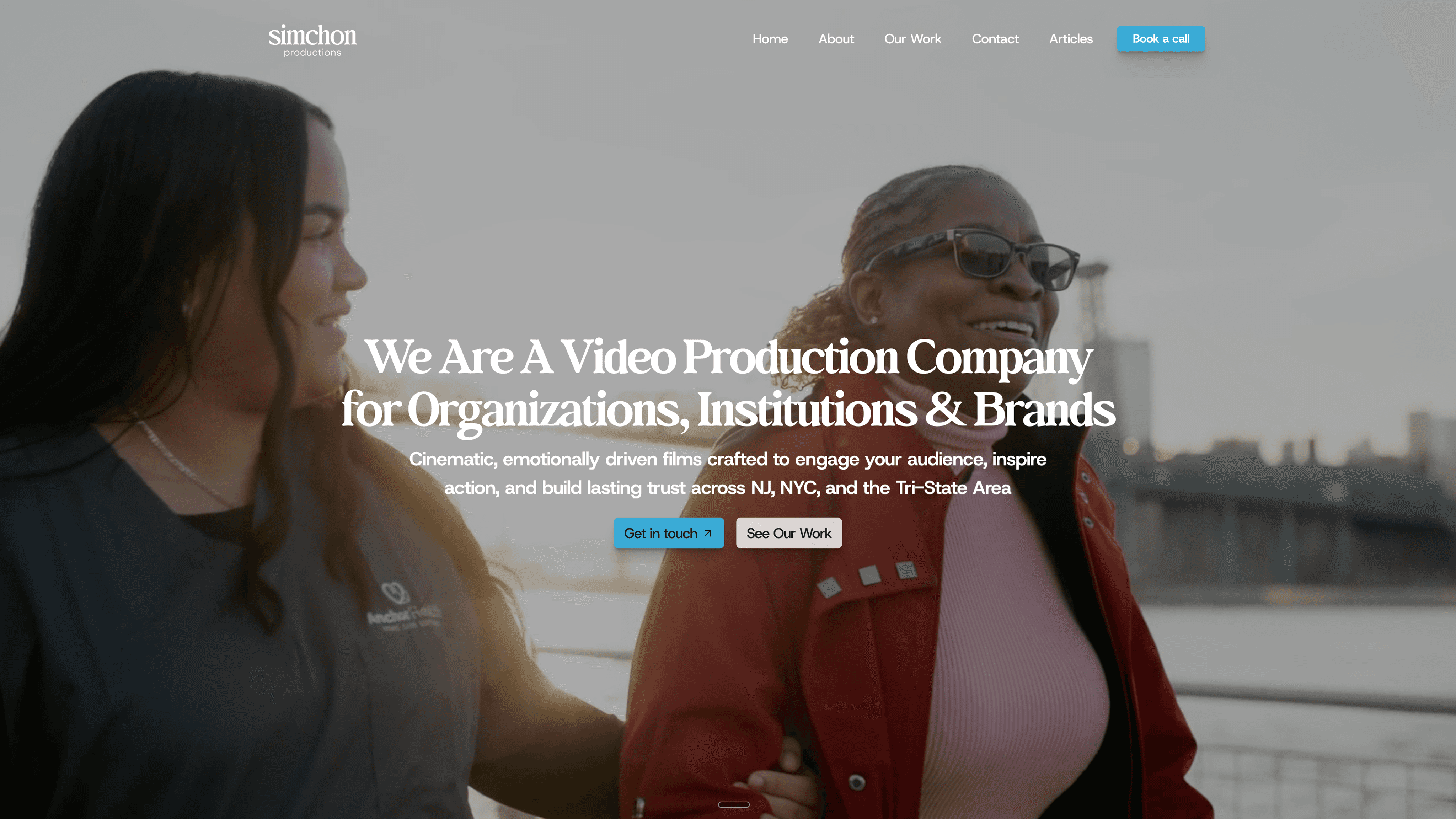
Hiring makes sense when you don’t have the internal time to prep an interviewee, light a room, or cut a 90 second story out of fifteen minutes of footage. It also makes sense when the stakes are high: a donor film, a flagship client case study, or a testimonial that’s going to run as a paid ad for months. A professional production team can handle the questions, the setup, the warm-up, and the edit, so the finished piece looks intentional instead of improvised. If your team could use a hand structuring the next round of client interviews, an initial conversation about your project is the natural next step. You can also see how a similar engagement typically runs in our guide on hiring a video production company.
Sources
FAQ
What Are Good Testimonial Questions to Ask?
Good testimonial questions ask for a story arc: what the problem was, why the client chose you, what changed, and who they’d recommend you to. Avoid yes or no questions like “Were you satisfied?” since they produce flat answers instead of quotable ones.
What Are 10 Good Interview Questions for a Testimonial?
A strong set of ten mixes background, problem, decision, experience, results, and recommendation prompts, pulling one or two from each theme as HubSpot recommends. Examples include “What was happening before you found us?”, “What almost stopped you from moving forward?”, and “What would you tell someone on the fence?”
What Are Testimonials in an Interview Setting?
A testimonial in an interview setting is a recorded or written statement from a real customer describing their experience, problem, and result. It’s gathered through a short, structured conversation rather than a written survey, which usually produces more natural, detailed answers.
What Are Some Effective Testimonial Examples?
Effective testimonials name a specific before-and-after, include a number or timeframe when possible, and end with a clear recommendation. A line like “We cut onboarding time by a third within two months” works better than “Great service, highly recommend.”
How Long Should a Video Testimonial Interview Take?
Plan for 8 to 12 minutes of recorded conversation to get 3 to 6 usable answers, even if the final clip runs only 60 to 90 seconds. Extra time gives you room for retakes and a stronger one-sentence sum at the end.