Filmmaker friendly video RFP template with five must have sections, copy ready fields, clear budget and rights prompts, and a scoring rubric.

5 Must Have Sections for a Video RFP Template That Filmmakers Trust
A video RFP template works only when it forces clarity: objectives, deliverables, a budget range, rights terms, and a scoring rubric. Copy the section-by-section template below, fill in your project specifics, and set a realistic budget range before you invite vendors. Legal guidance on rights and specs backs this approach, and it matches how working production companies like Simchon Productions actually review proposals.
TL;DR:
Providing a clear budget range, including specific exclusions like talent and licensing fees, helps filter vendors and prevents unexpected final costs.
An RFP must include detailed deliverables with exact formats and lengths, as vague scope descriptions lead to incompatible proposals.
Explicit ownership, licensing, and release terms—preferably specified upfront—avoid legal disputes over footage rights and usage rights later.
The evaluation process should prioritize strategic alignment, process transparency, and relevant experience over reel quality alone, with weighted scoring.
Smaller projects or organizations with trusted vendors can often skip formal RFPs, relying on brief summaries and direct conversations to save time.
Simchon ProductionsBring Your Story Into FocusSimchon Productions creates cinematic films with clear audience strategy, authentic storytelling, and focused messaging for organizations and brands.Explore Simchon Productions
Table of Contents
What Must a Video RFP Include?
Section-by-Section RFP Template: Copy This Structure
How Should You Set a Budget Range in a Video RFP?
What Rights and Licensing Terms Belong in the RFP?
What Technical Specs Should the RFP List?
How Do You Score and Evaluate Video Production Proposals?
Quick RFP Checklist and One-Page Template
What Do Working Filmmakers Wish Every RFP Got Right?
What Payment Terms Should the RFP Specify?
When Should You Run a Full RFP Instead of Just a Brief?
Prefer to Skip the RFP and Talk to a Production Partner Directly?
Where Can You Find More RFP Templates and Legal Guidance?
Sources
FAQ
What Must a Video RFP Include?
A video RFP needs five mandatory sections: company overview, target audience, scope of deliverables, timeline with milestones, and submission requirements. Skip any one of them and you get proposals that can’t be compared side by side.
Company overview and project purpose. Start with who you are and why this video exists. Don’t just say “we need a video.” Say what the video needs to accomplish: drive donations, recruit students, explain a new product line. Tie the purpose to where the video will live. A video for a homepage hero banner needs different pacing than one built for a fifteen-second Instagram reel.

Target audience details. Vendors design differently for different viewers. A brand film aimed at hospital donors reads slower and warmer than a school admissions video aimed at parents scrolling on their phones during a commute. Include age range, viewing context, and what you want the audience to feel or do after watching.
Scope of work and deliverables. This is where vague RFPs fall apart. Don’t write “a video for our website.” Write exact counts and formats:
One 90-second brand film master file
Three 15-second social cuts (vertical, for Instagram and TikTok)
One 60-second version for paid YouTube ads
Closed captions in English for every version
Timeline with milestones. List the actual dates: RFP release, question deadline, proposal due date, vendor selection, kickoff, first cut review, revision rounds, and final delivery. Most projects need two to three review rounds. If your organization has a slow internal approval chain (legal, marketing, and a board sign off, for example), say so upfront. Vendors price differently when they know they’re waiting on four layers of approval instead of one marketing director.
Submission requirements. Tell vendors exactly how to submit. Common requirements:
Requirement | Typical standard |
|---|---|
File format | PDF, under 10 pages |
Attachments | Portfolio samples, insurance certificate, references |
Deadline | Specific date and time, with time zone |
Contact | One named point of contact for questions |
Clear submission rules save everyone time. Vendors report spending 20 to 38 hours responding to a single RFP on average. A tight page limit and a clear format cut that time down and raise the quality of what you get back.
Section-by-Section RFP Template: Copy This Structure
The best video production RFP template follows procurement logic: summary first, then background, then the details vendors need to price the job. Proposal guidance from Qwilr recommends opening with a project summary followed by portfolio, process, and pricing, because that order lets reviewers compare submissions fast without hunting for the numbers that matter.
Here’s the order to use, with sample field prompts you can paste directly into your document.
Project Title. One line. Example: “Annual Report Highlight Film, Fiscal Year 2026.”
Background. Two to three sentences on your organization and why this video matters now. Example prompt: “Describe your organization’s mission and the specific moment or milestone this video supports.”
Objectives. State the measurable outcome. Example: “This video should increase online donation conversions from our homepage by giving donors an emotional, specific reason to give before our year-end campaign closes.”
Audience. Name who watches this and where. Example: “Primary audience: parents of prospective students, ages 35 to 50, viewing on mobile during evening hours.”
Deliverables. List every file you expect, with length and aspect ratio. Don’t leave this open ended.
Creative Direction. Share tone references, brand guidelines, and any existing footage or brand photography vendors should match. If your organization has a branding photo library, reference it here, similar to how a branding photo checklist helps keep visual assets consistent across a campaign.
Timeline. List the milestone dates in a simple table.
Budget. Use exact phrasing to avoid vague answers. Two options that work well:
“Provide a total, all-inclusive price for the scope described above.”
“Provide a budget range: $X to $Y, and state whether this figure includes third-party costs.”
Submission Format. State the file type, page limit, and naming convention. Example: “Submit as PDF, maximum 8 pages, named OrganizationName_VendorName_Proposal.pdf.”
Evaluation Criteria. List your scoring categories and weights so vendors understand what you’re judging.
Legal and Rights. State who owns the raw footage, who handles music licensing, and what release forms vendors must provide.
For ambiguous items, exact phrasing prevents ambiguity. Instead of asking “what’s your process,” ask: “Describe your production timeline from kickoff to final delivery, including the number of revision rounds included in your quoted price.” Instead of “tell us about your experience,” ask: “Provide two examples of projects similar in scope and audience to this one, with links.”
Pro Tip: Set a hard deadline for vendor questions, not just for proposal submission. A short question window, five business days is typical, keeps every vendor working from the same information and prevents one vendor from getting an advantage through a side email conversation.
Formal institutional RFPs offer a useful model for this structure. A public procurement RFP PDF from a higher education agency shows how submission deadlines, question windows, and insurance requirements get spelled out in writing, which is worth reviewing even if your organization isn’t bound by formal procurement rules.
How Should You Set a Budget Range in a Video RFP?
A budget range works better than an open-ended request for quotes because it filters out vendors who can’t deliver at your price point before you waste time reviewing their proposal. An open-ended RFP invites quotes from $8,000 to $80,000 for the same brief, and now you’re comparing apples to spaceships.
State clearly whether your budget is all-inclusive. Legal guidance on video production RFPs recommends specifying this directly, because ancillary costs like permits, talent fees, and music licensing can add thousands of dollars a vendor might not mention unless you ask.
Costs to call out separately in your RFP:
Music licensing (stock or custom composition)
On-camera talent fees, including usage buyouts
Location permits and location fees
Travel and lodging for crew
Hard drive delivery, archival storage, and cloud hosting fees
Vendors that don’t quote all-inclusive pricing should be required to itemize excluded costs. That single request avoids the most common budget surprise in video production: a “final” invoice that’s 20% higher than the number in the original proposal.
Sample budget bands are offered as rough references, acknowledging that regional rates and production complexity vary widely. Short social videos generally cost a few thousand dollars, brand films range into the mid thousands, and training video series can be significantly more expensive.
These bands shift based on shoot days, crew size, animation needs, and how many locations the video requires. A single day shoot with one location prices very differently than a three day shoot across two states.
What Rights and Licensing Terms Belong in the RFP?
A video RFP should require explicit language on footage ownership, music licensing responsibility, and talent releases before any contract gets signed. Leaving these terms to be worked out later is how organizations end up paying twice for the same asset or losing access to their own raw footage.
Clarify work-for-hire status upfront. Under a work-for-hire agreement, your organization owns the final video and often the raw footage outright. Under a license, the vendor retains ownership and grants your organization rights to use the video for specific purposes, sometimes with time or platform limits. Legal guidance is direct on this point: don’t leave raw footage ownership and licensing terms to be negotiated after the contract is signed. Ask the vendor to state ownership terms in their proposal, not after you’ve already picked a winner.
Specify who handles third-party licensing:
Ask whether the vendor sources and pays for music licensing, or whether your organization needs to secure a separate license.
Ask whether stock footage or stock photography costs are included in the quoted price.
Require the vendor to disclose any licensed assets that carry usage restrictions, like a time limit on how long you can run the video in paid ads.
Require proof of proper releases. Ask vendors to attach sample release language and proof of insurance with their initial submission, not after you’ve already selected them. This catches problems early. If a vendor can’t produce a standard talent release form during the proposal stage, that’s worth knowing before, not after, you sign a contract.
Ask for chain-of-custody policy on proprietary assets too. If your organization is sharing sensitive footage, internal photos, or unreleased branding materials, the RFP should require the vendor to state how those files are stored, who has access, and how they’re deleted or returned after the project closes.
What Technical Specs Should the RFP List?
A video RFP should list master file formats, delivery codecs, aspect ratios, caption formats, and delivery method before production starts, not after the final cut arrives in a format nobody can use. Including exact technical specs in the RFP avoids costly rework and delays at delivery, which is one of the most preventable failures in a video project.
Request both a master file and delivery files:
Master files: ProRes or DNxHR, editable and high quality, for archival and future edits.
Delivery files: H.264 or H.265, compressed for web and social platforms.
List every aspect ratio and version you need:
16:9 for web and YouTube
9:16 for Instagram Reels, TikTok, and mobile-first social
1:1 for some Facebook and LinkedIn feed placements
Standard length guidelines vary by placement. A paid pre-roll ad usually runs 15 to 30 seconds. A brand film for a homepage or fundraising event runs 90 seconds to 3 minutes. A training module can run 5 to 15 minutes depending on content density.
Require caption and transcript files:
SRT or VTT caption files for every delivered version
A full text transcript, useful for accessibility and for repurposing content into blog posts or social captions
Clear file naming, something like ProjectName_Version_AspectRatio_Date.mp4
State the delivery mechanism in the RFP too. Secure cloud transfer (Dropbox, Google Drive, or a dedicated media delivery platform) works for most organizations. If your organization has strict data security requirements, say so in the RFP, not after the vendor has already built their workflow around a different system.
How Do You Score and Evaluate Video Production Proposals?
Score video production proposals using a weighted rubric that puts alignment and process ahead of raw budget or reel polish. A sample weighting that works well for most organizations:
Strategic alignment and creative approach: 30%. Does the proposal show they understood your objectives, or did they send a generic pitch?
Process and communication: 25%. How clearly did they describe their production workflow, revision policy, and point of contact?
Cost and value: 25%. Is the pricing clear, itemized, and within your stated range?
References and past work: 10%. Are their sample projects relevant to your audience and scope, not just visually impressive?
Rights and compliance: 10%. Did they answer your ownership and insurance questions directly, without vague language?
Portfolio relevance matters more than production polish. A scoring rubric that weights process and communication heavier than demo reel quality tends to predict a smoother, more satisfying long-term engagement. A vendor with a slightly rougher reel who answers every question clearly and on time is usually a better bet than a vendor with a stunning reel and a vague, generic proposal.
When you check references, ask specific questions: Did the vendor hit their deadlines? Did they stay within the quoted budget, or were there surprise charges? How did they handle feedback during revisions? A reference call that only confirms “yes, they’re talented” tells you nothing useful about how the project actually ran.

Pro Tip: Call at least one reference from a project that finished more than a year ago, not just the vendor’s most recent client. A fresh client is still in the honeymoon phase. A client from a year or two back can tell you whether the final product still holds up and whether the vendor was responsive after the invoice was paid.
Watch for these red flags during review:
No numbers in the budget section. A proposal that talks about “competitive pricing” without a dollar figure is stalling.
Missing insurance documentation. Any vendor filming on your property or with your staff should carry general liability insurance and be able to prove it immediately.
Vague rights language. If a proposal doesn’t clearly state who owns the raw footage, ask directly before moving forward.
Unrealistic turnaround claims. A vendor promising a finished brand film in one week when your RFP describes a multi-location, multi-interview shoot is either inexperienced or planning to cut corners.
Quick RFP Checklist and One-Page Template
Copy these fields into a one-page document for fast internal intake or informal briefs when a full RFP feels like overkill.
Project summary: One sentence on what the video is and why it’s needed.
Target audience: Who watches it and where.
Key deliverables: Exact count, length, and aspect ratio for each file.
Budget range: Low and high number, and whether it’s all-inclusive.
Deadline: Proposal due date and expected project completion date.
Contact: One name, one email, one phone number.
Keep attachment requirements simple: a portfolio link, a one-page insurance certificate if the shoot happens on your property, and a short reference list. A page limit of five to eight pages keeps proposals easy to compare side by side.
This one-page version adapts well for informal internal use, download it as a DOCX or PDF, drop it into your organization’s shared drive, and adjust the field labels to match your own procurement language when a full formal RFP isn’t necessary.
What Do Working Filmmakers Wish Every RFP Got Right?
Realistic timelines separate a smooth production from a stressful one. From preproduction through final delivery, a typical brand film needs four to eight weeks: one to two weeks for planning and scripting, one to two weeks for shooting, and two to four weeks for editing and revisions. Rushing that timeline usually shows up in the final cut.
The most common procurement mistakes are fixable with small changes to the RFP itself:
Vague scope. “We need a video about our nonprofit” gets vague proposals back. Naming exact deliverables fixes this immediately.
Missing release language. Organizations that skip talent release requirements in the RFP often discover the gap only when they want to reuse footage two years later and can’t confirm they have the rights.
Unrealistic review expectations. Expecting unlimited revision rounds within a fixed price leads to scope creep and vendor frustration. State the number of included rounds upfront.
The portfolio from a local production company shows brand films, nonprofit videos, event films, school videos, and documentary-style content, project types that map closely to the sample budget bands covered earlier. Organizations weighing a formal RFP against a direct conversation can review that work to see which project scope fits their own budget range before writing a single field of the template.
What Payment Terms Should the RFP Specify?
A video RFP should require vendors to state their payment schedule and terms as part of the proposal, not leave it to be negotiated after selection. Most video production contracts use a deposit and milestone structure rather than a single lump sum.
A common structure looks like this:
40% to 50% deposit due at contract signing, before production begins
25% to 30% due at the start of editing, once filming is complete
The remaining balance due upon final delivery and approval
Ask vendors to state this breakdown directly in their proposal so you can compare payment structures alongside pricing. Some vendors bill in three installments, others in two, and a few smaller shops may ask for full payment upfront on lower budget projects. None of these structures is automatically wrong, but you want to know which one you’re agreeing to before you sign.
The RFP should also specify what happens with late payments, accepted payment methods (check, wire transfer, ACH), and whether the final files get released before or after the last payment clears. Most production companies hold final master files until full payment is received, which is standard practice and worth stating clearly so there’s no confusion at delivery.
If your organization requires net 30 or net 60 payment terms due to internal accounting policy, say so in the RFP. Some smaller production companies can’t absorb a 60 day payment delay on a large project, and knowing this upfront prevents a vendor from underbidding a job they can’t actually afford to deliver on your payment schedule.
When Should You Run a Full RFP Instead of Just a Brief?
A formal RFP earns its cost when the budget is large, when procurement rules require competitive bidding, or when multiple stakeholders need a documented comparison to justify the final decision. A university, hospital system, or large nonprofit board often needs that paper trail.
Smaller projects rarely need the full process. If you already trust a production partner, or the scope is a single event video or a short social campaign, a clear brief and a phone call usually gets you a better result faster than a six week RFP cycle.
Use the checklist from this template even for informal briefs, drop the scoring rubric, and just talk through fit and pricing directly. A short request for information before a full RFP can also filter out mismatched vendors early if you’re unsure whether a formal process is even necessary.
Copy the full template when procurement requires it. Contact a trusted local partner directly when it doesn’t.
— Tzvi Simchon
Prefer to Skip the RFP and Talk to a Production Partner Directly?
This production company is an alternative to a lengthy RFP cycle for organizations looking to partner with a team that understands schools, healthcare systems, and nonprofits, not just a generic vendor list. Instead of scoring five unfamiliar bids against a rubric, you get a direct conversation with a team that builds brand films, nonprofit videos, event films, school videos, and documentary-style content for institutions that need their story told with care.
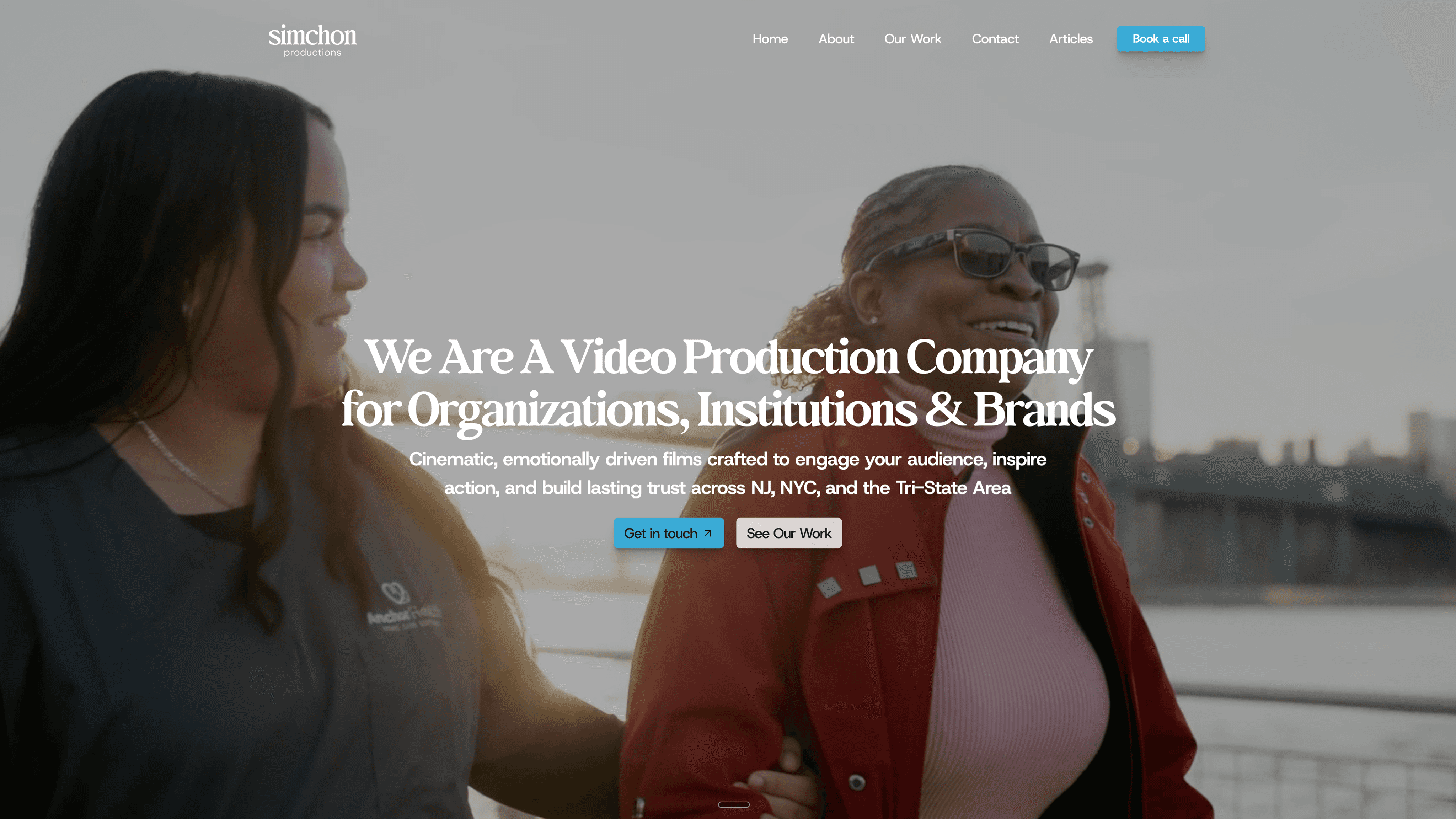
A responsive provider can answer a formal RFP using the exact structure above, or work from a short brief if preferred. Either way, consistent production standards apply: clear deliverables, explicit rights language, and a realistic timeline from kickoff to final delivery.
Review recent project work to see which budget band and video type fits your organization, then reach out through Simchon Productions to start a conversation about your specific project. If you’re still building out your evaluation process first, the hiring guide walks through what to ask before you commit to any vendor.
Where Can You Find More RFP Templates and Legal Guidance?
LegalClarity’s guide on video RFP rights and specs covers ownership language, licensing terms, and budget disclosure in plain legal terms.
The West Virginia Higher Education Policy Commission RFP PDF shows a full formal procurement document, useful as a structural reference.
Sam demonstrates federal procurement formatting for organizations bound by government contracting rules.
The Demand Metric video marketing RFP template offers a downloadable starting point for marketing teams building their first RFP from scratch.
Sources
RFP for Video Production: Requirements, Rights, and Specs - LegalClarity
Video Production RFP: 8 critical things that actually matter - 8 Media Group
FAQ
What is a video RFP template?
A video RFP template is a structured document that lists project objectives, deliverables, budget range, timeline, and evaluation criteria so vendors can submit comparable proposals for a video production project.
How long should a video production RFP be?
Most effective RFPs run 3 to 8 pages, covering background, scope, budget, timeline, submission format, and rights terms without excess detail that slows vendor response time.
Should I give vendors an exact budget or a range?
A budget range works better than an open-ended request because it filters out vendors outside your price point and keeps proposals easier to compare, according to legal guidance on video RFPs.
Who owns the raw footage after a video project ends?
Ownership depends on the contract terms stated in the RFP and proposal. State explicitly whether the agreement is work-for-hire, which typically grants your organization full ownership, or a license, which leaves the vendor holding rights.
What’s the difference between an RFP and a creative brief?
An RFP is a formal, comparable bidding document used to evaluate multiple vendors, while a creative brief is a shorter, less formal scope document often used when working with a trusted partner like Simchon Productions without a competitive bid process.
How many vendors should receive the RFP?
Most organizations send a video production RFP to three to five vendors, enough to compare pricing and approach without creating an unmanageable review workload.